Dive Holidays Worldwide - Resort and liveaboard scuba diving holidays Specialists in wreck diving, whale shark diving and drift diving. Resort and liveaboard diving holidays

Dive Worldwide Staff Trip Reports

Curacao Trip - by Anthony Dixon

Curacao Trip, by Anthony Dixon

Looking for a relaxing place for a dive holiday? No hassles, cold beer, go any time of the year? Well try Curacao. Situated in the far south west of the Caribbean, it is less than 50 miles from the north coast of Venezuela, but can take only one change of 'plane to get there.

Arriving via Miami after our flight, the resort manager made it his business to greet his new arrivals in person to settle us in - as he did for just about everyone. Directed to the beach front BBQ, we were greeted by the friendly smiles of the resort staff, as well as that all important first cold beer!

The next morning showed that our very light and comfortable room had, in common with most rooms, an excellent view over the sea, which was warm (27C) and clear - the viz all week was a steady 15m or more.

Curacao Trip, by Anthony Dixon

We quickly settled into a routine of a two-tank morning boat dive followed - if we got off the sun lounger - by an afternoon seahorse-viewing directly out from the dive operation. Other highlights of the diving included bigger things like frog fish and turtles for me, and a good collection of macro stuff for my buddy - so we were both happy!

The hotel is all inclusive, so all meals and drinks were all on tap, and no having to carry money around, which was great. Varying from a la carte to buffets to barbeques, the menu was international and varied. Curacao is also one of the few places in the world where you really can drink the water straight out of the tap. I also got to discover the delights of coconut rum on our last evening, as well as tasting the world-famous blue-coloured orange liquor that originates from this island.

Curacao Trip, by Anthony Dixon

On an afternoon off, we went to the capital, Wilhelmsted, half an hour or so away on the regular free shuttle from the resort. My buddy liked the colourful houses along the sea front whilst I spent most of the visit trying to work out how they built and operate the swinging pontoon bridge - you'd have to see it to really appreciate how odd it is. For those needing to stretch their legs there are quite a few trips organized by the resort, from trips to the town centre night life through to nature reserves and cave complexes. For the kids there are snorkeling trips, sand-castle building and a variety of events on the sandy beach.

We wanted a relaxing time involving warm water, cold beer, and relaxed diving. We found it all at Sunset Waters in Curacao. You know the best bit? There really are sea horses just off the beach in only 7m of water. No, really, there are! We have the photographic evidence to prove it!

Seahorse, Curacao Trip, by Anthony Dixon

Text Trip report - Katrina - Andaman Islands

S/Y Siren Liveaboard, by Katrina Dixon

I was invited onto the brand new sailing vessel, the S/Y Siren to visit the remote Andaman Islands. Lying between India and Myanmar in the Bay of Bengal, these mysterious islands are little visited and even less often dived. Although closer to Thailand that India, we flew via Chennai and boarded the boat in the islands capital, Port Blair.

The Siren has extremely comfortable, en-suite cabins - all enjoying individually controlled air-conditioning and offering a computer and flat screen, so the laptop can be left at home! Once on board we set up our kit just once - thereafter it stayed in situ for the whole trip, with free nitrox for those who were qualified to use it. All diving was from ribs and, with dive sites no more than 10 minutes ride, four dives a day, with sensible surface intervals, were easily managed.

Map of Bay of Bengal

Delightful though the boat was, the most memorable thing about the trip was the huge numbers of fish encountered. Only 37, of 360 plus, islands are inhabited, with mainly subsistence fishing, giving the waters here the feel of an "aquarium." We hadn't seen so many fish per dive site in many years - at one site the school swirled around us, parted for our bubbles before reforming again.

The list of sightings was phenomenal: highlights being Manta rays, seen on almost every dive taken on the Outer Islands; a passing school of 32 Mobula rays; and, in relatively shallow waters, several swirls of Chevron Barracuda and giant schools of Jacks allowing plenty of time to take photographs.

Blenny Lep, by Katrina Dixon Crab, by Katrina Dixon Baracuda, by Katrina Dixon

Critter hunters may need to search harder here than in some regions, but there are various invertebrates, including nudibranchs, and particularly interesting crabs. Some sites sport large numbers of Leopard or Spotted Blennies, not commonly seen elsewhere.

The low level of habitation on active volcanoes, such as Barren Island, has resulted in hard and soft corals of excellent condition, with everything appearing much more vibrant and colourful against the black, volcanic sand.

Land Barren, by Katrina Dixon Manta Ray, by Katrina Dixon Fish Shoal, by Katrina Dixon

Soft Coral, by Katrina Dixon

The S.Y. Siren has a Thai crew and, as might be expected, the food was excellent and frequent, and, after the last dive of the day, the free beer went down a treat!

I would like to thank my hosts on S.Y. Siren and at Worldwide Dive and Sail for an enjoyable and memorable trip, and the "fishy-est" diving I have enjoyed for many years.

Click here for further details about the Liveaboard - S/Y Siren.

Trip report Bridget Maldives March 2008

Black Pearl - Liveaboard, Maldives

It was the third day of spring and driving up the A3 towards Heathrow in heavy snow I couldn't help but feel excited, I was off to the Maldives for a much needed holiday with my husband. We were booked on the Black Pearl Liveaboard and really looking forward to some sun and getting into the warm water at one of our favourite dive destinations.

The flight with Emirates was uneventful taking seven hours to Dubai and a further five to Male, via Dubai as the direct flight was already full when we booked five months earlier.

Monday morning we stepped out into the glaring sunshine and heat at Male airport. Our guide was there to meet us and within ten minutes we were on the dive dhoni making our way across the harbour to where the Black Pearl was moored. A warm smile, cold drink and even colder towel provided by the Sri Lankan chef was very welcome. After the obligatory briefing and paperwork we were shown to our cabin where we slept for the next couple of hours.

Black Pearl - Liveaboard, Maldives

The Black Pearl is a 29m wooden vessel, sleeping fourteen guests in seven cabins all of which have a double bed and a single bunk. The boat is a good standard dive boat but not a luxury liveaboard. It has all the amenities you require for an enjoyable dive trip without the frills. On our trip there were only nine guests in total from various European countries making for lots of space on board. The front deck is shaded with a seating area and meals are normally taken at a long table on the back deck. Inside the saloon is the bar where a small can of beer costs US$3 and a small coke $2. The saloon has room for sitting plus a TV / DVD and plenty of books. On the top deck you will find the sun beds however the deck is not shaded and therefore only really useable during early morning and late afternoons. Food on board is simple and wholesome. Meals mainly comprised of fresh fish or chicken dishes with rice and salads plus plenty of delicious tasting fruit. The chef prepared a Maldivian feast one night and there was a beach BBQ on another.

3pm and time for the first dive at Vilivaru Giri in North Male Atoll. This is an easy site used for check dives and gives everybody the chance to check equipment and weighting. It was so lovely to jump into 29 degree water with around 20 metres visibility. After the first day the normal schedule was up at 06:00, first dive around 06:30 followed by breakfast. The second dive around 11:00 then lunch and a third dive around 15:00 with dinner around 19:00.

Fish, Maldives

Maldives diving is fantastic and in my personal opinion the best anywhere in the world, that is if you like big action diving. The corals and macro life are not the calibre that can be found in other places but I was there to see sharks, mantas and lots of hunting and schooling fish and certainly wasn't disappointed, every dive delivered. Some of my favourites sites are the channel dives where you swim across the current into the deep water channel, hang on or hook in and watch the show. Any number of sharks could show up including white tips, grey reefs plus schools of eagle rays and hunting fish galore. A lot of the dives were on thilas or submerged circular reefs rising from 30 - 40m with the reef tops at between 5-10m making for good long dives. The reefs were absolutely teeming with red toothed trigger fish, oriental sweet lips, and chromis of every colour. In the currents there are huge schools of jacks, giant tuna, and fusiliers of every sort. I have never dived anywhere else where you are so completely surrounded by fish on nearly every dive. In addition to the schooling fish we saw numerous sharks, turtles, morays, octopus and lobsters galore.

The cruise route was mainly through South Ari atoll which is about a three hour crossing from Male atolls; starting south we worked our way up through the atoll and over to Rasdhoo atoll slightly to the north. The southern end of Ari atoll is famed for its sighting of Whale sharks, which can be seen at anytime but particularly between December - April. Just last week up to five were spotted on one day by either snorkellers or divers but these are wild animals and despite a two- three hour trawl up and down we weren't in luck. Not to be perturbed though the manta dives were more fruitful and mantas were seen on at least four dives, the last at a cleaning station near to Male where they are almost certainly seen and if not disturbed will hang around for the duration of the 60 minute dive.

Manta Ray, Maldives

Another morning we elected to rise at five am in the hope of catching hammerheads coming up from the very deep water off a sheer wall. We descended to 30meters in the blue and drifted for 30minutes before two were spotted in the distance, then just before we started our ascent two more large sharks were spotted, this time much closer at around 20 metres. The top of this reef at 15 metres is covered in pristine hard corals.

There were too many great dives to choose a favourite but there is one that always sticks in my mind when I come to the Maldives, Maya Thila - a small thila rising from 30 to 40 metres on the sand bottom to six to ten meters on top. With strong currents bathing the reef it is truly like diving in an aquarium, there were fish everywhere. I have never seen so many red toothed (blue) trigger fish in my life, plus schools of neon fusiliers, jacks and barracuda. We also saw five or more octopus, loads of morays, numerous turtles, eagle rays, sting rays white tip sharks and a giant barracuda, what more do you want? Night dives are also usually conducted on this reef for good reason so it does get very crowded; our guide wisely waited an hour until most other boats were finishing their dives before we proceeded to the reef and descended. The current can be very strong as on most reefs in the Maldives but if the current allows the best plan is to circle the small reef at ten to fifteen metres then spend the majority of the dive on top at six to ten metres where you will see hunting white tip sharks everywhere, just sit still and watch the action! There is a Giant Barracuda that rules the reef and is friendly to divers, it comes very close showing his teeth and posing for photos. Both the day and night dives at Maya Thila get my vote for dives of the week.

Clown Fish, Maldives

In addition to diving, during a one week cruise the boat stops at a local tourist Island where you have the opportunity to go ashore, walk around and do some shopping. Souvenirs are for sale of course. There is also a scheduled visit to a deserted island although you will probably share your deserted island with several other liveaboards and their guests!! Here the crew prepared an evening BBQ for us followed by local music and dancing with a few other surprises thrown in!

Too soon it was Monday morning and 17 dives later time to make our way to the airport. Some of the guests were heading off to an island resort for an additional week while we had a scheduled stopover in Dubai for one night. You can stop over or extend a trip to the Maldives for as long as your time schedule allows or even easily combine a Maldives holiday with a liveabaord out of Dubai.

In my opinion diving the Maldives just can't be topped if you have limited time and are looking for warm water a very laid back atmosphere, lovely people and fabulous action diving. The best time to visit is November-April but diving will be good all year. Book early six months to one year in advance is recommended especially if you want a liveaboard or your choice of resorts during the high season. We are already planning our visit for 2009!

Papua New Guinea by Katrina Dixon

Dolphins

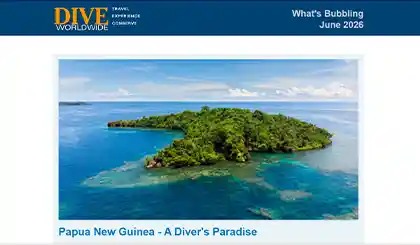
With too much going on before our trip we had little time to do much research into exactly what Papua New Guinea had too offer. What we did know was that there was rumoured to be some spectacular diving. We love the liveaboard option and we had a number to choose from in Papua New Guinea. We settled on the Star Dancer that leaves from the Walindi Plantation Resort, near Rabaul on the island of New Britain.

The flights to Papua New Guinea from UK are not daily, so we arrived early and had the opportunity to stay in and dive from Walindi Resort before boarding our liveaboard. The diving from Walindi takes place in Kimbe Bay. This large bay had a large number of dive sites of differing topologies, from sea mounts to shallow reefs. The inhabitants ranged from pygmy seahorses to orcas, and nothing was more than about an hours boat ride away. It was the variety of marine life that made the diving so good. There were excellent corals, lots of fish life and even a plane wreck. The resort is very attractive and well thought out, and also has fabulous chocolate ice-cream!

Sharks

The liveaboard trip had a lot to recommend it, from sharks, snorkeling with dolphins, and excellent corals, as well as the opportunity to see some local culture that has yet to be influenced by modern, western, culture. The scenery was gorgeous with stunning volcanic backdrops. We noticed our liveaboard was trading salt for fresh fruit that was paddled several miles out to us in a dug out canoe, and we realised that we had indeed come to a destination with much more to offer than just diving.

Dug out canoe Walindi Plantation Resort

The diving is why we went and it was spectacular. Papua New Guinea is in the area of the world which has the largest number of different species - thought to be as a result of the least impact from the last ice age. We had reefs, pinnacles and muck dives, creatures that were wholly indigenous, copious sharks and large numbers of fish. There was also an excellent variety of colourful nudibranchs and various other critters in the muck that are unusual to find.

Clown Fish Orange Crab Nudi Poker

This was a great trip that we would definitely return to - except for the fact that there are so many other areas in PNG that we have not yet explored!

See Our PNG holidays

Anthony - Swimming with Whalesharks in Kenya

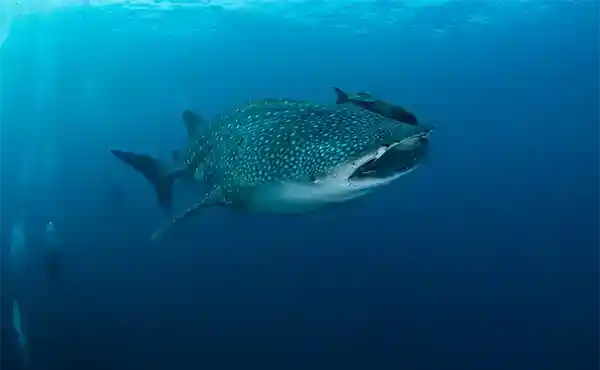
Whale Shark, by Anthony Dixon

All dressed up and ready to go... but your partner has not turned up yet? An all too familiar feeling for whaleshark spotters all around the world, suited up, mask and fins ready, but not a fin in sight!

Well, my trip to Kenya had an entirely different feel to it, courtesy of some very well spent surface intervals between dives. Cruising up and down the reef off Chale Island in southern Kenya resulted in as many whale shark encounters as a dedicated whale shark trip to Ningaloo!

We spent a week diving the reefs off southern Kenya just before Christmas time, and every day spent our surface interval cruising just off shore, and every day saw at least one shark, and usually several in less than an hour. To this day I'm not sure how the boat driver saw them as they were cruising along with their fins just underwater, so quite tricky to see. Once in the water with our snorkel gear they were more easily viewed, cruising along the reef without a care in the world.

The shark viewing was relaxed and easy - no other boats, and few people on our boat made for prolonged encounters snorkeling along with this spotty giant of the sea. They were a mixed bunch, one big shark, and a couple small, but mostly 6-8m long sharks all going south, continuing on their traditional migration routes. We even saw one giant whilst diving which made our day!

We combined this week seeing the giant of the sea with a short safari. A close encounter with a massive bull elephant certainly ensures that this trip will live long in our memory.

See our Kenya Itineraries

Juliet - Tobago Trip Report

Juliet Gush

Arriving in Tobago 5 years after my first visit to the island, I was pleasantly surprised by how little had changed. Tobago still had the rustic charm I remembered. Trinidad & Tobago form the southern most islands of the lesser Antilles chain in the Eastern Caribbean and are geologically an extension of the South American continent. Lying just 7 miles off the coast of Venezuela, Trinidad & Tobago are less commercial compared with many other Caribbean Islands. Tobago really is one of the last of the "unspoilt Caribbean" This strip of elongated land, approximately 25 miles by 8 miles, is blessed with natural beauty: palm-lined beaches, lush rain forests and pristine coral reefs. The south coast is washed by the Atlantic and is lined with vibrant fishing villages while the north coast provides Tobago with some of its finest beaches. And for the nature lover, the eastern landscape of the interior rises steeply into tall peaks, providing shelter for one of the oldest protected rainforest reserves in the western hemisphere.

Tobago Trip

Tobago is rich in indigenous culture and is the birthplace of calypso music and the steelpan. It has a relaxed attitude - sleepy and quiet especially in contrast to the UK. A popular local pastime is "liming", a social institution which roughly means "hanging around" "the art of doing nothing"! I flew with Excel Airways, a charter airline who offer direct services to Tobago twice a week. These flights are good value but don't expect the same service you would from a scheduled airline! the best value item on their menu was the champagne! And as for the food, does a slice of processed cheese count as real food? However a big plus side to flying with Excel is the generous luggage allowance they give - 40kg per person (in Economy Class).

My week in Tobago was spent based at Manta Lodge, hosted by Sean Robinson who has a wealth of information on Tobago's diving history. But make sure you have enough time to talk to him, because he has a lot to say! I would describe Manta Lodge as a divers lodge, suitable for groups, families and individuals. The rooms are comfortable, clean and spacious and the staff are friendly and helpful. On site they have a fresh water swimming pool and a full service dive shop - Tobago Dive Experience. Manta Lodge is located in the northern part of Tobago in the sleepy fishing village of Speyside. Speyside does not offer much in the way of shops and amenities - there is no supermarket, pharmacy, bank, ATM machine or petrol station, but there are a few dining options - Jemmas Treehouse (popular with tourists), Birdwatchers Restaurant (I had a great meal here) and Redman Simple. Don't expect menus or great choice at any of these Creole restaurants - the choice is normally just fish, shrimp, chicken or meat (often goat). In my opinion, the food in general on Tobago was bland and not great value for money.

Queen Angel Fish

It is this northern end of the island that reputedly has the most diverse and challenging diving. This is where the Caribbean Sea meets the Atlantic Ocean. Coupled with the confluence of the strong Guyanese current and the seasonal outflow of Venezuela's Orinocho flow, these waters are rich in nutrients. As a result the visibility can be variable, averaging between 10 and 25 metres. It is also this Guyanese current which can cause the strong, and exciting currents. Tobago offers a variety of dive sites unparalleled in the Caribbean for species diversity. Most of the dive sites are a short boat ride away, between 5 and 15 minutes, and the majority of dives are conducted as drift dives. Temperatures tend to range between 24C in January and February and 28 C in the summer.

There are a couple of wrecks in Tobago's waters, one being the Maverick. Originally named the Scarlet Ibis, she was the first passenger ferry offering services between Trinidad and Tobago before being sunk in April 1997. She now provides a home to plenty of marine life including Rainbow Runner and snappers.

Located at the northwestern end of the island is the well-known dive site "The Sisters" - a series of rock pinnacles rising up from the deep. It is here that Hammerheads are often sighted. Manta Rays are also occasionally in this area, but not as frequently as they were a few years ago. I did two dives here and both Hammerheads and a Manta Ray were spotted. Unfortunately not by me! Another popular and well-known dive site is Kelleston Drain. It is here that you can see (allegedly) the second largest brain coral in the world (and the largest in the Western hemisphere). The coral and sponges in this area are healthy and brightly coloured and there is a variety of multicoloured reef fish - Angel fish, Parrot fish, Damselfish, Drum fish as well as Banded Shrimp and Arrow Crabs. Keep your eyes open for Reef Sharks, Southern Sting Rays, Turtles and Barracudas.

Banded Coral Shrimp

I also experienced diving from the Peter Hughes Liveaboard, M/V Wind Dancer - an exceptionally comfortable vessel, with welcoming and accommodating crew. They offered a very slick dive operation, with Nitrox facility and dives conducted from 2 well-equipped spacious tenders. The dive guides were professional and I especially liked the little touches - a warm towel straight out of the tumble dryer after the dive, a shoulder massage from the staff and chocolates on the pillow before bed! They offered home made snacks between dives and 4 course meals in the evening. The food, although not being typical of the local cuisine, was the best food I ate while in Tobago! If staying on a liveaboard is not your thing, the other hotel in the north that I would recommend is Blue Waters Inn. Just 15 minutes walk up the coast from Manta Lodge, you'll find Blue Waters Inn set in 46 acres of tropical grounds providing a home for many of the fascinating bird species. Blue Waters Inn has more of a resort feel to it with facilities including tennis courts and a library, but no swimming pool. It is set in the stunning location of Batteaux Bay which provides a lovely setting for the hotel and acts as its own natural swimming area, along with views across to Little Tobago and Goat Island. This is home to some of the impressive birdlife, including frigate birds, white-tailed tropicbirds, boobies and pelicans. I would recommend Blue Waters Inn for non-divers as well.

French Angel Fish

For hotels in the south consider Toucan Inn. Located in the heart of Crown Point, it is small (20 rooms) and friendly with cabanas scattered around the pool area and the gardens. It has a great little bar - "Bonkers"and they serve good lunches of local cuisine as well as catering for a more international taste. Toucan Inn is home to R&Sea Divers - run by English couple Wendy and John who give such attentive service and will not fail to look after you. Toucan Inn is popular and great value, but, as with many of the hotels in the south, it is not located on the beach and lacks a sea breeze. As an alternative, Kariwak Village is also located in the heart of Crown Point not far from Toucan Inn, and offers an intimate and Caribbean atmosphere amidst lush gardens and thatched-roof cabanas. They have a reputation all around the island for the wholesome and fresh cuisine they serve. Holistic holiday activities such as yoga, massage and Tai Chi are also on offer. If you are looking for luxury and would prefer the privacy and seclusion of a private villa, then I would highly recommend Stone Haven Villas. Situated just north of Mount Irvine bay and near the golf courses, these villas are beautifully decorated in a colonial style with mahogany, marble and granite. Each of the 14 villas has its own infinity pool and stunning views over Stone Haven Bay. It is near here, at Great Courland Bay (aka Turtle Bay) where Leatherback Turtles come to nest from April until July.

Underwater Sillouette

I hired a car and spent a couple of days exploring the island. I would definitely recommend this to visit the beautiful bays and untouched beaches along the north/west coast (Englishman's Bay, Bloody Bay, Parlatuvier Bay). Charlottesville, in the north, is one of Tobago's oldest communities. It is picturesque with houses tumbling haphazardly down the hillside and there are a few souvenir shops in the bay. Bird watching in Trinidad & Tobago is first rate with over 430 species of birds being recorded. I was really impressed by the amazing colours, noises and the weird and wonderful nests. Visit Grafton Caledonia Sanctuary where you can see the Mot Mot bird (- feeding time 4pm). Sunday School, much like "liming" is another Tobagonian institution, and not for the pious. It is a massive beach party which takes over Buccoo village with crowds of locals as well as tourists. The action begins with a local Steel band, the Buccooneers, and this is followed by a pumping sound system with reggae and calypso. A weekly event not to be missed.

Juliets Tobago Trip

The climate in Tobago is pleasant most of the year and although May, June and July can be wet at times, the variation between the wet and dry seasons is not significant. June to November is the rainy season, when the islands are subject to more clouds, rain and humidity. Tobago lies just south of the hurricane belt and the best time to visit is from December until May when it's coolest and the least rainy. Because of the trade winds, it rarely feels excessively hot but take a sweater or jacket because evenings tend to cool off quite a bit.

If you are thinking of visiting Tobago please do give me a call - I would be happy to chat to you about my experience.

Read more about Tobago

Anthony - Palau (Micronesia) Trip Report

Cultural Site, Palau

Many divers have heard of Palau in the context of the stingless Jellyfish, but few UK divers have actually ventured into the Palau waters, so I had few pre-conceptions when the opportunity to visit the islands came up late in 2006.

I was expecting a far more difficult trip over, but the new route through Manila using brand new BAe146 planes (the same as used by the Queen) was a breeze, so I was well rested on arrival in Koror, the capital of Palau.

Wanting to pack in as much as possible, we'd arranged flying visits to many of the islands attractions before doing the diving - else I would have been too tempted by just the diving! For a tiny country I was amazed not just by the number of attractions, but the quality of them.

There are several museums in and around Koror, detailing the history of the islands, both before and after contact with Europeans. Complete with models, early photos and copies of contemporary reports and maps, we came away with a vision of an amazing journey that the Palaun people have made, particularly in the last hundred years. Contrasting the modern facilities and diverse restaurants were the many sites around the country where the ancient culture of Palau was readily visible.

But obviously, we were there for the diving: and two dive sites stand out for me, Blue Corner and the Depth Charge Wreck.

Blue Corner:

Blue Corner is one of the premier shark spots in Palau, usually done hooked-in to the reef. I was particularly impressed with the fact that the dive operators make people hook in to the same place - limiting diver damage to a couple of small areas.

Of course the sharks are the highlight, white tip reef sharks and grey reef sharks in the main. Cruising up and down the reef in the crystal clear waters they generate a thrill for as long you can make your air last on a dive.

Turtle DixonPALAU001.jpg White Tip Shark

This site is not just about sharks, with resident groups of barracuda, and bump head parrot fish, as well as an occasional turtle. We were lucky enough to see a passing hammerhead here whilst on a safety stop, proving that there is plenty of shark action around.

Depth Charge Wreck:

What is not well known about Palau is that the lagoon is the final resting place of dozens of wrecks from Operation Desecrate 1 launched by the American Fleet March 1944 when well over 60 wrecks were created. Varying from zero fighters to freighters and the occasional war ship, most are in the protected lagoon, and make excellent Nitrox dives as most are less than 40m deep.

DixonPALAU005.jpg DixonPALAU007.jpg Wreck Diving in Palau, Micronesia

The Depth Charge wreck is particularly good as it was "lost" after the war and only recently rediscovered. It was loaded with a varied war cargo, including Depth Charges and Helmets, leading to its two names of the Depth Charge or Helmet wreck. No-one knows its real name.

Swimming through the holds looking at its cargo of shells, depth charges, rifles and airplane engines is a sobering experience, particularly when you realise the ship was sunk by a single small bomb that detonated next to the dozens of massive depth charges!

Other Highlights:

Jelly Fish lake is a must - swimming gently through hundreds, if not the thousands of jellies pulsating through the salt-water lake is a once in a lifetime experience.

Palau is made up of hundreds of Rock Islands - the strangely shaped rock formations can best be visited on kayak trips, giving a unique insight into the flora and fauna of this unique Pacific habitat.

This combination of superb reef diving, an amazing collection of 2nd World War wrecks, and the culture available on land mean that I'd love to return to see the sights I did not get the chance to visit, including the island of Pelileu, the site of a major battle in the Pacific War. Read more about Micronesia

Simon - Fantastic Freebees in Fiji

Simon Ferry

When the boss asked if I had been to Fiji, I was half expecting to be asked to talk to a customer about it - not offered a fabulous familiarisation trip to Fiji's Northern Islands.

As the only European delegate on the trip, I took the opportunity to relax on the Heathrow - Los Angeles leg; before meeting and greeting the rest of the group, all fourteen of them. Word of warning, when asking directions from Terminal 2 to Terminal B, I duly followed instructions to catch a bus - waiting twenty minutes for a bus to take me on a two minute journey! Our overnight, Air Pacific, flight got us into Fiji nice and early and we were able to use a dayroom at the Courtyard Marriott Resort, to shower and have breakfast, before our transfer to Wananavu Resort.

Wananavu is a pretty resort, set on its own beach with palm trees and masses of flowers - an idyllic destination. After corresponding with Ra Divers for some time now, it was nice to be able to meet the team face-to-face, especially when the meeting is followed by a mind blowing first dive - the coral colours are astonishing and totally unexpected. There are four deep coral heads, reaching 35 metres on the landward side and dropping off much deeper on the seaward side. The shallower depths are home to a wide range of tropical fish, meandering amongst yellow soft corals and, deeper, schools of larger fish - barracuda, tuna, trevally, mackerel and the occasional reef shark.

Nanuya Beach, Fiji "Blue Lagoon Liveaboard,"

For the first few days accommodation was at Nananu Beach and Dive Resort, just five minutes boat ride from Wananavu, with three dive operators offering a number of dive locations. A quiet resort, Nananu boasts a natural beach on both sides of the island - one was covered with pumice stones from Tonga - surrounded by mangroves. The coral is fantastic; having dived around the world I have seen plenty of colourful corals but nothing like this Fiji - definitely deserves its reputation as 'The Coral Capital of the World.' Diving with a 'seavision' mask, with colour corrective lenses, enhanced the experience. Choosing the pink lenses added the red filter that is naturally lost at depths of 15-20 metres and resulted in an awesome range of colours from red to blue, and everything in between!

Swimming

After one last dive in the Bligh Waters on Monday morning, we headed onto our next, and very special, accommodation - one night onboard the 5-Star 'Blue Lagoon Cruise' liveaboard. This luxurious boat is the perfect holiday for a couple comprising diver and non-diver, offering the best of both worlds, and fantastic food to boot.

Moving north along the chain of the Yasawa islands, we enjoyed some fantastic and very different dives. The coral heads here are some of the most architecturally stunning I have ever seen, with big outcrops of coral and ledges, holes and overhang everywhere. Each stop finds you hanging upside down looking for lobsters, shrimps, eels and fish of all kinds.

Manta Ray, Fiji - Courtesy of Matava

The following night we stayed on a very different boat - Awesome Adventures. This liveaboard caters predominantly for the backpacker market; with dorm - style accommodation, but with similar dive location - although not known as a Manta Ray location, we were lucky enough to snorkel with some Manta Rays that had been in the area for a couple of weeks. Whilst here, I also had the chance to take a night dive - an experience I never turn down - and see marine invertebrates sculling around the reef feeding, including shrimps of every type and even a couple of swimming Moray Eels.

Wednesday night saw us moving south again into the Mamanuca chain of islands, and the group split to look at different islands. I found myself staying on Beachcomber Island Resort, which has a reputation as the best party island in Fiji - and I can attest to that. The resort offers different styles of accommodations, from dorm's (not recommended) to Beachfront bures, and I stayed in a lovely little beach front property, and a well-organised dive operation. Diving here offers a few wrecks and the world famous Supermarket dive - pick a fish and there is a very good chance that you will see it here. I would suggest the Beachcomber for the single traveller and then probably as a wind-down location, for a few nights at the end of the holiday, being only 45 minutes from the airport.

Reef Fiji Parrot Fish 2 Canoeists

All too soon the diving was over and I had to get my work ethic back into gear as the last two nights were spent in the five star Sonaisali Island Resort, where I earned my trip by talking to dive centres and hotel representatives from all over Fiji. Trying not to think of all the spectacular diving outside of the conference room! We did, however, have one last fun-filled excursion - by travelling by bus, at 5a.m., from Nadi towards Suva and meeting up with Rivers Fiji, a white water rafting outfit offering what is almost a 5-star activity to anyone at any stage of life. The river comprises stunning gorges and waterfalls, with the rapids being very easy to handle. I took a kayak and some of the others jumped into one of the five boats travelling down the river with us - for a fantastic fun experience. On the way down the river you are able to stop, swim and even change boat. This was the perfect end to the most amazing work trip I have had the good fortune to do. My final suggestion would be a good brand of waterproof sun cream - as my flight home was rather uncomfortable on the old legs, thanks to my catching the sun a bit too much.

If you are thinking of Fiji as a destination I will be more than happy to share all of my experiences just drop me a line to sales@diveworldwide.com or call on 0845 130 6980 Thank you for taking the time to read my trip report. Have a look at Fiji
Thank you for reading our reports - Go back to Inspiration