Everything You Need to Know About Diving the Cenotes
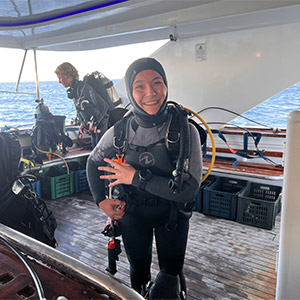
Product Executive Jo Charter visited Mexico earlier this year and returned with some recommendations on the best Cenotes to dive in Riviera Maya, Mexico.
The Cenotes, on Mexico’s Yucatán Peninsula, can only be described as another world. The light and geological formations are breathtaking. Cenotes are a collection of chambers, caverns and cave systems, created in the limestone by underground waterways and sinkholes. The water is predominantly freshwater or brackish, and the Cenotes themselves come in all shapes and sizes. There are over 900 in the region, many of which are diveable, so there are dive sites to suit many levels, however good buoyancy is key.
The cavern Cenotes are suitable for recreational divers without any cave training, as these have direct access to the surface within 60 metres and have natural light, granting visibility even in the overhead environments. I was lucky enough to dive an excellent cross-section of these sites during my visit, from entry-level to advanced.
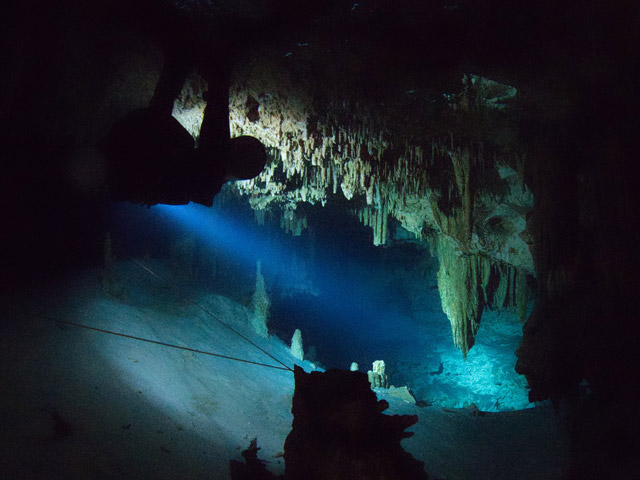 Dos Ojos (Two Eyes) is a wonderful introduction to the Cenotes, and is often where dive centres operate check dives. This site is popular with both divers and snorkellers, due to its relatively open structure, which allows natural light to be clearly visible throughout the dive. The site is made up of two dives, the ‘Barbie Line’ - aptly named because of a Barbie doll that is tied at the halfway point - and ‘Bat Cave’. The connecting chambers to Dos Ojos are relatively wide (over two metres) and there's a mix of stalagmite, stalactite, and bolder formations. The light filters through the water at the various holes, creating stunning sunbeams in the water.
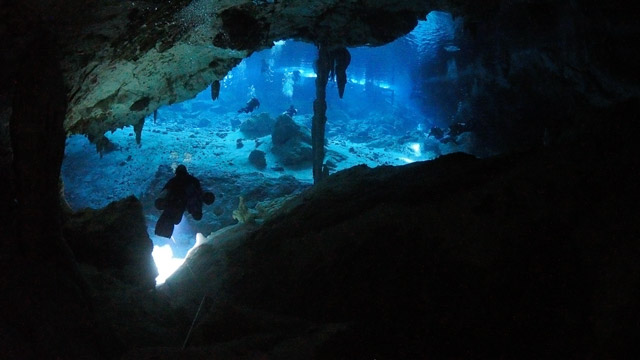 Dream Gate is a shallow but more challenging dive. Again, there are two routes from the same entry point, so this dive gives those with excellent buoyancy a chance to wind their way through pristine geological formations.
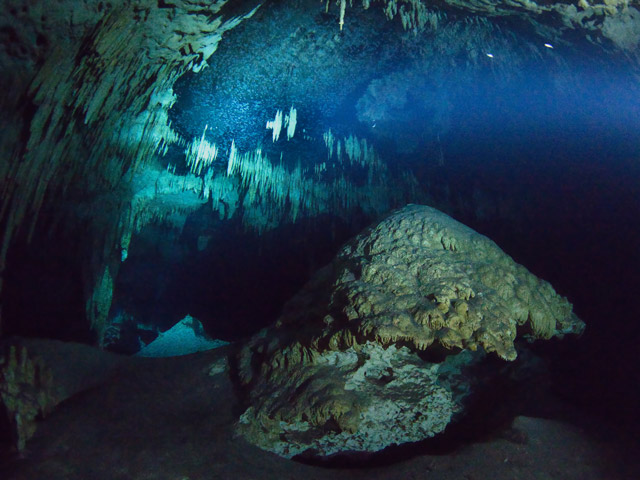 For the more experienced diver, there are Zapote and Maravilla dive sites. Starting with Zapote, otherwise known as Hells Bells, your dive starts by entering what looks like a 15-metre wide pond surrounded by tropical jungle. The pond is deceptive, as in reality it is a 30-metre tunnel which drops directly into the earth! At the end of the tunnel, the walls open up into a huge chamber ready for you to discover. With a Deep Diver Speciality qualification, and Nitrox to extend your bottom time, you can explore a flooded chamber which houses hundreds of stalactites.
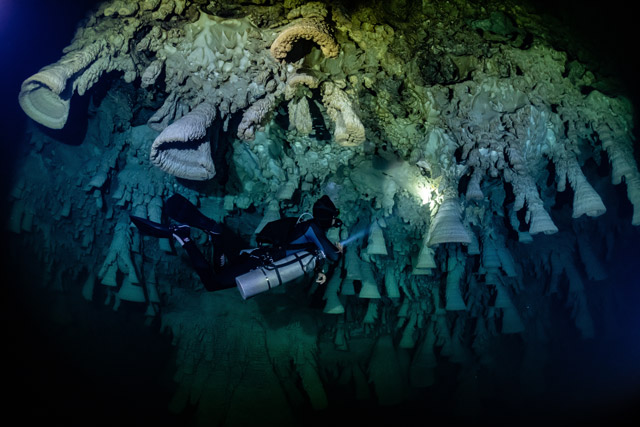 These are no regular stalactites. These formations are curiously conically shaped and up to two metres in length, hence the nickname Hells Bells. They are formed under specific physical and biochemical conditions, created prior to the cave flooding, and can only be seen in very rare instances. These impressive creations encircle a column of light that highlight a fallen tree perched on the remains of the collapsed earth, an eerie reminder of the world up above.
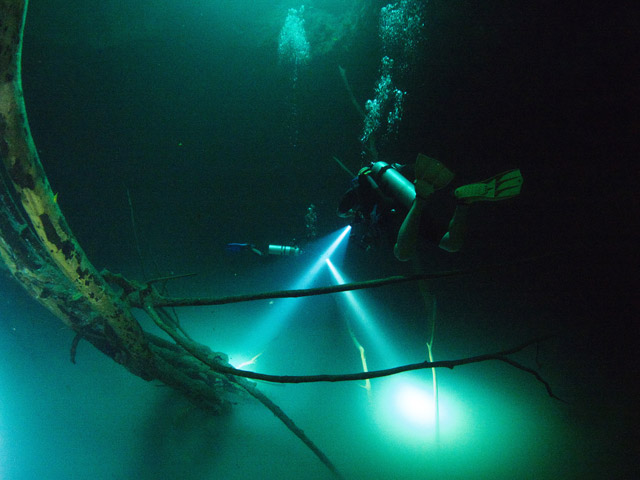
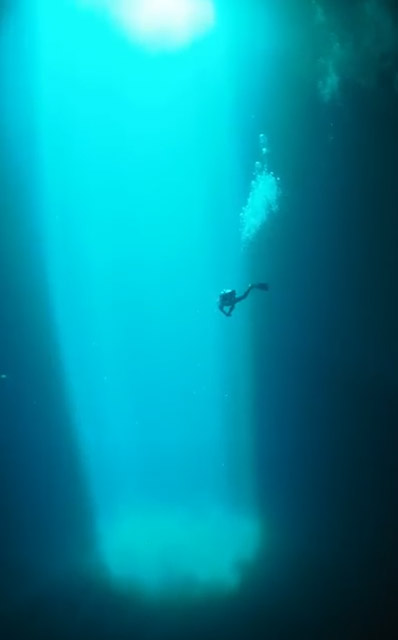 Maravilla begins similarly to Zapote: the entrance looks like a muddy pond that you might feed the ducks on, but after the initial short tunnel, the space opens out into a huge chamber with crystal clear visibility. You feel as if you're flying in space; the only evidence that you’re still on Earth are your bubbles.
At around 28 metres, there's a thick, dark cloud. The layer looks like a halocline, but is actually hydrogen sulphide that has sunk to the bottom of the chamber. This layer is non-penetrable and adds to the alien-like environment. On a clear day, the sunlight beams through the jungle, through the gin-clear water, and onto the thick cloud below. This was by far my favourite dive.
As my dive buddies and colleagues will tell you, I'm not often speechless, but after diving the Cenotes … well. It took me a while to find the words to describe how it all made me feel. As a hard-core biodiversity and macro lover I was sceptical of the sparseness of the Cenotes, but the beauty of the light, the ancient natural formations and the crystal-clear water, it was all sensational. The Yucatán Peninsula is worth a visit for the Cenotes if nothing else, even if you have only ever dived in reefs.
Discover more of our Cenotes diving holidays! Whether you want a dedicated snorkelling trip, or explore the Mesoamerican reef system on our Cenotes & Reefs itinerary, our friendly team can talk through all your requirements.