
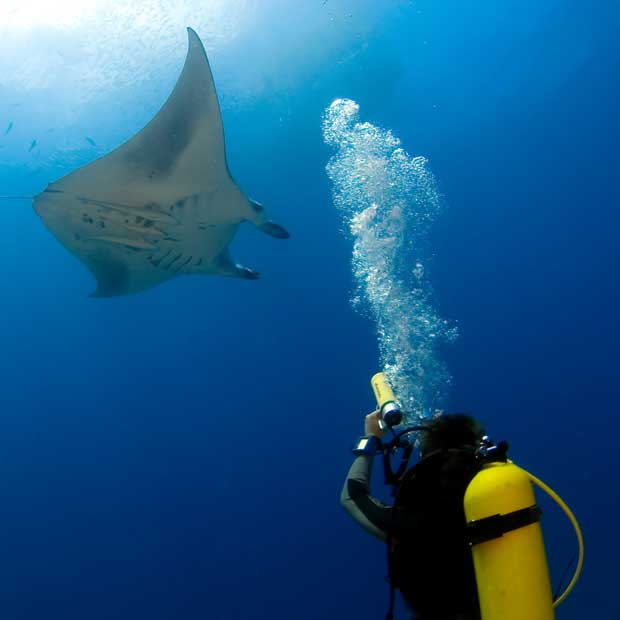
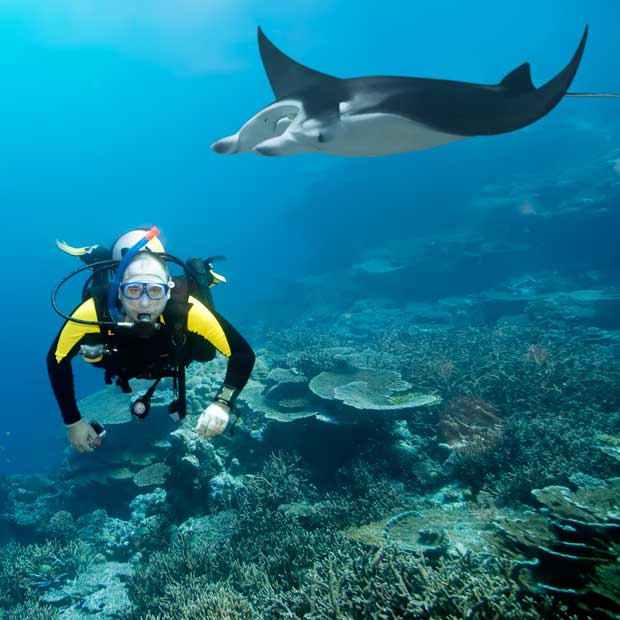
Diving with manta rays is at the top of many divers' wishlists. The sheer size, grace and elegance of the manta ensures their place as one of the most sought after encounters in the marine world. Browse our carefully crafted manta ray trips for that special encounter.
Why our manta ray diving holidays are so successful
What manta rays to see and where
Manta rays can be found in tropical waters around the world. These large filter feeders can be encountered at cleaning stations or in plankton rich waters where their food is abundant.
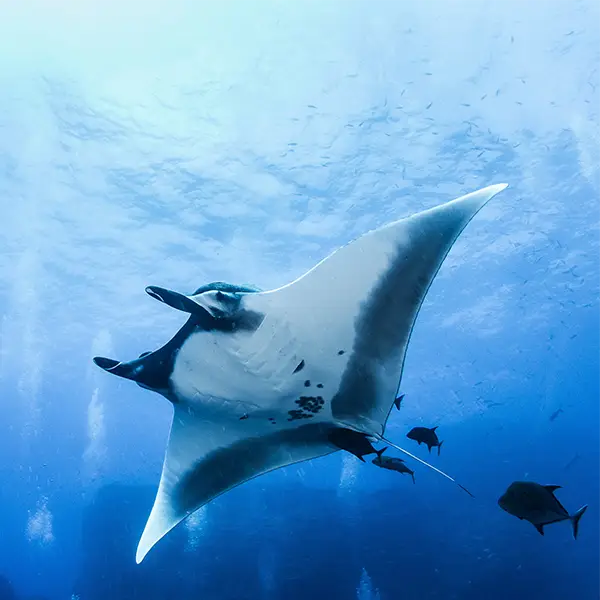
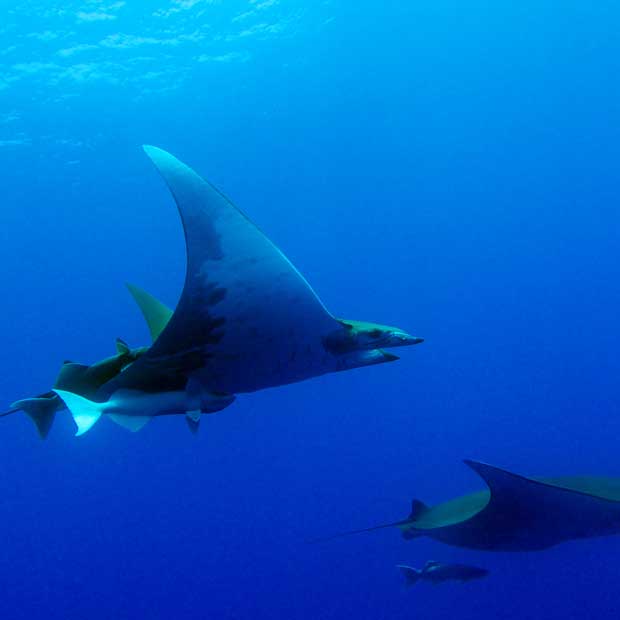
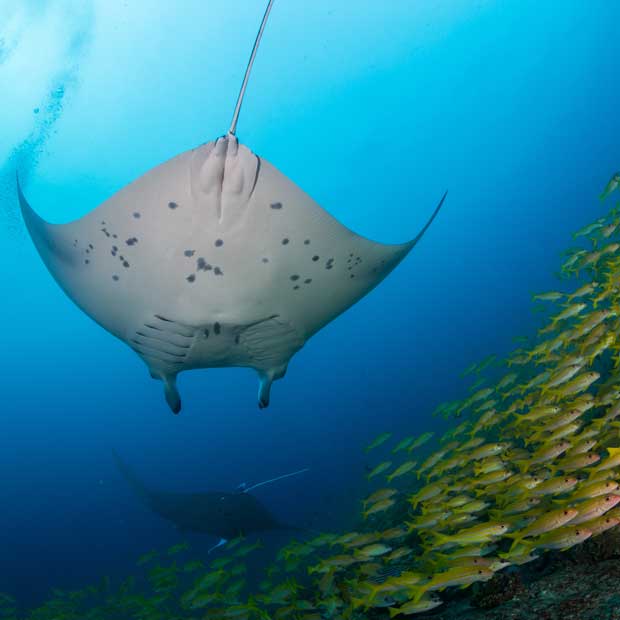
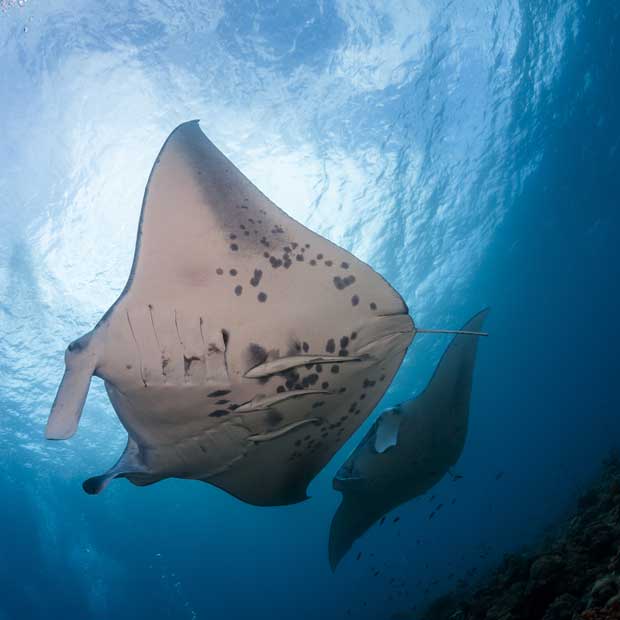
There are two species of manta ray, the giant oceanic manta and the smaller reef manta. The reef manta tends to cover a smaller range and is generally considered resident to a certain area, while the larger oceanic manta is more nomadic, wandering the oceans.
Manta rays are in turn part of the Mobulidae family, which also includes mobula or devil rays. These smaller cousins, found in large numbers in the Azores among other places, are often mistaken for manta rays.
From Fiji to the Maldives, Indonesia to the Galapagos and beyond, there are many locations where it is possible to dive with these incredible, intelligent animals.
Giant manta ray
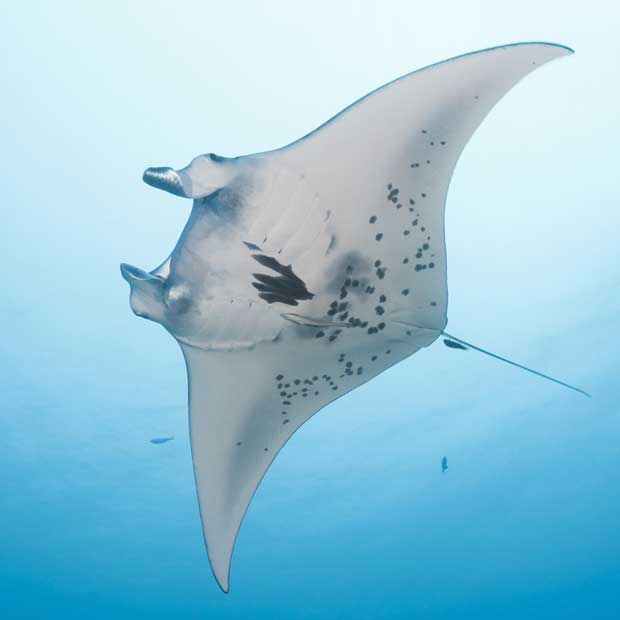
More elusive than the reef manta ray due to their large range, giant oceanic mantas can be seen in Mozambique, Thailand, Socorro, the Azores and the Galapagos Islands.
Devil ray
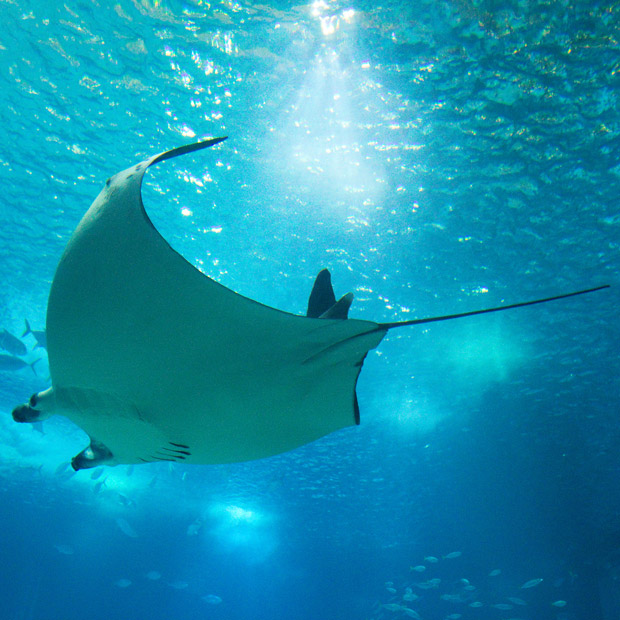
Smaller than both species of manta ray, devil rays still reach and impression size. Like their cousins, they are filter feeders, chasing the blooms of plankton and small fish across the waves.
The rays found in Mexico have been documented leaping from the waters in huge numbers and splashing back down in a spectacular display that may be linked to mating rituals.
Reef manta ray
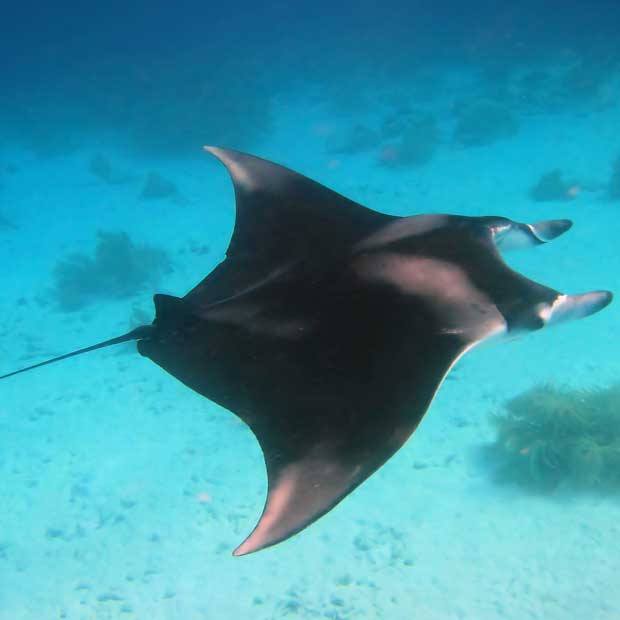
Their tendency to gather in larger groups ensures that encounters with these majestic plankton feeders are no less spectacular.
Reef manta rays can be seen in the Maldives, Indonesia’s Komodo National Park, the Philippines and Tahiti.