Diving in Indonesia vs Philippines: A Comparison Guide
With more than 80 diving hotels and liveaboards across Indonesia and the Philippines, we have first-hand insight into what makes each destination stand out. Here, we compare two of the world's greatest dive destinations, from the marine life, types of diving, when to go and overall experience, so that you can decide which is the better fit for your next dive trip.
Ask a well-travelled diver to choose between Indonesia and the Philippines and they may struggle to give you a clear answer. Both countries sit at the heart of the Coral Triangle, the global epicentre of marine biodiversity, and both have built their reputations on world-class diving opportunities. In this blog, we explore some of the similarities, and the differences, to help you make an informed decision on your next diving holiday.
Quick Summary
Similarities Between Diving in Indonesia & the Philippines
- Located in the Coral Triangle & offer exceptional marine biodiversity
- World-class reefs, muck diving & underwater photography
- Encounters with manta rays, whale sharks & other big marine life
- Excellent liveaboards, beginner diving & snorkelling
- Year-round diving, depending on the region & season
Differences Between Diving in Indonesia & the Philippines
- Indonesia is larger, more remote & more geographically diverse
- The Philippines is more compact, with a greater concentration of varied diving experiences
- Indonesia offers longer liveaboard itineraries compared to the Philippines
- The Philippines is stronger for wreck diving & thresher sharks, particularly around Coron & Malapascua
- Indonesia is stronger for biodiversity, volcanic reefs, wild whale sharks & mola mola
- The Philippines may be more accessible for English-speaking travellers
- Indonesia offers greater cultural & geographic diversity
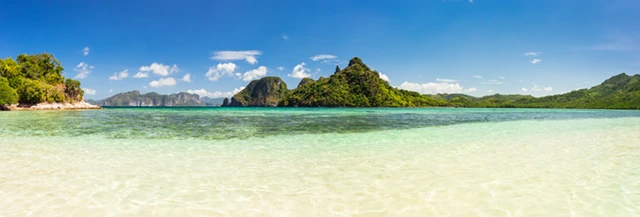
Below we delve into further detail, starting with the basics of these two South-east Asian gems. Indonesia stretches across more than seventeen thousand islands, a scale that gives its diving extraordinary scope, from the volcanic seamounts of the Ring of Fire to the flat, mirror-calm channels of Raja Ampat. The Philippines, lying farther north, is a little smaller in size, but still possesses more than 7,600 islands and has 36,000 kilometres of coastline to explore.
 Biodiversity & Reefs
Both countries sit within the Coral Triangle, the region bounded loosely by the Philippines, Indonesia, Malaysia, Papua New Guinea and the Solomon Islands that holds the highest coral and reef fish diversity on the planet. Raja Ampat, in Indonesia's West Papua province, is widely considered the most biodiverse marine region on earth, with survey counts regularly exceeding 1,500 fish species and 550 coral species across its four main island groups.
The Philippines counters with Tubbataha Reefs Natural Park, a UNESCO World Heritage Site covering some 100,000 hectares of coral encrusted atoll in the Sulu Sea. Access is restricted to a short liveaboard season each year, which has no doubt helped to keep its reef structure so vibrant. Where Raja Ampat wins on sheer numbers, Tubbataha stands out for protection and visible reef health. Wall after wall of pristine hard coral is patrolled by resident sharks, turtles and occasional mantas.
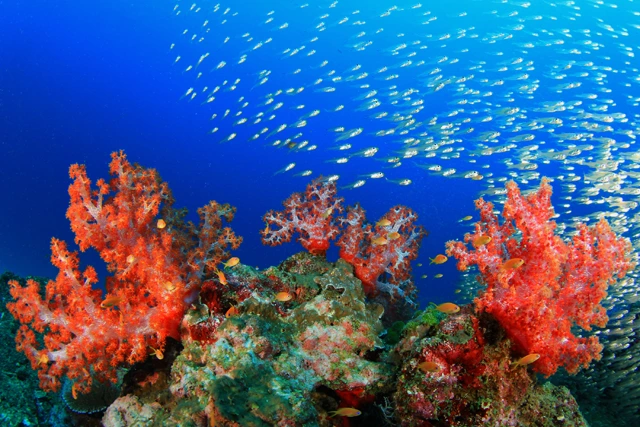 The wider geology matters here too. Indonesia sits on the Pacific Ring of Fire, and its volcanic terrain has shaped much of what makes its reefs so distinctive. Nutrient-rich upwellings around volcanic seamounts feed the plankton that in turn feeds the reef, while sheltered straits between the islands create calm, current-fed conditions in which soft coral gardens thrive. The Philippines, positioned slightly further from the main volcanic arc, relies more on strong tidal currents moving through narrow island channels to deliver a similar nutrient load, producing reefs that favour hard coral and drift diving over the softer, more static gardens found across much of Indonesia.
See our recommendations for coral reef trips in Indonesia and the Philippines.
 Liveaboard Diving
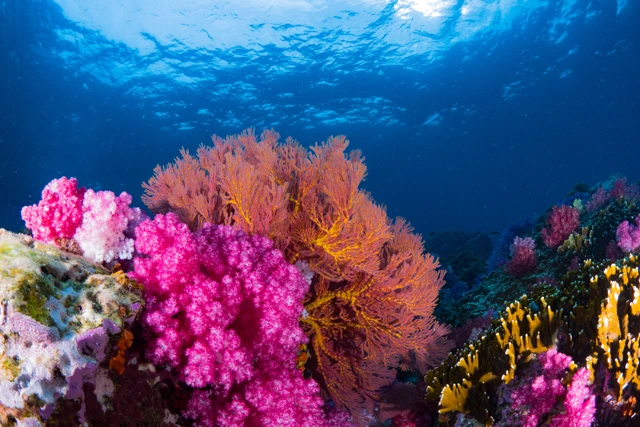
Liveaboards are where each country's diving identity comes through most clearly. Indonesia's classic routes encompass Komodo National Park, home to around 5,700 Komodo dragons and rich action in the country, and the beautifully biodiverse reefs of Raja Ampat.
The size of the archipelago means a multitude of less explored routes are also available taking in the Banda Sea, Alor, Sulawesi and beyond. The choice is huge, and the distances tend to lend themselves to longer liveaboard adventures.
View all our liveaboard holidays in Indonesia.
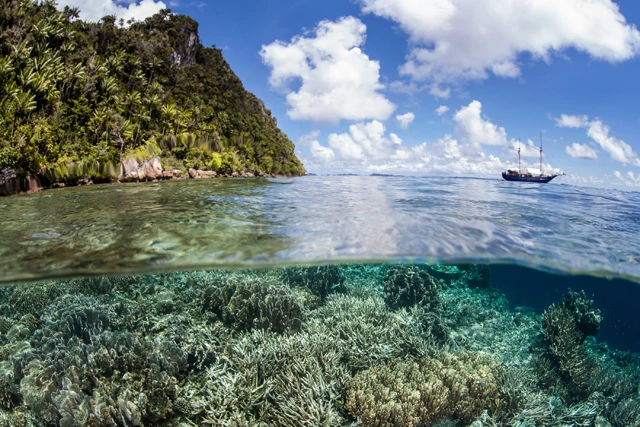 The Philippines built its liveaboard reputation on Tubbataha, but the wider Visayas region has grown into a serious liveaboard circuit in its own right, threading together Malapascua, Cebu, Negros and Bohol. Trips tend to be slightly shorter than their Indonesian counterparts, often seven nights in duration, but can be combined with resort stays for those looking to extend their time. We specilalise in tailor-made diving holidays, so can help plan your trip to your exact requirements - just contact us to discuss the options available.
View all our liveaboard holidays in the Philippines.
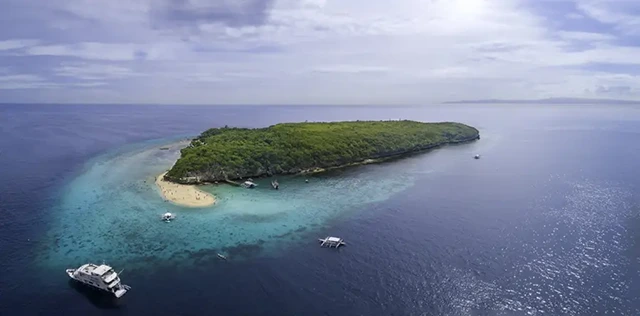 Image of Atlantis Infiniti by David Fleetham
Muck Diving & Underwater Photography
For photographers, both countries offer some of the finest muck diving on earth, though the two scenes have distinct characters. Lembeh Strait, in North Sulawesi, and Ambon Bay are two of Indonesia's flagship muck sites: black volcanic sand punctuated by rare and bizarre critters, among them mimic octopus, hairy frogfish, flamboyant cuttlefish and wonderpus.
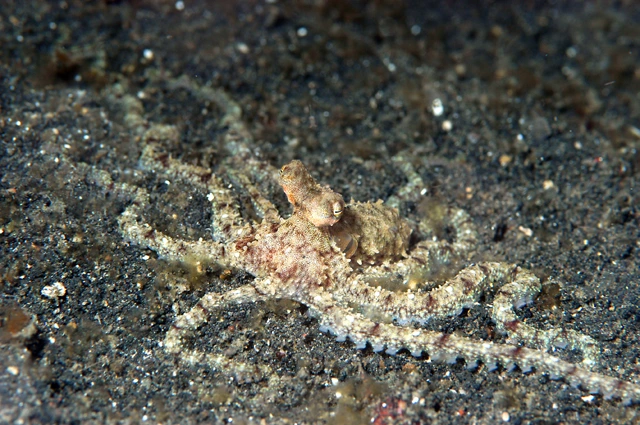 Dumaguete and Anilao perform the same role for the Philippines. Anilao, within easy reach of Manila, has become one of the most concentrated muck diving destinations anywhere, with dive guides adept at finding the smallest and strangest subjects across a cluster of reefs. Dumaguete adds stronger currents and slightly more varied topography to the mix, while both also have excellent reef diving options too.
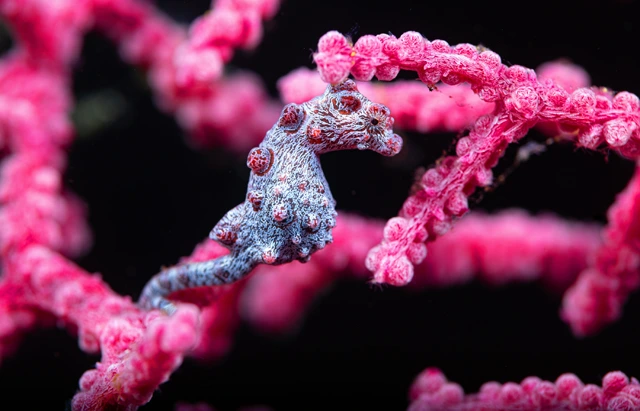 Divers chasing a specific critter checklist will find guides in both countries who treat the search as a genuine specialism, not a sideline to reef diving.
See our recommendations for muck diving trips in Indonesia and the Philippines.
Serious underwater photographers need more than good critters nearby; they need somewhere to to call their base. Dive into Lembeh Resort sits directly on the house reef in Kasawari Bay, giving photographers unguided access to sites such as Hairball and Aw Shucks between scheduled boat dives, alongside a dedicated camera room and a diver-to-guide ratio of just three to one.
In the Philippines, Atmosphere Resort & Spa in Dauin runs its dive centre with an on-site professional photographer and its own fully equipped camera room, with house reef sightings that regularly include frogfish, ghost pipefish and flamboyant cuttlefish before a boat has even left the beach. Buceo Anilao Beach & Dive Resort, further north in Batangas, goes a step beyond even that: its camera room runs to eighteen individual workstations, each with its own power outlet and storage, built specifically around the demands of macro photographers working through more than 50 nearby dive sites.
Alor, further east in Indonesia's Nusa Tenggara region, achieves something rarer still. Proper muck diving in Kalabahi Bay sits alongside vibrant wall and reef diving in the neighbouring Pantar Strait, both reachable from the same base. Divers who want a similar contrast without travelling quite so far east can combine Lembeh with Bunaken Marine Park, pairing a week of muck diving with reef walls and pelagic action only a short boat transfer apart.
See our recommendations for underwater photography holidays in the Philippines and Indonesia.
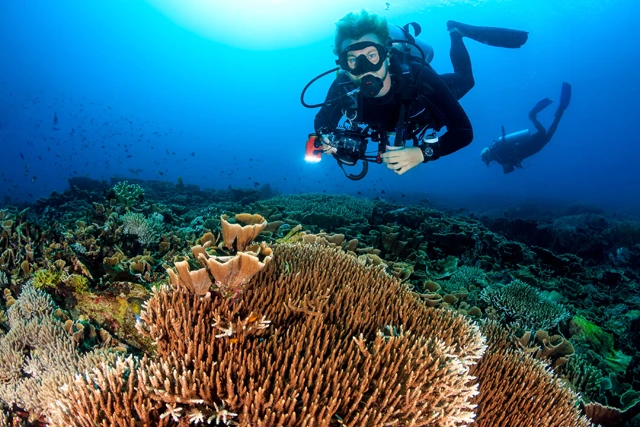 Big Fish Encounters
At the other end of the size scale, big animal encounters are just as strong in both countries. Manta rays are reliable in several locations: Nusa Penida (off the coast of Bali), Komodo and Raja Ampat in Indonesia all offer close encounters with manta rays at cleaning stations and feeding aggregations. In the Philippines, manta rays can be seen reliably at Ticao Pass, along with Tubbataha Reefs National Park.
See our recommendations for manta ray trips in the Philippines and Indonesia.
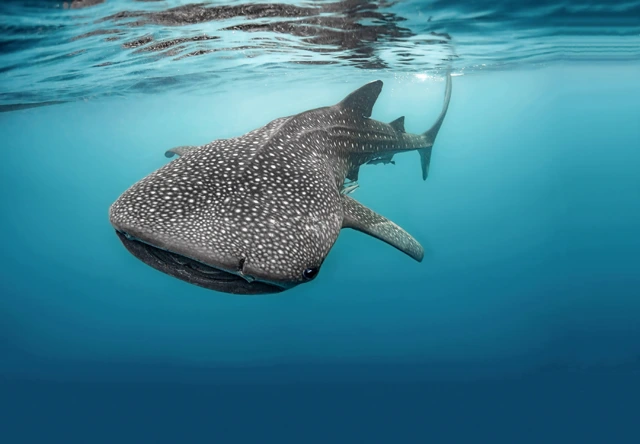
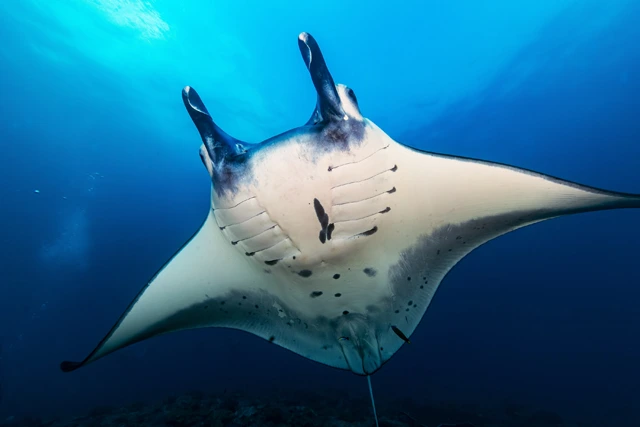 Whale sharks appear in both countries too, though the encounters differ in character. Cenderawasih Bay in Indonesian Papua offers genuinely wild interactions, where whale sharks gather beneath traditional bagan fishing platforms to feed on baitfish, often allowing divers to spend extended time in the water alongside them. Similar interactions also occur in Triton Bay and Sumbawa. Donsol, in the Philippines, runs a longer-established and tightly regulated whale shark programme, though sightings there are snorkel only rather than scuba.
See our recommendations for diving and snorkelling with whale sharks in Indonesia and the Philippines.
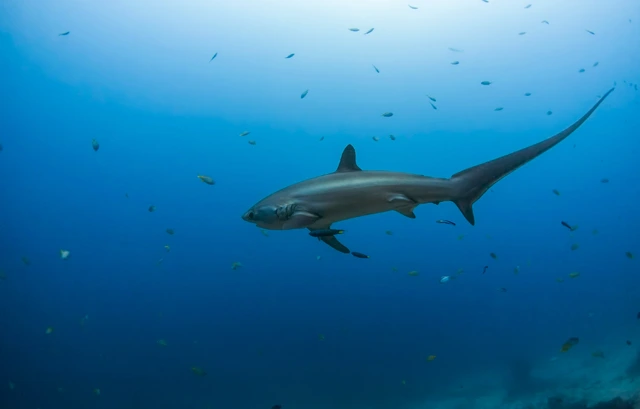
 Thresher sharks are where the two countries diverge. Malapascua's Monad and Kimud Shoals are possibly the only sites in the world offering reliably close, unbaited encounters with pelagic thresher sharks at dawn, a genuine Philippine speciality. Indonesia has no equivalent site with the same consistency, so divers chasing threshers specifically will find the Philippines the stronger choice.
 Bali adds a big fish story of its own. Between July and October, cold upwellings around Nusa Penida and neighbouring Nusa Lembongan draw mola mola, the ocean sunfish, up to diveable depths at cleaning stations such as Crystal Bay, an encounter found reliably in very few other places on Earth.
Wreck Diving
Wrecks are one area where the two countries are not evenly matched. Coron, in Palawan (the Philippines), holds around a dozen Japanese naval and cargo wrecks sunk in a single US air raid in 1944 during World War II, many sitting between 10 and 40 metres and largely intact, encrusted in coral and accessible to divers of varying experience. It stands among the finest wreck diving destinations anywhere in the world.
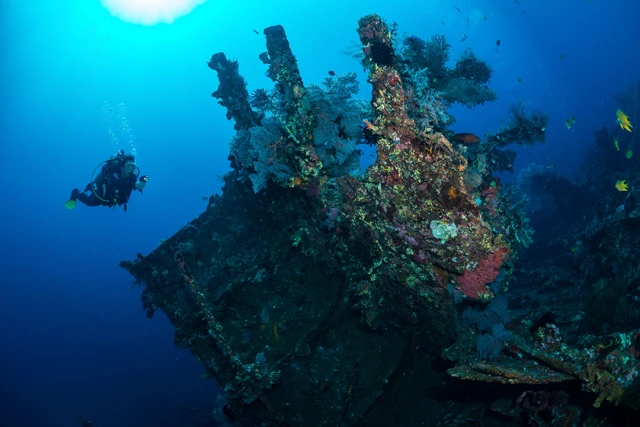
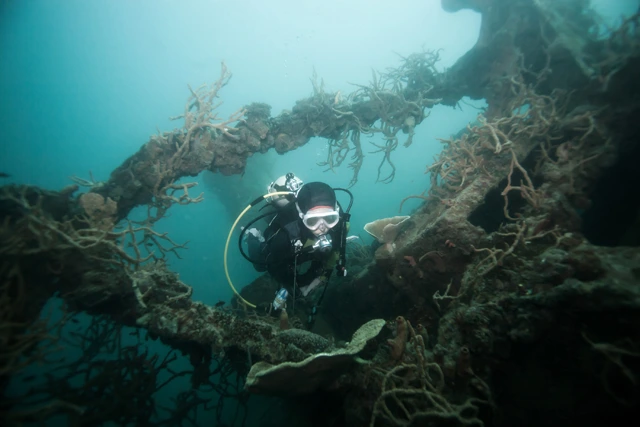 Indonesia's best-known wreck is the USS Liberty, a US Army cargo ship torpedoed in 1942 and now resting just off Tulamben in Bali; close enough to shore to be reached on foot from the beach. It's an excellent single-site wreck dive, rich with soft coral growth and resident schools of fish, but Indonesia has little else at Coron's scale.
See our recommendations for wreck diving in the Philippines and Indonesia.
 Learning to Dive
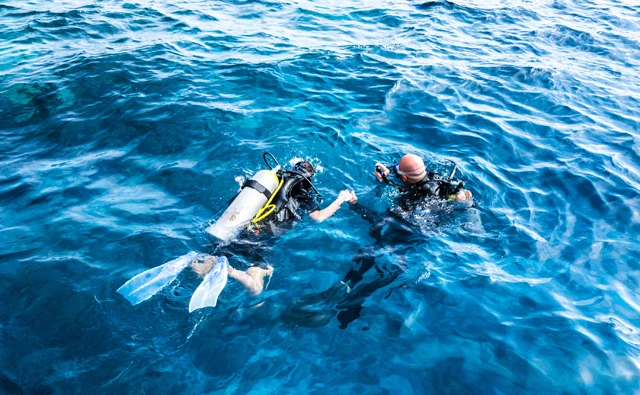
Both countries are well set up for beginners. The Philippines, with its concentration of dive resorts around Puerto Galera, Moalboal and Anilao, offers calm, shallow training sites close to the coast and professional dive centres accustomed to running Open Water courses alongside more advanced training courses.
View our learn to dive holiday in the Philippines.
Indonesia's equivalent learning grounds sit around Bali, Gili Trawangan and the Bunaken area, with similarly sheltered conditions and well-established dive schools. Either country makes a credible first stop for a diver working towards their first certification, with instructors in both keeping the calmer, current-free bays for training and saving the more demanding sites for afterwards.
View our learn to dive holidays in Indonesia.
 Snorkelling
Neither country is diving-only. Raja Ampat's shallow reef flats and Bunaken's coral walls both come close enough to the surface to reward snorkellers with much of what certified divers see below.
In the Philippines, Apo Island's marine sanctuary and the sardine run at Moalboal are two of the most accessible snorkelling experiences anywhere in Asia, regularly bringing snorkellers face to face with sea turtles and, at Moalboal, moving through shoals of sardines several million strong. Non-diving travel companions are well catered for in both destinations.
View our snorkelling holiday in the Philippines.
For snorkellers wanting a full liveaboard trip rather than a resort base, the Bugis offers a rare option in Indonesia: a purpose-built, snorkelling-only vessel sailing through Raja Ampat, Komodo and Wakatobi. She sleeps just eight guests across four cabins, built along sustainable lines down to its reclaimed teak hull and solar power.
View all our snorkelling holidays in Indonesia.
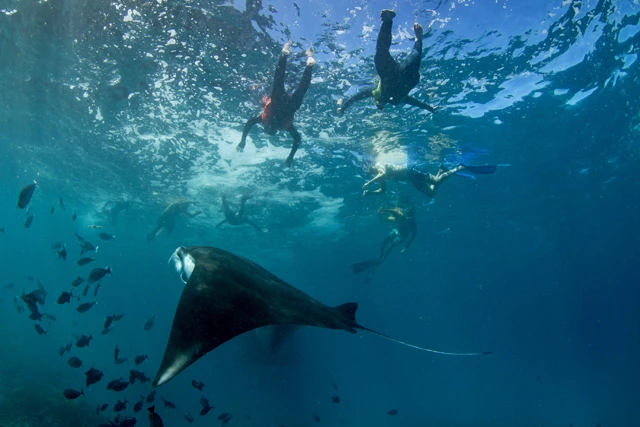 Image by Bugis Liveaboard
Beyond the Reef
Diving aside, the two countries offer distinctly different topside experiences. Indonesia is the world's most populous Muslim-majority nation, home to more than 270 million people and hundreds of distinct indigenous ethnic groups, with cuisine built around bold spices such as rendang and sambal. The Philippines, by contrast, is predominantly Catholic following centuries of Spanish colonial rule, with a population of over 115 million and a cuisine that leans towards meat-based, sweet and sour flavours. English is widely spoken across the Philippines, which some divers find makes logistics slightly more straightforward than in Indonesia, where Bahasa Indonesia remains the unifying language across the country's many regional dialects.
When to Go
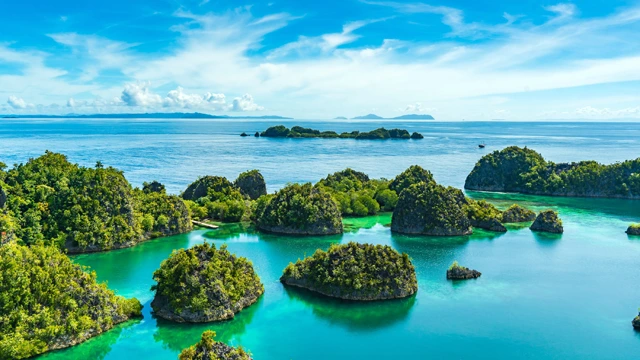
Indonesia's diving is possible year-round, though conditions vary widely by region. Raja Ampat's calmest window runs from November to April, when seas are settled and visibility regularly exceeds 20 metres. Indonesia’s central region, including Bali, Bunaken and Komodo have their best conditions from April through to October. Each location is unique, however, and there is somewhere with great diving at every time of year.
 The Philippines also offers exceptional diving year-round, and plenty of our clients travel well outside the traditional December to April high season. June to November brings higher humidity with typhoons a possibility in the latter months of this period. Tubbataha is the exception. Its liveaboard season runs only from March to June, when the crossing from Puerto Princesa is calm enough to make the journey safely, and outside that window the park is closed to divers entirely.
The Verdict
Both countries earn their place among the world's very best diving destinations, and neither is the wrong choice.
Indonesia attracts divers who want scale and geological diversity: black sand muck sites beside pristine coral gardens, wild whale shark encounters, and liveaboard routes that can run for up to 12 nights without risk of repeating a dive site.
The Philippines suits divers who want variety within a tighter geography: particularly in the lovely Visayas region. The country offers serious wreck diving, a reliable thresher shark site, and some of the finest macro photography anywhere.
We feature 55 hand-picked dive resorts and liveaboards across Indonesia and 28 across the Philippines, along with an experienced team well versed in planning diving holidays to both countries. If you're considering a holiday to Indonesia or the Philippines, get in touch with our friendly team today.