Tantalising Thailand
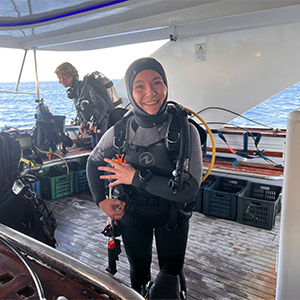
Thailand has been synonymous with scuba diving for decades, welcoming everyone from back-packers getting their Open Water qualification, to more experienced divers discovering the vibrant reefs of the Similan Islands and Richelieu Rock by liveaboard. My time had finally come to jump into the famed waters, sample street food, and experience Thai culture.
The Sea Bees Dive Centre team picked me up from Phuket International Airport and I was whisked away in a very comfortable, and more importantly air-conditioned, van down to Palm Gardens Resort, Phuket.
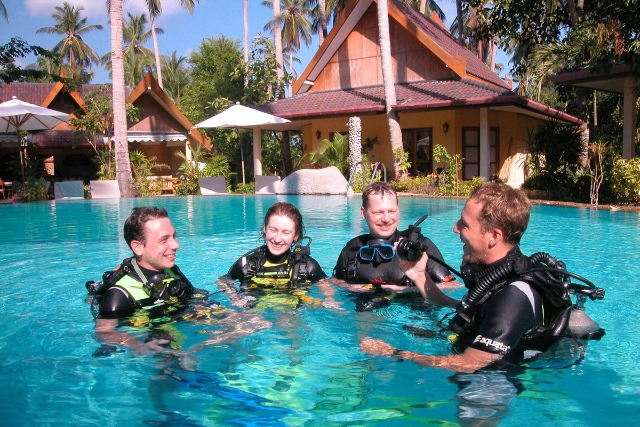
This diver-focused resort is an oasis amongst the hustle and bustle of this tourist-friendly town, and has all you need with simple A/C rooms, swimming pool with diver training area, in-house restaurant, and tropical gardens. The staff are friendly and accommodating, and it has the welcoming community atmosphere that I love about a dive resort.
 The day I joined we were venturing to Phi Phi Island in the Andaman Sea, around half way between Phuket and Koh Lanta islands. This did mean a relatively early morning, but all was forgiven with the delight of a Thai breakfast on board the dive boat. From Phuket, multiple dive sites can be reached in a 1-2½-hour journey.
The day boats from Phuket are spacious and accommodating, making the crossing to Phi Phi very comfortable, with air-conditioned lounges, shaded open-air seating, and full sun deck. I’ve never eaten so much on a day boat, it was amazing!
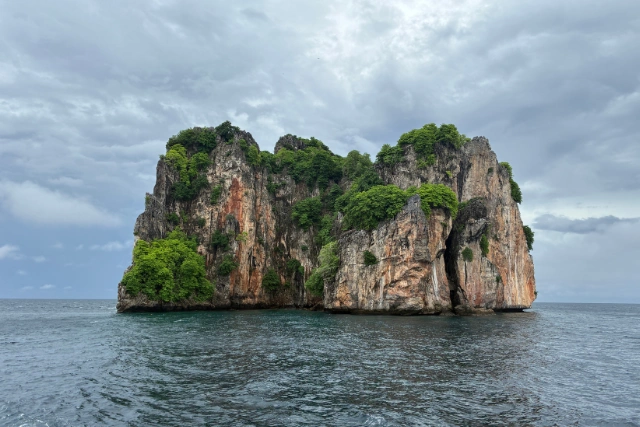
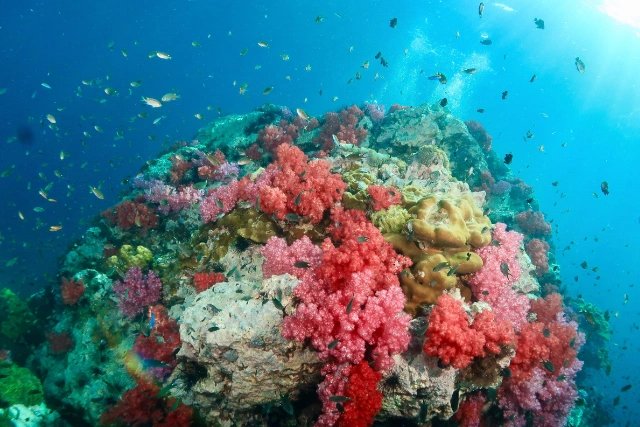
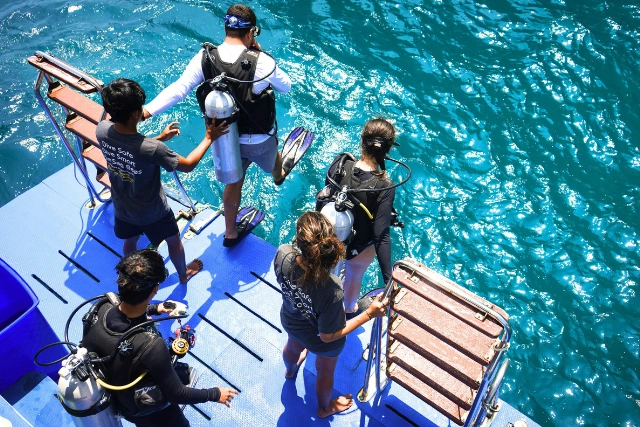 Our first dive site was Koh Bida Nok, beneath the waterline of one of the many towering, iconic limestone pinnacles typical of this area. A giant stride plunged us into the sheltered bay, with terrace-like reefs cascading down from the sheer rock face above. I was instantly hit with colours from all sides; aqua fusiliers and yellow snappers streamed over the reef, while purple soft corals waved in time with the ocean.
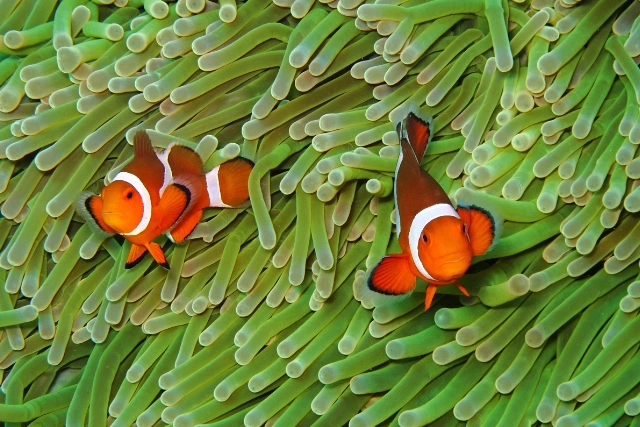
 On rocky outcrops, dozens of barrel anemones were anchored in various states of unfurling, deep blues, bright pinks, and outrageous greens. These of course were home to plenty of characterful clownfish. Clearly used to divers, these fish were ready to defend their claimed home with valour.
Following the reef on our right, the bay became a deep wall, decorated with giant gorgonians, whip corals, and more soft corals. In the open ocean next to us, a school of juvenile barracuda had joined the party, their unmistakable silver barred backs shimmering.
 The next dives, Koh Bida Nai and Shark Point, kept the standards high. A highlight was the rather chunky black tip reef sharks, patrolling the tidal shelf and observing the reef below. Keeping a respectful distance from the divers, they would cruise back and forth. Moray eels of all sizes were squeezed among the reef, and scorpion fish blended with the sponges and hard corals. Each dive had its own punch of colour and individual feel.
 Thailand’s diving season is typically within the dry season, from November to April when diving from Khao Lak through to Phuket, and Phi Phi. At this time of year liveaboards cruise the waters around the Similan Islands, where arguably Thailand’s best diving can be found. Those lucky enough can even spot manta rays and whale sharks here.
Sea Bees are a highly experienced and trusted dive centre and liveaboard operator, with decades of experience in the Andaman Sea. My experience felt personal from start to end, with knowledgeable guides and excellent rental equipment. Their centres are located in a way that twin or triple centre stays are possible, or to even combine a dive resort with their liveaboard, the Marco Polo.
Diving in late June was still wonderful — it did limit the diving area, but travelling in the summer I knew that would be the case. With the sort of diving I had “out of season”, I’m rather envious of anyone there during peak season.
 While in Phuket I took the opportunity to visit Phuket Elephant Sanctuary, which is part of the Dive & Explore Thailand small group tour. Animal tourism can be a controversial topic, and for good reason. Of Thailand’s 8,000 elephants, half are domesticated, and exploitation of these remarkable and intelligent giants has left many with physical and emotional scars.
In 2016 Montri Todtane - an experienced elephant riding operator - decided to take positive action, driven by the feeling that there had to be a better way for both elephants and tourists to interact. Phuket Elephant Sanctuary was founded, providing a safe haven to elephants rescued from the logging and tourism industries.
More recently the organisation has opened Phuket’s first elephant hospital. The 12-hectacre sanitary is currently home to 20 elephants, all but one being female. Each elephant has their own mahout, who stays with them from the moment they arrive, to create a safe bond of trust.
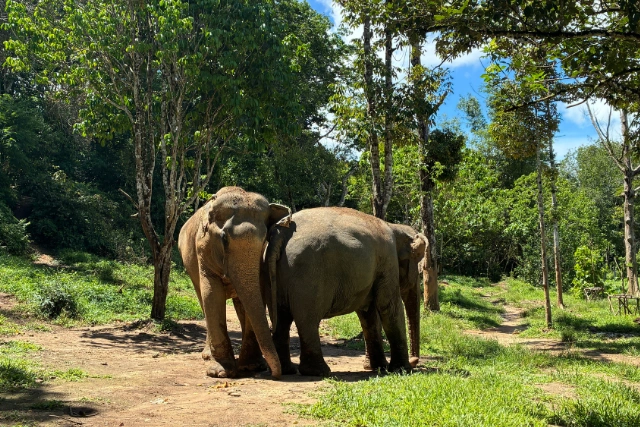
While elephants are typically known for living in close family groups, many here prefer to keep to themselves or stay close to one or two trusted companions with whom they have formed a strong bond — a hard-hitting reality of their past life experiences.
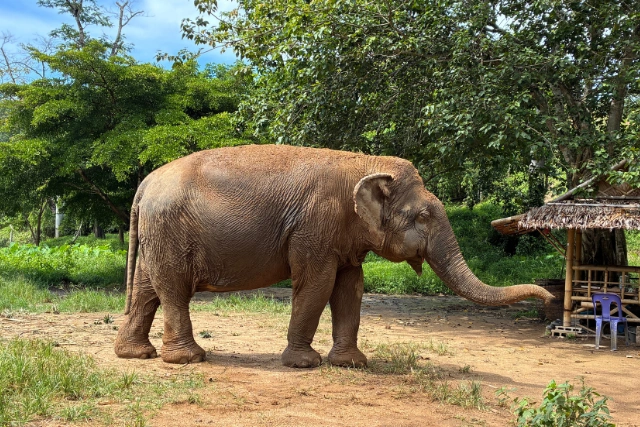 The team are dedicated to each one, in tune with their personality, their favourite food, and their preferred walking routes around the grounds. We had the opportunity to walk among the residents, keeping a safe distance, and observe above from the canopy walkway. I particularly enjoyed the latter as it felt completely unintrusive. We could see the elephants relaxing and even a hint of play, which was a joy to witness.
My visit stirred up a wide range of emotions. As a diver and travel professional, I know that tourism to see specific species is alive and well. I also feel we all have a responsibility in terms of how we do that, choosing ethical operators and learning from educational centres. Phuket Elephant Sanctuary is both of those things. It was an honour to visit and see the truly lifesaving work they're doing.
The founders of Phuket Elephant Sanctuary have created a wonderful place for a lucky few of Thailand’s domesticated elephants, and without tourists visiting, they wouldn't be able to continue saving elephant’s lives.
 During my short visit to Thailand I barely scratched the surface, but it’s evident to see why Thailand still draws so many of us year after year. For divers, warm and vibrant waters await with opportunities for pelagic species; foodies will experience some of the best dishes you’ll ever eat; and for the wanderers amongst us, the opportunity to interact with the kindest people that share their culture without a second thought. I can’t wait to return.
If you feel inspired by Jo's trip to Thailand, discover our collection of Thailand trips, resorts and liveaboards. For further guidance and to book your Thailand dive adventure, contact our expert team today.