Night Diving: The Difference Between Fluoro, Blackwater & Bonfire Diving
Explore a different side of the ocean. Light up the night and experience bioluminescence, float in inky blackwater and find out what miniature marvels rise from the deep, or watch curious creatures gather in the shallows on a bonfire dive. These exciting dives highlight the ocean's most otherworldly delights. Read on to find out more!
Most divers know the ocean as a sunlit world of colour and movement. But when the light fades and the surface world grows quiet, the underwater realm transforms into something altogether different. Night diving has long been a rite of passage for adventurous divers, offering a glimpse of creatures and behaviours that remain hidden through the daylight hours. Conventional night diving, torch in hand, is already a revelation. Yet beyond the familiar torchlit reef lies a set of dive experiences so unusual, so visually extraordinary, that they sit in a category entirely on their own.
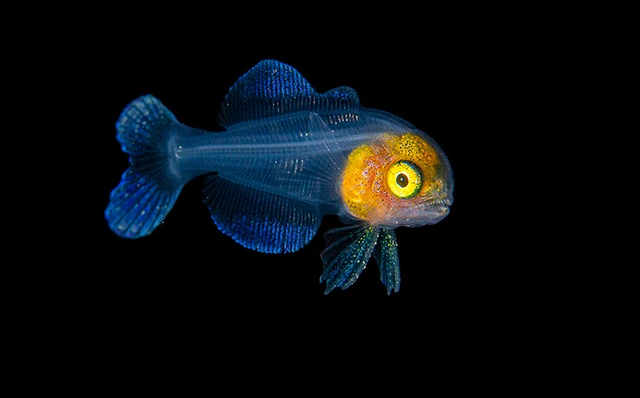 Fluoro diving, blackwater diving and bonfire diving each illuminate the ocean in a different way, revealing a cast of characters that few divers ever encounter. Whether it's a reef erupting in vivid neon under ultraviolet light, transparent larvae drifting through the darkness of the open ocean, or a swirling congregation of nocturnal life drawn to a single light source on the seabed, these experiences redefine what it means to explore the underwater world.
Below, we explore each of these remarkable dive styles, what makes them special, and where in the world divers can experience them for themselves.
Fluoro Diving: The Reef in a New Light
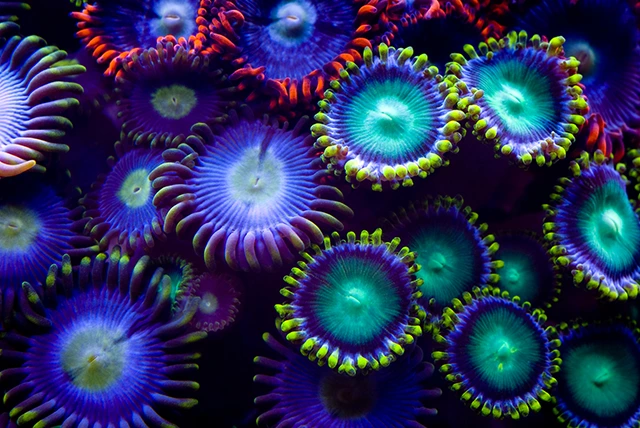 At first glance, a coral reef at night time can appear muted and still. But switch on an UV light, slip on a yellow-filtered mask, and the same reef reveals an entirely hidden dimension. Fluorescence diving, or fluoro diving, exploits the natural biofluorescent properties of many marine organisms, causing them to absorb ultraviolet light and re-emit it as vivid, glowing colour. Corals that appeared brown or beige by day suddenly blaze in electric greens, fiery oranges and deep crimson. Anemones pulse with neon intensity. Small fish, crustaceans and even certain species of shark display patterns that are entirely invisible under natural light.
The effect is startling, even for experienced divers. What appears to be a well-known dive site becomes an unfamiliar landscape, its geometry unchanged but its character entirely transformed. Biofluorescence is thought to play a role in communication, camouflage and mate selection for some species, though scientists continue to study its precise function. For divers, the science matters less in the moment than the sheer spectacle: a reef that appears to have been painted in luminous colour by an invisible hand.
Fluoro diving requires specialist equipment, specifically an ultraviolet torch and a barrier filter fitted to the mask or dive light, which blocks out the blue light and allows the emitted fluorescent colours to be seen clearly. The experience is available at a growing number of dive destinations worldwide, and is suited to a wide range of experience levels. It's an accessible and visually extraordinary introduction to night diving for those new to scuba diving after dark, whilst offering experienced divers a genuinely fresh perspective on familiar reefs.
Experience Fluoro Diving at Eri Resort, North Malé Atoll, Maldives
For divers seeking to experience fluoro diving in exceptional surroundings, Eri Resort in the Maldives is an outstanding choice. Set on a small island in the North Malé Atoll, this intimate resort combines relaxed, unhurried charm with access to some of the finest diving in the Indian Ocean.
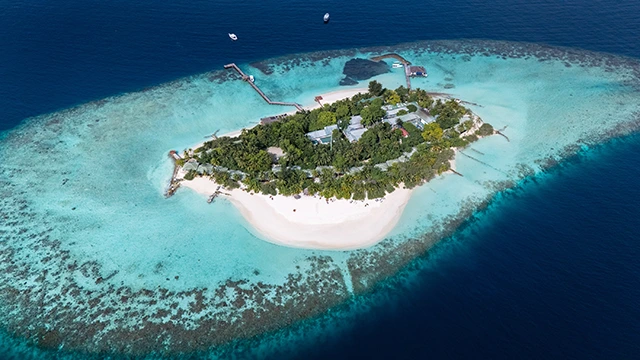 The resort provides access to more than 45 dive sites, encompassing the full range of Maldivian diving. Divers can explore colourful reef systems and submerged thilas, visit manta cleaning stations and encounter reef sharks and pelagic species in the blue. By day, the diving is first class; by night, the resort's fluoro diving programme offers a spectacular counterpoint, as the reef surrounding the island lights up in vivid bioluminescent colour.
Eri Resort is well suited to divers who want to combine high-quality daytime diving with the opportunity to try something genuinely unusual after dark. Its intimate atmosphere and strong dive operation make it a relaxed, rewarding base from which to explore the very best the Maldives has to offer, above and below the waterline.
Blackwater Diving: Into the Open Ocean at Night
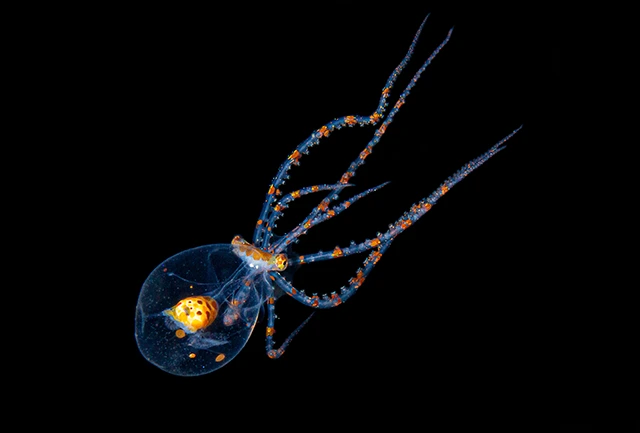 If fluoro diving transforms the familiar, blackwater diving takes scuba divers somewhere altogether unknown. Conducted far offshore in open water, often over depths of hundreds or even thousands of metres, a blackwater dive involves descending at night into an inky, featureless column of water and waiting for the ocean's smallest and most extraordinary inhabitants to rise around you.
The driving principle behind blackwater diving is the daily vertical migration of zooplankton and the creatures that feed on them. Every night, vast quantities of microscopic and near-microscopic life ascend from the mesopelagic zone, the twilight layer of the ocean that lies between roughly 200 and 1,000 metres below the surface, towards shallower waters in search of food. This nightly migration, one of the largest animal movements on Earth, brings with it an astonishing variety of life: paper-thin larval fish whose internal organs are visible to the naked eye, miniature squid no larger than a thumbnail, translucent crustaceans, and the larval stages of creatures that will later develop into recognisable species such as eels, crabs and shrimps.
The technique involves suspending a string of bright lights in the water column, typically from the dive vessel, which attracts the migrating organisms. Divers hover neutrally buoyant in the surrounding darkness, their own torches illuminating a constantly shifting stream of life that drifts in and out of the beams. Subjects appear almost from nowhere and dissolve back into the dark just as quickly, creating an experience that feels as much like floating in space as diving in the sea.
Blackwater diving is widely regarded as one of the most technically demanding and visually rewarding experiences available to recreational divers. It demands strong buoyancy control, comfort in open water with no reference points, and the ability to remain calm in conditions of near-total darkness. For experienced divers, however, the rewards are considerable. Underwater photographers in particular are drawn to blackwater diving, which offers the opportunity to capture images of creatures that have never been photographed before, or that are so rarely seen they have no common name.
Experience Blackwater Diving at Buceo Anilao Beach & Dive Resort, Philippines
Anilao, situated on the Batangas Peninsula south of Manila, occupies a special place in the world of underwater photography and macro diving. Located at the heart of the Coral Triangle, the region possesses some of the highest marine biodiversity on Earth, and its dive sites are renowned for the extraordinary density and variety of life they support. It's within this exceptional setting that Buceo Anilao Beach & Dive Resort has established itself as one of the Philippines' leading dive operations.
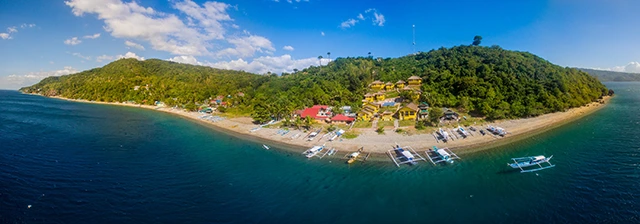 The resort provides access to more than 50 dive sites, ranging from vibrant coral gardens and dramatic walls to sheltered bays rich in fascinating macro life. Its purpose-built camera facilities are among the finest available at any resort in the region, with dedicated camera tables, rinse tanks and charging stations that cater specifically to the needs of serious underwater photographers.
The resort's expert guides lead regular blackwater dives into the waters off Anilao, where the combination of deep water close to shore and exceptionally high biodiversity makes for outstanding conditions. Subjects regularly encountered include larval mantis shrimps, juvenile frogfish, pyrosomes, siphonophores and a host of other gelatinous and near-transparent organisms rarely seen by divers elsewhere. For those who want to push their diving into genuinely unexplored territory, Buceo Anilao is one of the finest places in the world to do so.
Bonfire Diving: Gathering Around the Light
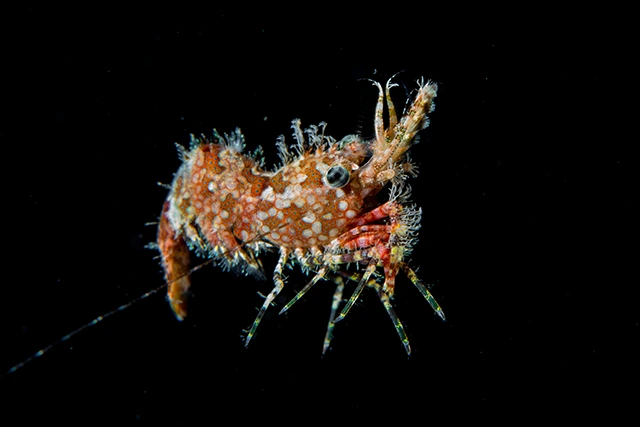 The third of these extraordinary nocturnal dive styles is, in certain respects, the most accessible, though no less remarkable for it. Bonfire diving, named for the cluster of bright lights placed on the seabed that recall a campfire in the shallows, is a shallow-water night dive designed to attract and observe the ocean's smallest and most intriguing nocturnal inhabitants.
The principle is elegantly simple. Powerful lights are positioned on a sandy or silty seabed in relatively shallow water, typically between five and 15 metres. The lights attract plankton, and plankton attracts predators. Within a short time, the light source becomes the centre of a miniature ecosystem in motion: swirling clouds of zooplankton, pulsing jellyfish and comb jellies, tiny shrimps and crabs, larval fish and cephalopods, and the larger creatures that hunt them. The scene resembles nothing so much as an underwater fireside gathering, each participant drawn in by the glow.
What makes bonfire diving particularly compelling is the sheer unpredictability of what might appear. Rare and unusual species are regularly encountered at the light, including mantis shrimps on the hunt, juvenile fish still bearing the ornate fins and markings of their larval stage, and, in certain locations, larger pelagic visitors drawn in from the surrounding water. The experience rewards patience and close observation, making it a natural fit for macro photographers, who can find an ever-changing parade of subjects within arm's reach.
Bonfire diving is also an excellent introduction to night diving more broadly. The shallow depths, fixed light source and controlled conditions provide a reassuring framework for divers trying night diving for the first time, whilst the density and variety of life on show means the experience is equally engaging for those with considerable night diving experience.
Experience Bonfire Diving at Magic Island Resort, Moalboal, Philippines
Moalboal, on the south-western coast of Cebu island in the central Philippines, is one of the country's most celebrated diving destinations. The area is best known for its extraordinary sardine run, in which millions of fish move in vast, shimmering shoals just metres from shore, as well as for the quality and variety of its macro diving, vibrant coral walls and the possibility of encountering thresher sharks and other pelagic species in the blue.
Magic Island Resort is well positioned to take full advantage of this exceptional diving. Situated with direct access to nearby reefs, walls and underwater caverns, the resort caters to divers of all levels and interests, with a particular strength in macro and night diving. Its experienced team conducts regular bonfire dives from the resort, guiding guests through the nocturnal spectacle that unfolds around the lights.
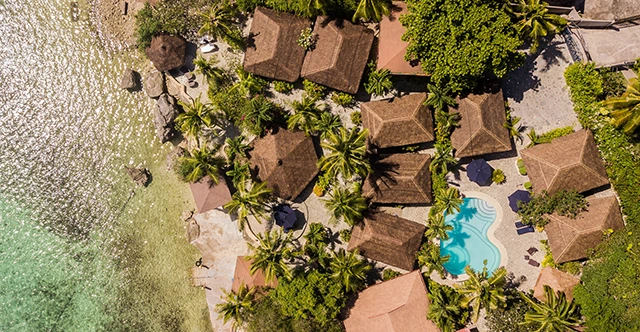 Given Moalboal's exceptional biodiversity, bonfire dives here consistently produce a remarkable variety of subjects, from larvae and crustaceans to the occasional cephalopod or juvenile fish displaying markings rarely seen in adult form. For underwater photographers and curious divers alike, the combination of outstanding daytime diving and the resort's expert-led night dive programme makes Magic Island Resort one of the most rewarding bases in the Philippines.
Discover the Ocean After Dark
Fluoro diving, blackwater diving and bonfire diving share a common quality: each one reveals a side of the ocean that the majority of divers never see. Whether it's the hidden fluorescence of a familiar reef, the ghostly parade of deep-sea larvae rising through open water, or the swirling nocturnal theatre that unfolds around a light on the seabed, these experiences offer a profound reminder of how much of our ocean remains to be discovered.
They are not, for the most part, extreme or technical dives in the conventional sense. What they require is curiosity, a willingness to look closely and a readiness to encounter the unexpected. For divers who feel they have seen what the reef has to offer by day, diving after dark has the potential to make the familiar world feel entirely new.
Read more about our recommendations for the top night dives, or to find out more about holidays that include fluoro, blackwater or bonfire diving, speak to our team of experts. We can help you plan the perfect itinerary around your interests and experience level.