Unique Dive Sites of the World
In this blog, we highlight some unique dive sites and discover why they are just a little (or a lot) different to the norm.
At Dive Worldwide, our clients are always ‘front and centre' in our minds when the team sources new destinations. Of course, many places around the world are very well established in the diving community, but just occasionally, our research or just a chance conversation with fellow divers may lead us to some very exciting and unique diving destinations. Some sites may be closer to home and others may be pretty inaccessible, but we always like to have something in our ‘back pocket' to offer into the mix.
One of the most common questions is “where's the best place to see...” but that often means those locations are well travelled and you would not be alone in seeking them out. In no particular order, here are a few gems we would highly recommend.
Dive Between two Tectonic Plates
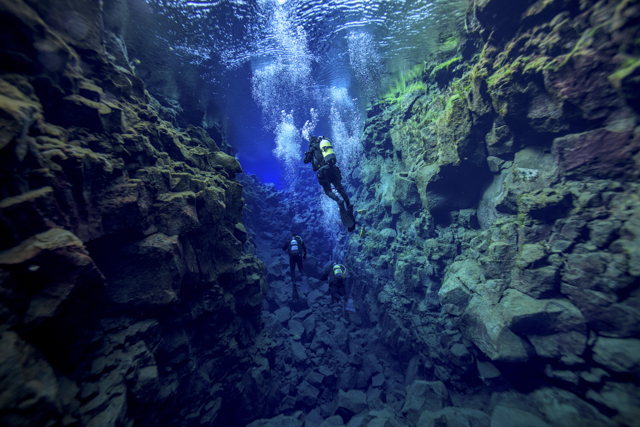
The Silfra dive site in Iceland is a natural fissure, formed by the divergent tectonic drift of the Eurasian and North American plates, which are steadily moving apart by about 2cm a year. The flooded ravine is infamous for its cold waters (can be as low as 2°C, so dry suits are a must), but the underwater visibility is epic and can reach up to 100m.
 Dive in Geothermal Waters
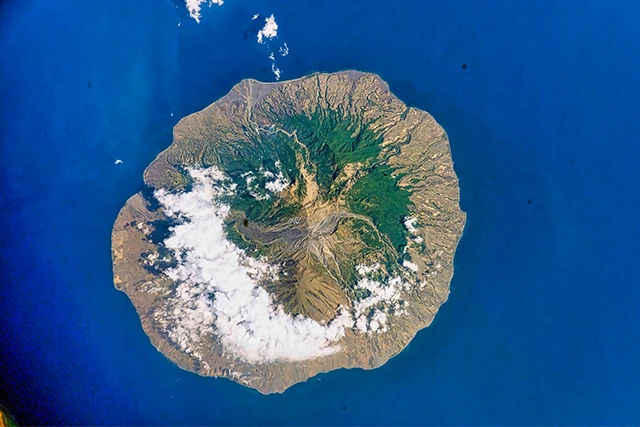
Hot Rocks is part of a northern Komodo itinerary in Indonesia. As the name suggests, the rocks are superheated by the neighbouring volcanoes. It is very unique to listen to the dive site briefing, as an active volcano goes about its business in the background, throwing steam into the air every 30 minutes. Once underwater, the dive site is mostly black sand and critters, which is relatively unusual in itself, except in a patch of water, the superheated thermal vents show themselves on the sea bed as bubbles of methane and hot water. Flushing your wetsuit has never felt so good!
 Dive with Marine Iguanas
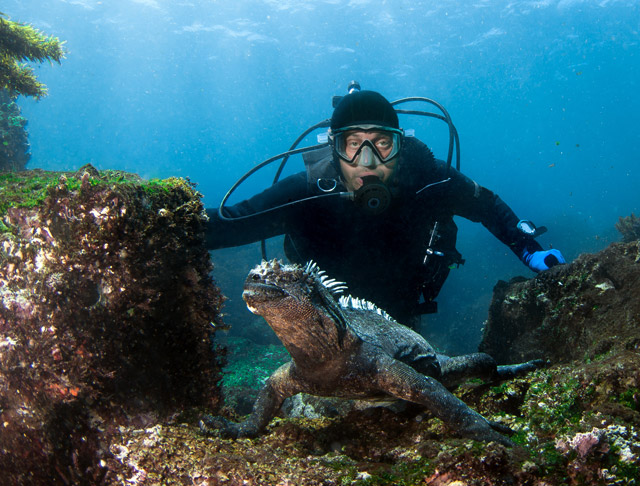
Cabo Douglas and Punta Vincente Roca dive sites in the Galapagos Islands offer you the very rare opportunity to dive or snorkel alongside the famous swimming marine iguanas. These are the only sea-going lizards in the world and can only be found in select areas of the Galapagos Islands. They will rest in the sunshine to store up their energy before taking to the waters (mostly close to the shore) to feed on the algae along the coastline. These dive sites are only accessible by a few liveaboard itineraries.
 Immerse Yourself in Mexico's Cenotes
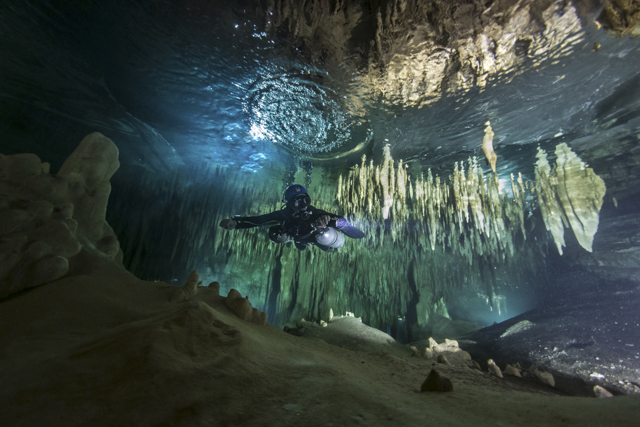
The Cenotes of Yucatan Peninsula in Mexico, are truly stunning dive sites. A cenote is a sinkhole in the limestone as a result of the collapse of the roof of a cave. This reveals the groundwater, which can be accessible to almost any level of diver and snorkeller. The waters are mostly fresh, though some cenotes can mix with sea water. As the rainwater is filtered through the limestone before entering the underground river systems, it tends to be exceptionally clear. Although there are several thousand cenotes all across the peninsula, only a handful are open to dive tourism, but those are still spectacular. Some cenotes initially appear to be just a small gap in the rocks, whereas others are more like open water ponds, which open up below the surface to reveal a labyrinth of caverns and caves. Although there is little marine life in the cenotes, they can make for superb photography.
 Dive with Sea Kraits at Snake Island (Manuk Island), Banda Sea
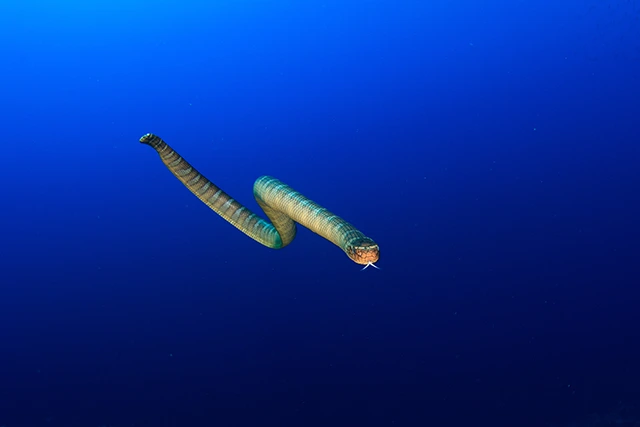
There’s nothing quite as startling as coming face to face with a snake underwater. While rare in most dive spots, certain Indonesia itineraries visit Banda Sea and include sites like Manuk and Gunung Api, where you might encounter up to 20 individuals on a single dive. The most common in this region is the olive sea snake, named for its distinctive colouring. These marine reptiles can grow over two metres long and hunt a variety of prey, including fish, crustaceans, molluscs and eggs. Though primarily nocturnal, they’re often active during the day too. Adults must surface every couple of hours to breathe, but otherwise, they live entirely beneath the waves.
“Diving with hundreds of banded sea kraits at Manuk Island, Banda Sea, was definitely one of my more interesting dives! Beautifully elegant in the water, they glide among the reef and seem to dance in the blue. They're rather curious, though, often when watching one, I’d find another approaching to say hello. Famously venomous, they pose very little threat to divers … my brain had a hard time remembering that in the moments when they appeared beneath me!“ - Jo Charter
 Night Diving with Manta Rays in the Maldives
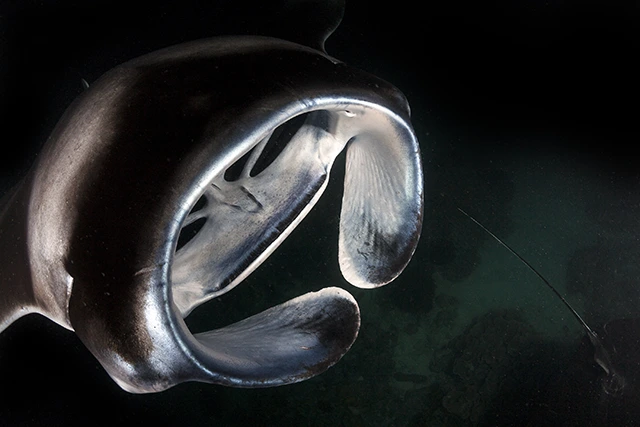
Night diving is often a surreal experience, but unique to this part of the Maldives – widely considered one of the world’s top scuba diving destinations – is the chance to swim in inky black waters with one of the ocean’s most beloved giants: manta rays. A bucket list experience for many, these waters attract travelling pelagics drawn in by the nutrient-rich currents. On select itineraries, you can board a boat and head to Fesdhoo and experience something extraordinary. Floodlights off the back of your boat draw in clouds of plankton, which in turn attract hungry mantas sweeping in from the dark. Slip into the water and watch them glide and feed right in front of you.
This site is visited when the liveaboard comes across the North Ari Atoll during Master liveaboard Central Atolls or Central Atolls and Baa itineraries.
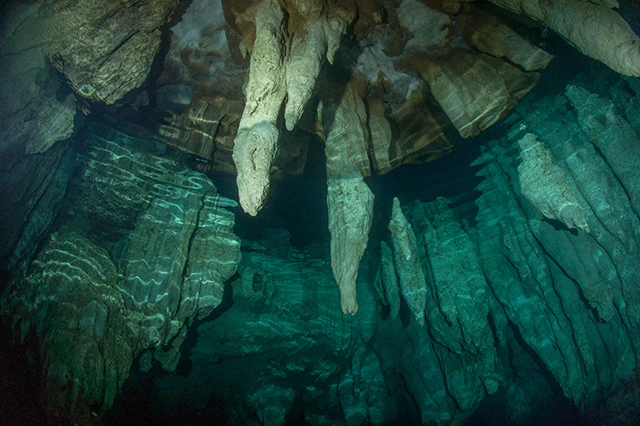
 Explore the Chandelier Caves in Palau
The Chandelier Cave in Palau is a truly exciting and unique experience for divers looking to do something different. Only accessible via a hidden entrance four metres below the surface, this magnificent five-chamber cave system offers excellent visibility and hides towering stalactites and stalagmites that inspire its name. Weave your way through the various chambers and past the soldierfish and cardinals guarding the entrances to discover a unique array of cave formations, home to crabs, small shrimp, and a variety of sponges. You may even be rewarded with a sighting of the rare mandarinfish. Turn off your lights for a truly memorable moment and watch as the sunlit entrances glow an otherworldly shade of green in the stillness of the dark waters.
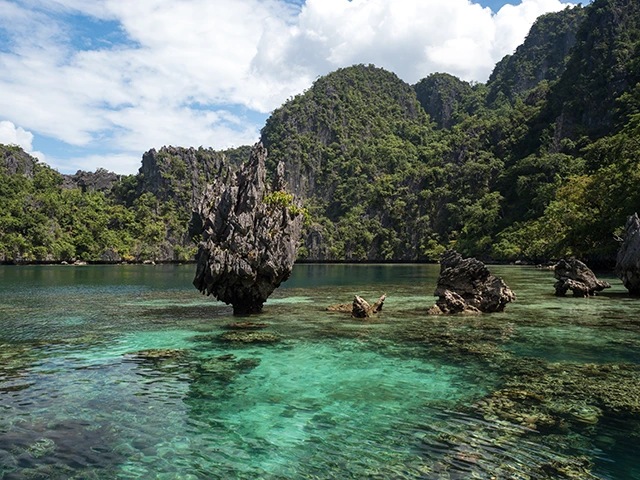
 Experience a Thermocline in Barracuda Lake, Philippines
Named after the ginormous – you guessed it – barracuda found in its waters, Barracuda Lake in Coron Bay sits just 20 minutes from the main island. Climb over the limestone that guards its borders and dive in to experience an otherworldly atmosphere. Unique rock formations, small caves and still, clear waters create a dramatic scene. But the real showstopper is the lake’s thermocline at around 15 metres, where cooler freshwater (approx. 28°C) meets a much hotter saltwater layer (approx. 37°C) in a surreal, geothermal clash.
Straight from team member Shem Tarko’s logbook: "Freediving in Barracuda Lake in the Philippines is like entering another world - its crystal-clear waters, dramatic limestone formations, and thermoclines create a surreal and unforgettable experience."
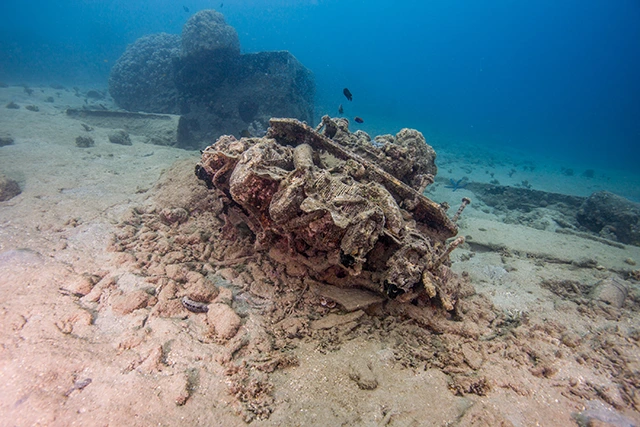
 Dive Million Dollar Point, Vanuatu
A bit of an oddity, Million Dollar Point off Espiritu Santo in Vanuatu is a gold mine for snorkellers and scuba divers. Dive among a fortune’s worth of military tanks, guns, and jeeps slowly eroding beneath the waves. Dumped out of spite by the US military after WWII – so the British and French couldn’t salvage the equipment – this site now offers an unusual mix of wrecks, coral, and history to explore.
 Wreck Dive in a Fjord in Norway
Dive backwards in time to a scattering of WWII shipwrecks and kelp forests hidden in the icy, fjord-laced waters off Norway’s coast. Once of immense strategic importance, this coastline was heavily targeted during WWII. German fighters were stationed at Herdla until Allied forces destroyed the port, giving bombers free rein to pick off marine traffic heading north and south. In the aftermath of this searing assault, the coast was littered with wrecks. Today, over 25 remarkably preserved shipwrecks remain – including the vast German freighter Frankewald – offering divers a haunting and fascinating glimpse into the past.
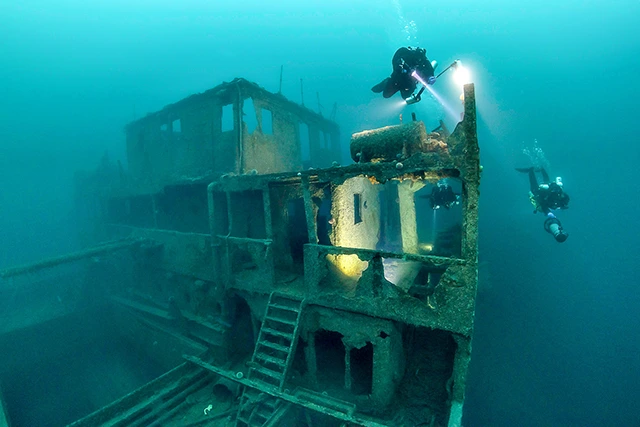 Image by Alex Dawson
Contact our expert team to create your unique diving experiences today.