Tobagonian Adventure: North to South
The small island of Tobago has plenty to offer divers, including vibrant coral reefs, wrecks and drift dives to name a few. Sales Consultant Emily Chappell visited late last year...
As the year started drawing to a close I thought my 2019 was rounding off nicely and then things got even better when I had the opportunity to visit the untouched Caribbean island of Tobago.
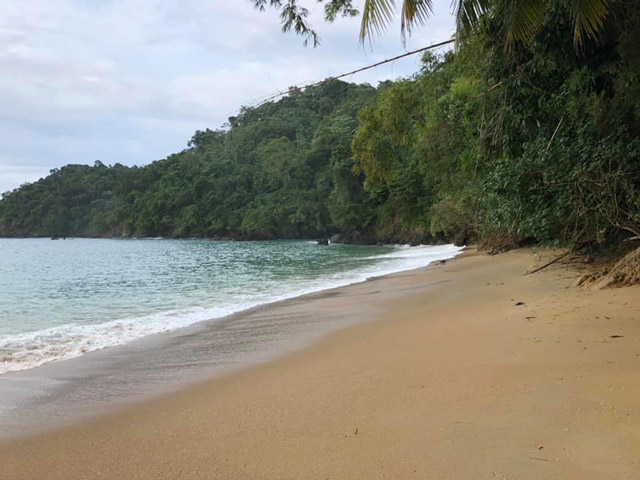 Organised by the Tobago Tourism Agency, I accompanied two dive shop owners and a writer for DIVE magazine to the southern Caribbean to explore what the island of Tobago had to offer above and below the waters; from the Caribbean to the Atlantic coastline.
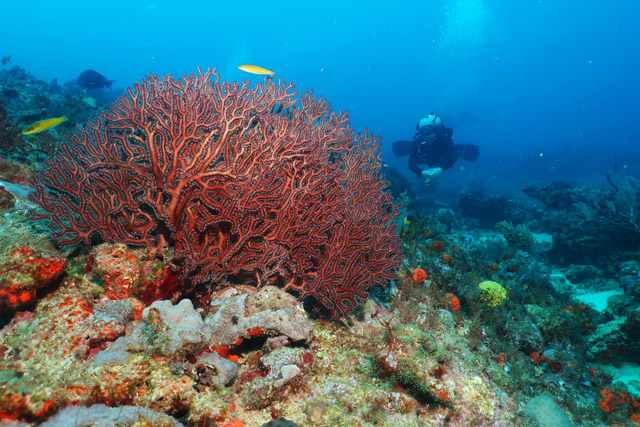
Tobago offers excellent year-round diving at a range of dive sites, suitable for both novice and experienced divers, with some sites providing sheltered conditions perfect for skills development and others that supply fast currents and thrilling drift conditions that the area can be renowned for. Whichever you prefer, Tobago boasts soft coral and sponge-dominated reefs that comprise some of the healthiest underwater ecosystems in the Caribbean.
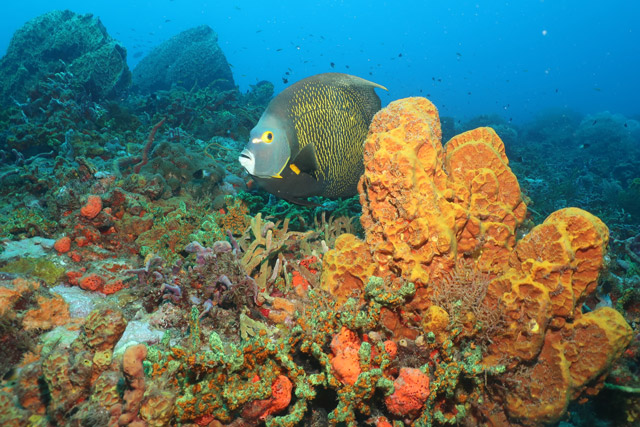 Tobago is reached by direct flights either with BA or Virgin Atlantic (short refuel stop in St. Lucia required), though other airlines fly indirect if you wanted to include a stop in the US or other Caribbean locations. Water temperatures range between 25°C and 28°C throughout the year and visibility is typically anywhere between 10-35m. January to May is considered the best season for diving with calmer sea surface conditions and better visibility. Outside of these months, seas can be turbulent and the weather rainy, with periods of lowered visibility, associated with the wet-season run-off from the Orinoco River. This having been said, the influx of nutrients from the Orinoco run-off – combined with the Guiana Current coming from South America – supplies plankton-rich waters that supply food for the reefs and the odd pelagic too! It is in these periods that charismatic species will visit Tobago’s diverse marine ecosystem; including manta rays, eagle rays, sea turtles and barracuda.
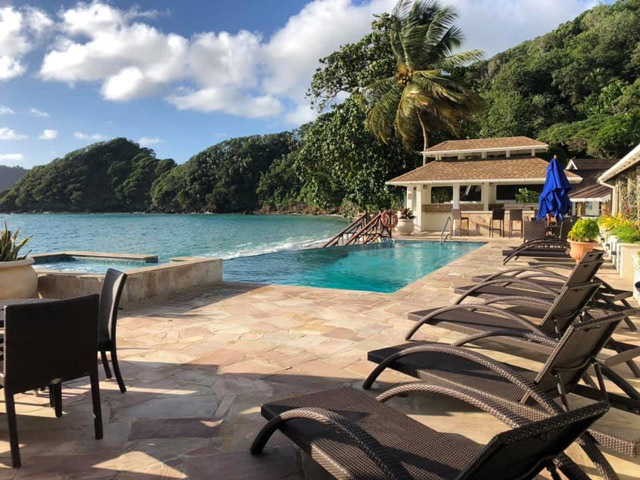
On the eve of our arrival there was only time to gaze out of the minibus window en-route to Speyside where we would be staying at Blue Waters Inn for the next four nights. Blue Waters is a gorgeous ocean-front property with on-site dive centre, restaurant, games room and swimming pool (complete with jacuzzi).
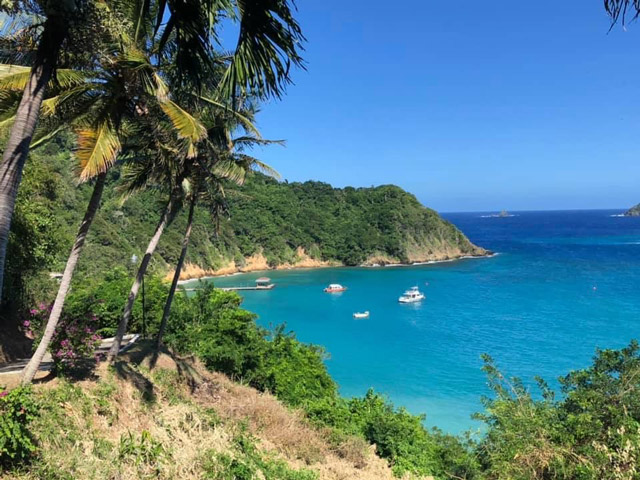
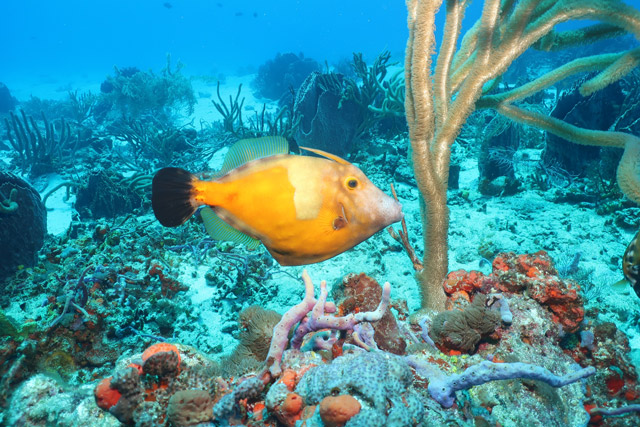
 The next day saw us departing for a days diving with Tobago Dive Experience in Speyside. We completed two morning dives and an afternoon dive with lunch in between. We dived at local dive sites around Goat Island and Little Tobago; about 20 minutes speedboat ride away. My favourite site of the day had to be Japanese Garden. A drift dive with some interesting topography, the ocean bottom was littered with sea whip soft corals, barrel sponges and gorgeous green hydrozoas. Creature highlights throughout the days diving included a glimpse of a southern stingray, a juvenile hawksbill turtle, Caribbean spiny lobsters, white-spot filefish, several large queen angelfish, garden eels, lionfish (an invasive species in the Caribbean, often removed to control populations) and a speckled moray eel. A nice species list for our first days diving!

 Day two offered us two morning dives at the MV Roundtable wreck and then Aquarium. The Roundtable was surrounded by sponges and glassy sweepers and we caught sight of hogfish and rock beauty’s too. In the afternoon we took a gentle hike through a rainforest track to Argyle Falls, located about 20 minutes drive from Speyside. The hike gave us our first taste of the spectacular bird life that Tobago has to offer topside. Our guide pointed out key bird and plant species including the cocoa tree, a rufus-tailed jacamar, mot-mot and the national bird of Tobago… the chakalaka. The falls themselves were gorgeous standing at 54 metres with a 3-tier system of pools. Two of us braved the cold, but refreshing, water in the bottom pool, before we made the calm hike back to base.
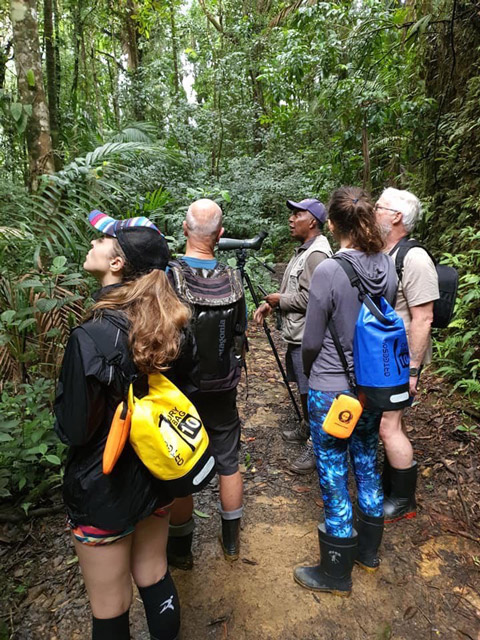 The following morning we were up again, this time dressed in waterproofs rather than wetsuits, and we began the drive to the national park to begin a rainforest hike with a local well known guide: Newton George. Newton guided us through the forest pointing out bird species and other things like the nest of a trap-door spider! We also found a whip-tailed scorpion which I kept my distance from! It rained throughout the entire tour (something you come to expect in a rainforest) but it was such a wonderful privilege to be listening to the natural sounds of the rainforest during this rain storm. It was a lovely morning. The afternoon was ours at leisure, though one dive went out with Blue Waters Dive’N from the hotel if we wished to join.
Day four we checked out of Blue Waters and drove around the north coast to Charlotteville. For most of the day, we spent time with ERIC (Environmental Research Institute Charlotteville); joining them for two dives along the rough coastline. ERIC Dive Centre offers dive training, coral reef ecology, survey and monitoring training and dive excursions and expeditions with marine biologists for environmentally conscientious divers. As part of our time with ERIC we received a briefing and lecture about the activities they undertake and we also got the opportunity to outplant some staghorn coral (Acropora cervicornis) on one of the nearby reef sites. Sea conditions were rough on this day, but on the dives we were still able to see pink sun corals littering the rocky walls and outcrops. Gorgonian sea fans decorated the reef flats and we even saw a colony of elkhorn coral (Acropora palmata) as we approached the shallows.
In the afternoon we took the north road around the picturesque coastline, and eventually arrived at our second hotel stop – the Shepherd’s Inn in Crown Point area. Located in Southern Tobago, Crown Point is full of friendly people and offers visitors a lively atmosphere, with plenty of restaurants and bars. The Shepherd’s Inn is an intimate hotel and diver-friendly, with quaint wooden-style chalets and rooms. Bright and colourful, the hotel has an on-site restaurant with plenty of food choices and is a short walk from the beautiful beaches of Store Bay and Pigeon Point.
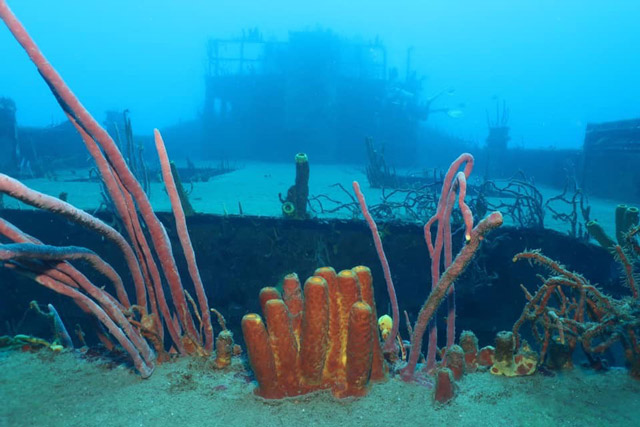
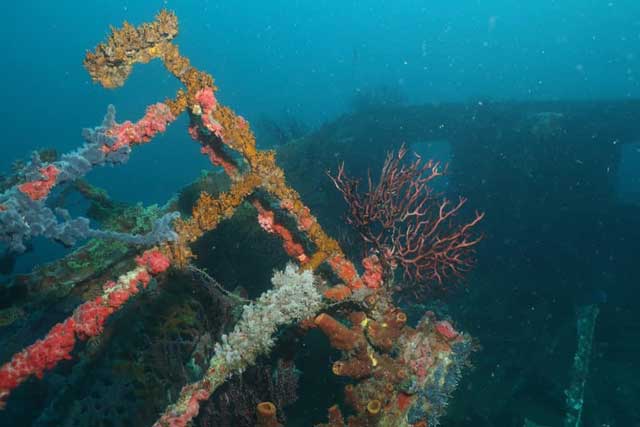
The day after our arrival at Crown Point, we made our way to the local jetty to embark on a diving adventure with Black Rock Divers. Black Rock Divers are based at the Grafton Beach Resort and we joined them for two morning dives to the famous MV Maverick wreck and Dutchman’s Reef. The Maverick is a stunning wreck, completely encrusted with life. Sponges and corals decorate the rusted ship, creating bursts of pinks, oranges and reds, pleasing to the eye.
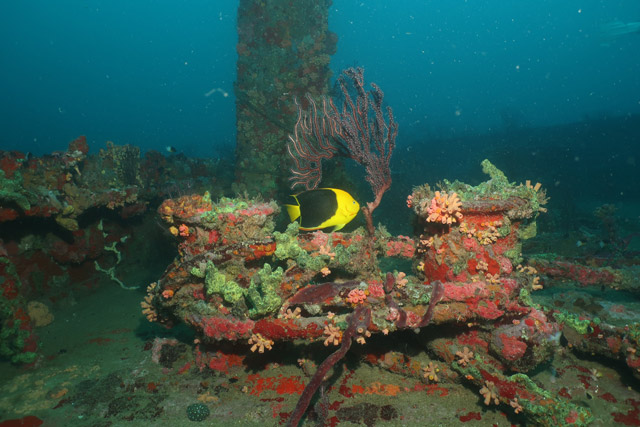 Moving around the wreck, we saw rock beauty’s, hogfish and clouds of brown chromis, Creole wrasse and a variety of silver bait fishes dance above her bridge which still stands at about 22 metres. Towards the stern at about 30 meters there is a resident wolf fish and migratory cobias can be encountered between her rudders by the fortunate diver.
 The afternoon was spent at Pigeon Point beach. The rain stopped play as we huddled under one of the beach cabanas for shelter and then we returned to the Shepherd’s Inn before sampling the nice restaurants and nightlife that Crown Point has to offer!
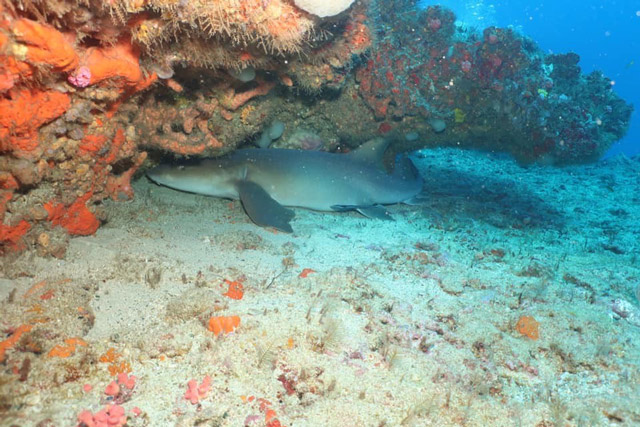
Our penultimate day saw us diving with Undersea Tobago, based at Coco Reef Resort. Ran by Derek – a diving pioneer in Tobago since the 1990’s – we left the bay of the resort and took the speedboat out about 15 minutes to Divers Thirst a thrilling drift diving site. The site had various coral and sponge encrusted rock ridges with undulating sand valleys. Under several of the ridges we encountered large nurse sharks, taking refuge for an afternoon nap. During the drift, we breezed past several schools of French grunts, goat fish and school masters which rounded off the dive nicely.
Our second dive site was Runway, located just off the coast and in view of the International airport. This was a calmer dive site, usually used by Undersea Tobago as an orientation dive site or a site for beginner divers. There was little current and we cruised over the reef with ease. Every now and then we came across groups of juvenile Caribbean spiny lobsters. Derek told us the site acts as a nursery for them, hence why we saw all these little lobster clans! We also came across a juvenile nurse shark, a stingray, curious french angelfish and lots of trumpetfish, as well as barred hamlet.
That evening we also got the opportunity to go on a bioluminescence* kayaking tour at night with Radical Watersports. Departing at 6:00pm, we were given a briefing and geared up in our life jackets and kayaks and then paddled 2km to the first stop off; a beach called no man’s land. Here we disembarked our kayaks and got a briefing on some of the night-time wildlife of Tobago such as bats, predatory jacks and tarpon in the water. Next we kayaked another 1-2km around Bon Accord Lagoon before reaching a patch of ‘bio’ on the edge of the mangroves. Here we made shapes and patterns with our hands and feet in the water and a floury of bright light was created.
 Our final day was spent relaxing back at Pigeon Point Beach and after a hearty lunch we returned to the Shepherd’s Inn to pack and check-out before departing for cold (and apparently rainy) Blighty. A wonderful experience was had by all on this trip and it was a nice way to round off 2019!
* Bioluminescence is the production and emission of light by a living organism; in this case by the planktonic organisms in the water.
To book your Tobagonian adventure, or for more information, contact our friendly Dive Experts.