Spellbinding Sali Bay
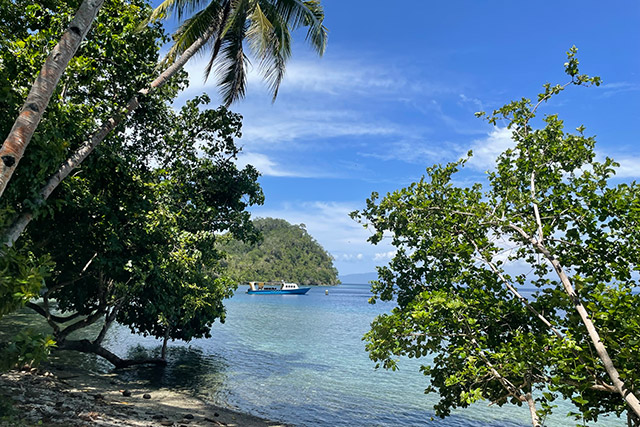
Sali Bay Resort is located in one of the richest marine hotspots of the Coral Triangle – South Halmahera. A lush, volcanic island in an area with some of the most pristine corals I have ever seen, Halmahera is part of the northern Maluku region. The Moluccas archipelago is made up of over 600 islands (including Ambon, Buru, Ternate and Kai).
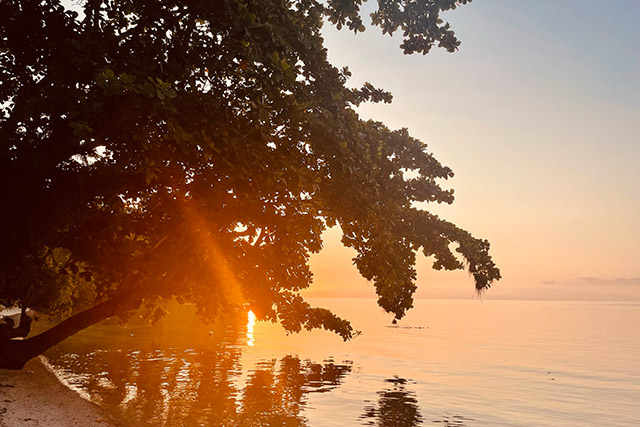
Known as the Spice islands, the Moluccas were once the largest producers of nutmeg, mace and cloves in the world. Spices were a valuable commodity back in the 16th and 17th centuries and many nations fought over them. Even today, the coastline is fringed by nutmeg trees that kiss the surface of the bay.
Sali Bay is ideally located for a twin centre holiday where you may choose to explore more than one area, with Raja Ampat to the east and Lembeh to the west. It looks almost identical to Sulawesi on a map, but is one third of the size. I was happy to spend 10 nights in this resort as it was a part of Indonesia I had never explored, and I was intent on spending as much time in its relatively unchartered waters as possible!
For a remote location, Sali Bay is fairly easy to get to. A flight to Manado via Singapore is followed by a full 24 hours to catch up on some zzzzzzzzs before boarding a domestic flight to Labuha. I stayed at the Novotel Manado and Convention Centre, which has an oblong pool for you to cool down in, and some of the tastiest chicken satay in town. A good night’s sleep will then have you ready for the twin prop domestic flight over to Labuha. The plane touches down on the volcano island of Ternate, before swiftly taking off to the skies again – a total flight time of just two hours and 20 minutes.
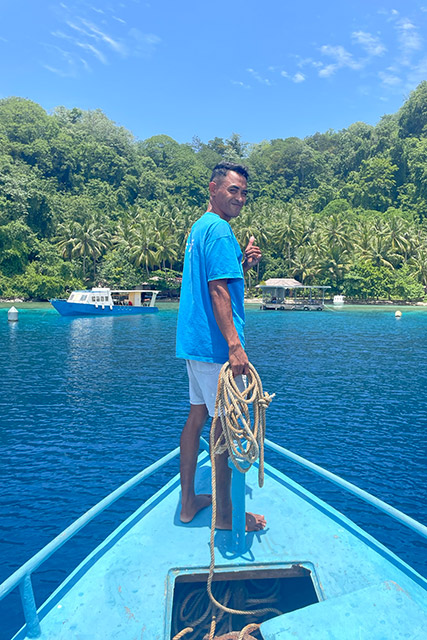
We were met with smiles at the other side by a combination of dive guides and kitchen staff – who had been to the local market to stock up on supplies. They loaded our bags into pickups and we headed for the port. Just 20 minutes later, we were watching a fiery sunset do its thing behind the wake from the boat engines.
It always feels special to disembark onto a jetty in the tropics where a cool, colourful drink is waiting for you! The jetty lit up our arrival, while we watched the torches of night divers flit underneath it, searching for the endemic walking shark. We arrived in time to get settled in our rooms, pack our dive boxes and freshen up for dinner at 8pm.
Food at Sali Bay Resort is a combination of Asian fare and classic Italian dishes, Once a week there is a buffet which features a whole barbequed fish and other delicacies. You are given a choice at the earlier mealtime of what you would like for the later one. We were never disappointed and became especially fond of the banana and dragon fruit ice creams! Following a briefing about diving logistics, we let our full stomachs rest and our weary heads hit the pillows.
I awoke to the sound of palm fronds brushing on the roof and the “Willie Fantails” calling to each other. After an omelette, a coffee and some fresh fruit, it was time to board one of the three large dive boats for a day at sea. So what is it makes the diving so special here, other than the remote location and lack of divers? As you sail through the archipelago you can see a lot of water movement between the islands themselves. Dive safety briefings always inform you of where the reef may end and the importance of not taking the current into the channels. The combination of this topography and the 2,040 metre deep Halmahera Basin creates a very nutrient rich area. Also the islands of Sali and Kusu close off the Patinti Strait which speeds up the currents, bringing food.
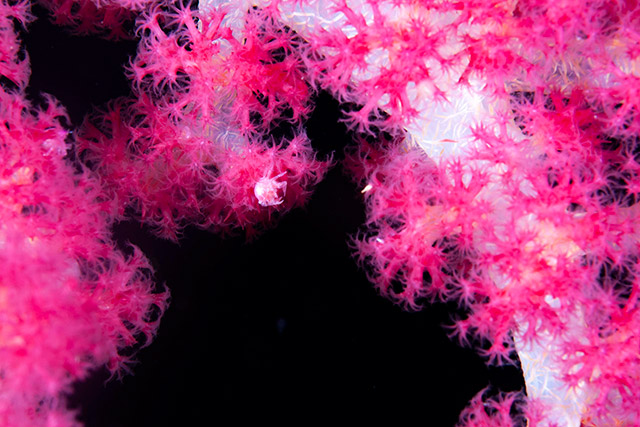
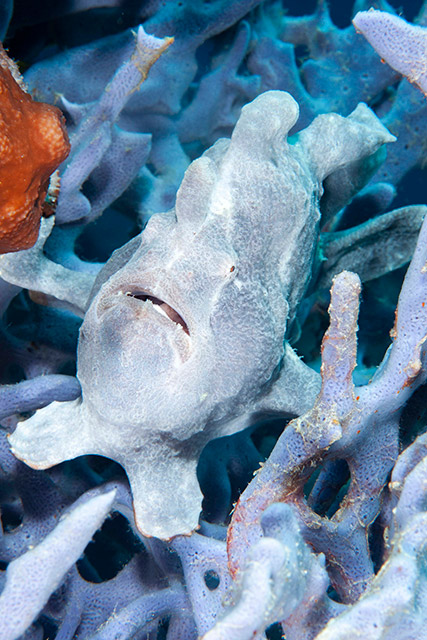
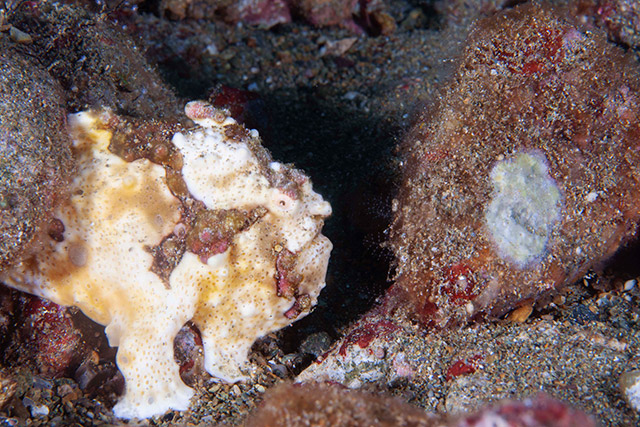
Shallow reefs, shelves, drop offs and corners house a huge variety of coral species, all vying for space to feed in the current. Never have I been on a dive where a coral garden gave way to an alleyway of muck - with painted frogfish and a hairy shrimp - and then yet another shallow reef plateau full of schools of oxeye scad and thousands of chromis. This was at a very special site called Low.
I dived Jebeje twice (as there were so many requests to do it again) and gasped at the beautiful soft corals with shoals of yellow-lined snapper, sweetlips and jackfish swirling around them. The sheer number of damselfish, anthias and red tooth trigger fish on Nanas Reef South almost needed pushing out the way so we could enjoy the turtle, bump head parrotfish and black tip reef sharks that swam behind them. What a show!
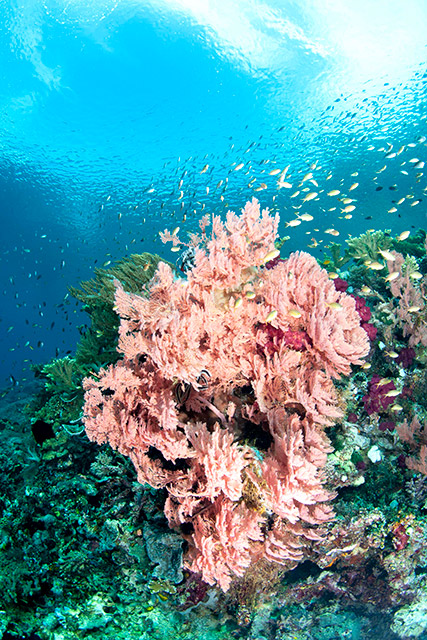
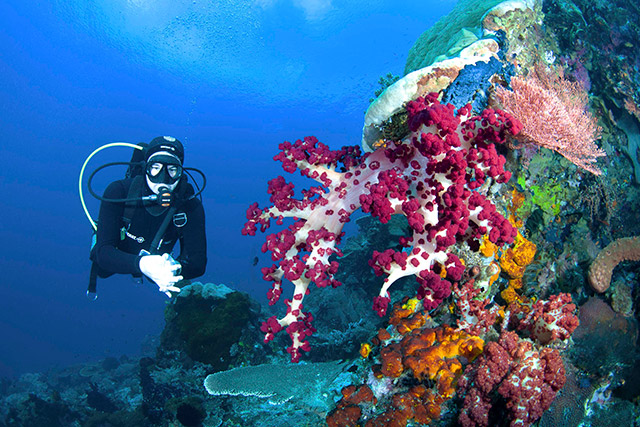
There were dive sites where baby Gorgonia sprouted out of huge Jurassic Porites coral; where purple broccoli corals happily nestled alongside massive feather boa-like sea fans; where long sponges adorned tall coral pinnacles, as if they were tinsel around a Christmas tree; I also saw barrel sponges big enough to sit in! Of course, beauty like this doesn’t come without a price: there were dives where the current was so fast I just hugged my camera and took in the view. How the teeny-weeny pontohi pygmy seahorses clung to their delicate ferns in these currents astounded me!
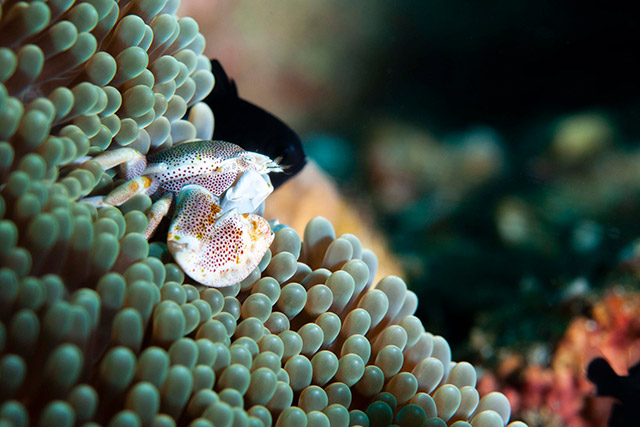
Macro, super macro and wide angle photographers were given a fair share of sites to suit their lenses. The Sali Bay guides are very attentive and knowledgeable of the area. With small guided groups, everyone gets their chance to take home magic on their memory cards.
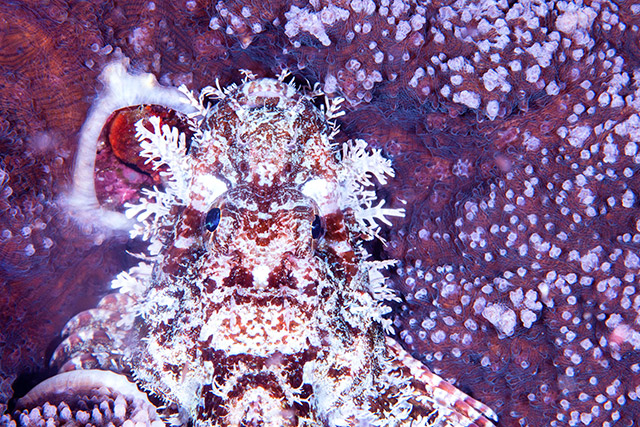
The vibe on the boats was great. It never felt that you were rushed and surface intervals were long enough not to be boring or to get sunburnt! The surrounding nature was also very relaxing. The crew were always trying to locate monkeys in the island vegetation and we were shown sea eagles flying overhead and perching on branches at the shoreline. One day we found dolphins hunting thousands of mackerel, which made the surface look like it was raining! From the boat you can look down at hectares upon hectares of staghorn coral, and the greatest part? We didn’t SEE anyone else!
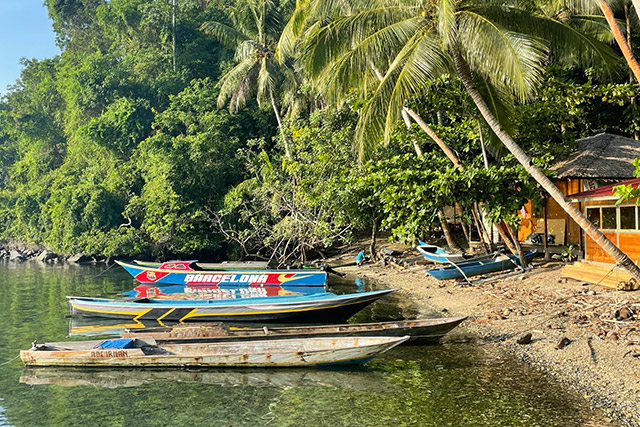
The 600 metre long Sali Bay Resort house reef can be snorkelled on a lazy afternoon or dry day and dived in either direction, depending on the current. In the shallows there is never a dull moment as giant trevally hunt schools of scad, needlefish chase silversides and black tip reef sharks almost beach themselves looking for a tasty lunch! You will find yourself surrounded by open-mouthed mackerel, iridescent damselfish and busy sergeant majors. On high tide you can float over massive Acropora and branches of finger corals.
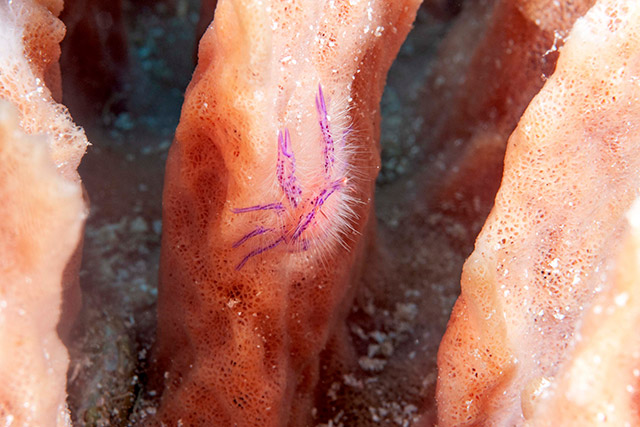
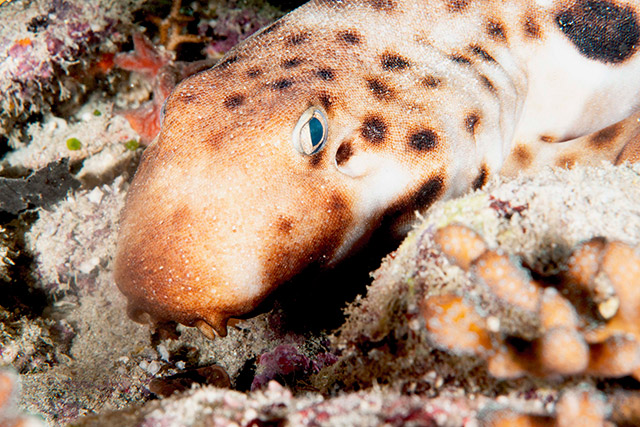
Diving the house reef will reward you with some beefy looking black tip reef sharks, usually swimming in unison. There are gorgeous bright orange and yellow gorgonian fans down from the jetty and very photogenic longfin spadefish. Of course, the night will reveal spider crabs, crinoid squat lobsters, decorator crabs and shrimp. But the primary reason for diving into the darkness is for the Halmahera walking shark (Hemiscyllium halmahera), which was only discovered in 2013. While they can swim, these reef-dwellers like to use their pectoral and pelvic fins as feet as they move across the sea floor in search of tasty crustaceans and smaller fish.
There are two room types at Sali Bay Resort – four terraced Diver’s Lodges at the end of the resort and 12 Beachfront Villas. All have a gorgeous sea view and are surrounded by lush vegetation. The Divers Lodges are perfect for single travelers and those on a tighter budget. While not as big or lavish as the villas, they are beautifully decorated and we enjoyed chats with our multi-cultural neighbours most afternoons, enjoying a cuppa on the verandah.
During my visit, I was privileged to see kingfishers around the island, huge stick insects, sea eagles hunting right in front of my villa, sailfish free-jumping outside of the house reef, fruit bats and hornbills flying overhead. This is a noise that you never tire off, always looking upwards to the jungle canopy when it comes like an Apache helicopter!
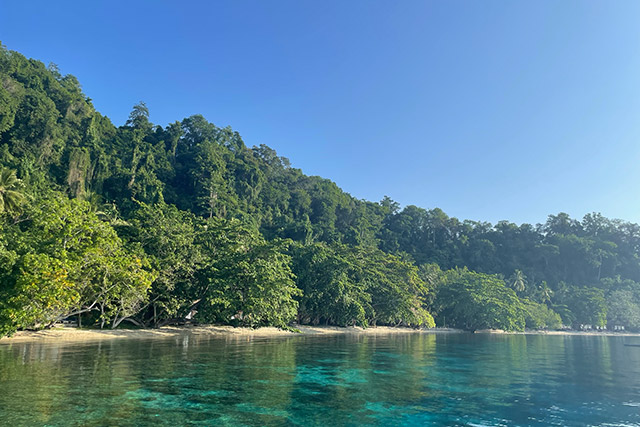
Sali Bay is an off the beaten track nature lovers paradise. Its vibrancy both above and below water will have you wanting to return. You couldn’t possibly dive all the 74 (discovered) dive sites in one trip anyway!
Learn more about diving at Sali Bay Resort or contact our friendly team.