Diving The Sardine Run - Fancy your Chances?

Simon Rogerson reflects on an extraordinary diving trip to South Africa with Dive Worldwide, chasing the annual migratory patterns of whales and other marine wildlife on the Sardine Run.
It was my third day out on the inflatable, and I was saddle sore. We had been covering up to 50 miles a day, scouring South Africa’s Wild Coast for the elusive baitballs that attract a parade of predators in mid-July, when the Agulhas current brings swarms of cold water fish to the African coast.
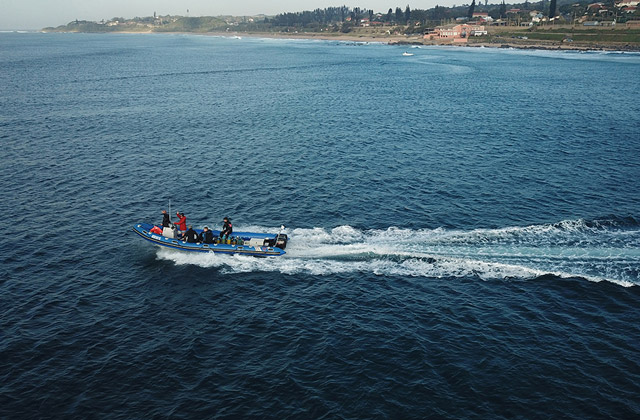
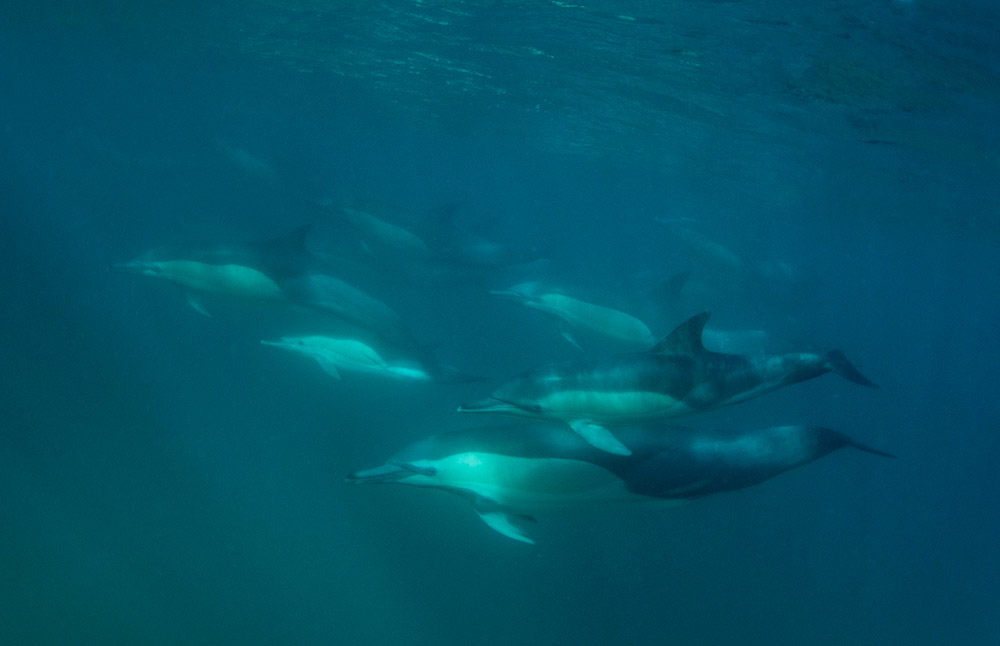
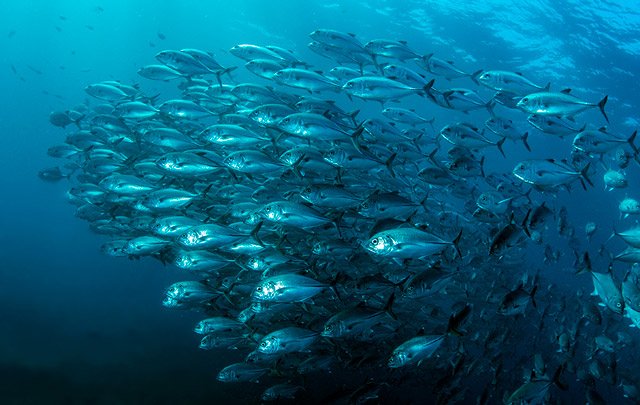
Out at sea there was no shortage of action – sightings of bottlenose and common dolphin are pretty much guaranteed, and we had seen several humpback and one southern right whale. But the famous schools were proving harder to pin down.
There had been a few tantalising moments when we got close to a baitball – its presence indicated by hordes of cape gannets plunging into the water – but on each occasion we were thwarted at some key moment. On day one, just as we were putting on our fins, a Bryde’s whale burst though the swell and devoured the school in a single gulp. It was, briefly, an awesome thing to see, but equally a good opportunity missed.
If you’re going all the way to South Africa in the Southern Hemisphere’s winter, you want to hedge your bets. The Sardine Run is famously hit-and-miss; on any given day you can have the encounter of a lifetime, or you can have a quiet day at sea and not enter the water at all.
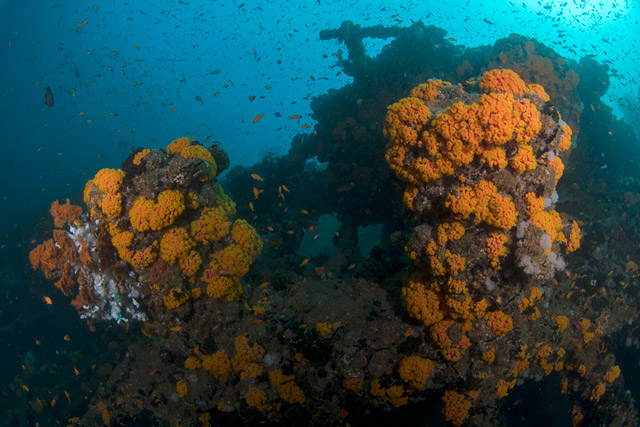
My agents at Dive Worldwide, had anticipated this unpredictability and factored in two days of scuba at Aliwal Shoal. The winter months see the arrival of the ragged-tooth shark, Carcharias taurus on Aliwal’s reefs, and coupled with the oceanic black-tip sharks, Carcharhinus limbatus, at organised feeds it’s a fine add-on for anyone who appreciates big fish.
Back to the Wild Coast
As I clung doggedly to the inflatable’s safety rope, I was thinking wistfully of the crowd-pleasing dives of Aliwal, where friendly raggies had been floating obligingly close to my camera a few days previously. The whole trip was meticulously planned, with our kit packed onto a bus to be transported to Port St Johns, a five-hour drive to the west of Umkomaas. That kit was sitting in front of me now, secured into the boat, but it was there as insurance – most Sardine Run encounters take place with mask, fins and snorkel, because you're jumping in and out of the water all day. You need to be quick and light. The scuba kit was only there in the event we came across a stationary school - a relatively rare event.
That's how it is when you're chasing down predatory events in the wild. As my guide explained, you have to be prepared for long periods of quiet, punctuated by moments of frenzied action. The trick to doing this for successive days is not to let yourself get too low during the periods of inactivity, and equally not to become too hyped-up when you do find some action. You need to stay focussed from the moment your boat launches through the morning surf of the Mzimvubu River estuary to your return eight hours later – it’s a long day on the water.
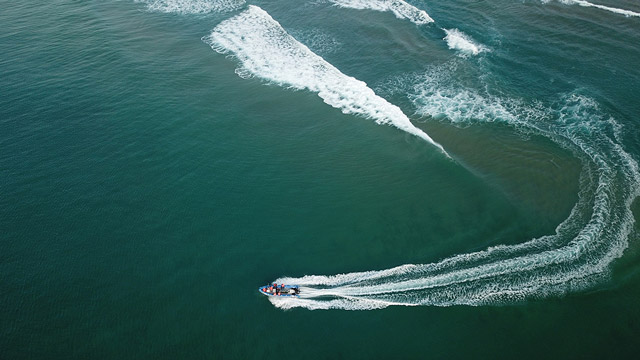
So there I was, feeling sweaty in my 7mm wetsuit, back aching and knuckles raw from hauling myself in and out of the boat… then everything changed. John, the driver, received a tip-off from his son (who was skippering a different boat), and all of a sudden we were off, hurtling over the swell at top speed. As we powered over a particularly intimidating wall of water, I must have let out a fearful “whoaa!”, because John briefly slowed and turned around. “We have to be somewhere,” he said… the implication being that whatever had been spotted was (a) out of the ordinary and (b) not likely to hang around. I clung on, stifling the urge to offer further boat handling advice.
Eventually all became clear when we saw a set of unmistakable black and white shapes breaking the surface. They had found a pod of orcas travelling up the coast, a rarity even in the predator-rich waters of South Africa’s Wild Coast. What were they doing here? Our best guess was that they were tracking humpback whales as they migrated north, perhaps hoping to separate a juvenile from its mother.
We watched the orcas for a few minutes, tracking them from a respectful distance as the skipper sized up their behaviour. At last he said: “We’re going to motor ahead of them and drop you in the water; see if you get a swim-by.” For a long time, it has been my dream to get in the water with an orca and now it was tantalisingly close – but was it necessarily a good idea? Jules the guide said he had never been in the water with orcas, but it was too good an opportunity to pass up. One guest decided to stay in the boat, another was a filmmaker who had dived with orca in Norway, and there was no stopping him.
We got a few hundred metres clear of the orca and lowered ourselves into the water. Behind my mask I felt unnaturally calm, almost as if I was somewhere else watching it happen. I finned away from the wash of the boat’s engines and looked down at shafts of sunlight cutting through the water. A quick look above and I thought I could see a set of sickle-shaped fins on a bearing towards me, so I ducked down and swam into the shadows.
“Just a big dolphin”
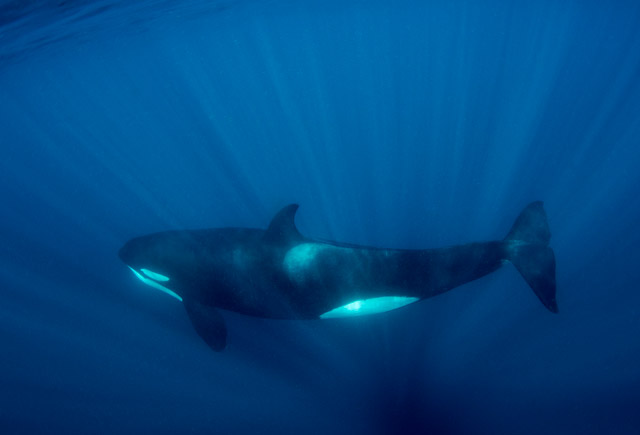
A moment later, a dark shape broke the surface right at the limits of visibility, maybe 15 metres away. I no longer had any sense of my aching back, and the stinging of salt water on my raw knuckles only served to remind me that I was alive and this was actually happening. Where before I was sunburned and sluggish, I was now coursing with adrenaline and completely in the moment. I lifted the camera to my eyes and somehow the autofocus managed to lock on to this astonishing, perfect animal as she swam toward me.
There was no fear. I remember thinking “oh, she’s just a big dolphin” as the orca approached and dived, looking up at me as I froze mid-water. The motor drive on my camera clattered away as I tracked the great mammal’s progression. In those few seconds it barely acknowledged my presence as it powered through the water, but for this fleeting encounter with the ocean’s alpha predator, I will always be grateful.
Back on the boat, faces were beaming. It seems the other guys also had some sort of encounter as the pod had separated, and the larger females had fanned out to greet us. Possibly, they were acting as scouts, ensuring we presented no threat to the calf. In the space of a few minutes I had gone from feeling sore and whiney to absolutely invincible, as my body flooded with a cocktail of adrenaline and serotonin.
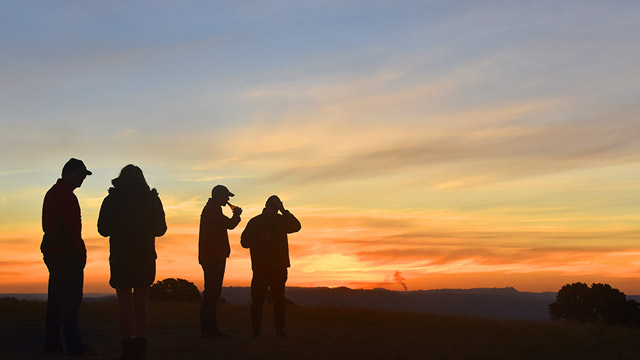
We tracked the orca pod for 90 minutes and managed another four drops, with varying degrees of success. At times they edged closer to the boat and it seemed as though they were playing with us, but eventually something changed and they lost interest. “We’re going full speed and we can’t keep up with them,” the skipper said. And that was that – time to head back to Port St. Johns and sundowners on a spectacular cliff overlooking our resort and the river gorge. A perfect day.
I had five days on the Sardine Run and saw some truly amazing things, including sharks and dolphins feeding on an anchovy shoal. The truth is, you never know what you’re going to see on the Sardine Run. For me, the orcas were a gift from the gods, but friends on different boats got in the water with right whales and humpbacks. You need a seasoned outlook for this trip, because conditions are unpredictable and you can have long spells when not much happens. But as the old saying goes, ‘you’ve got to be in it to win it’, and when the Sardine Run delivers you’ve got to be ready to reap the rewards.
Find out more about our Sardine Run Diving Trip in South Africa, or contact our diving experts for more information.