Dive into Raja Ampat at Waiwo Dive Resort
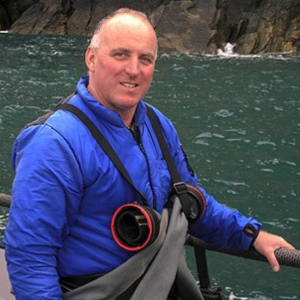
After staying at the Waiwo Dive Resort in Indonesia, John Liddiard recalls his time at the resort and experience diving in the Raja Ampat archipelago.
Part of the Coral Triangle, Raja Ampat is famed for being the most biodiverse marine regions on Earth, playing host to a huge array of marine life in its mangroves, reefs and seagrass habitats.
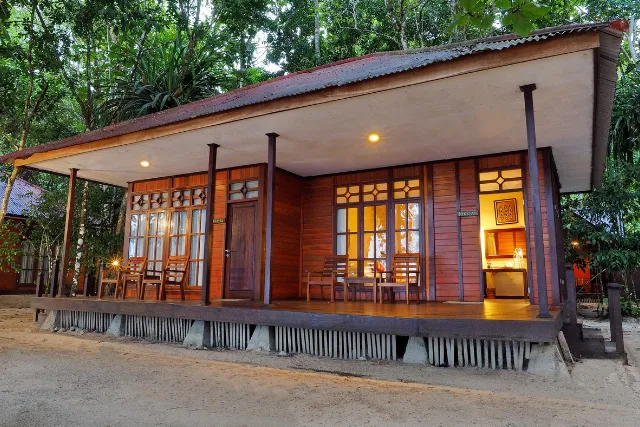
In this incredible archipelago, we stayed on Waigeo, the largest of the Raja Ampat islands. Located to the north of the Dampier Strait, this island is conveniently located for the ferry transfer from Sorong. Here we stayed at the Waiwo Dive Resort, where the diving is operated by Dive into Raja Ampat.
Our Diving Experience at Waiwo Dive Resort
On some days we enjoyed two dives in the morning, returning for lunch before a single dive in the afternoon. On other days, we stayed out on the boat with a picnic lunch, allowing us to venture a little further afield. Either way, we settled into a pattern.
We started each day at one of the deeper, bigger and higher energy sites. Our middle dive was more variable. Sometimes it was big, sometimes muck, sometimes transitional. Then it’s time for a well-deserved lunch or a picnic. Our last dive was usually a macro site, but occasionally we headed to a jetty or reef.
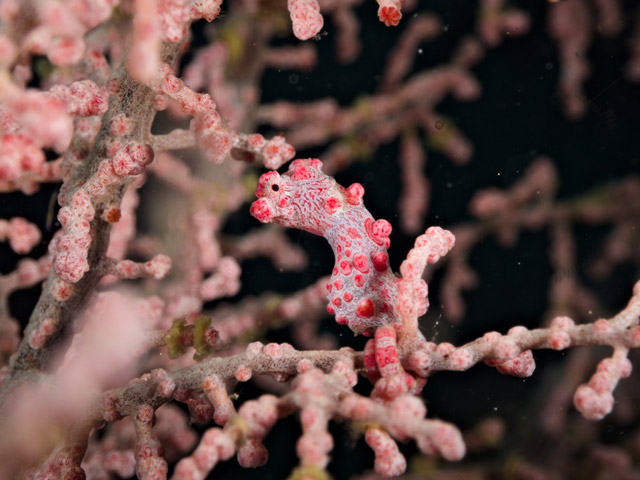
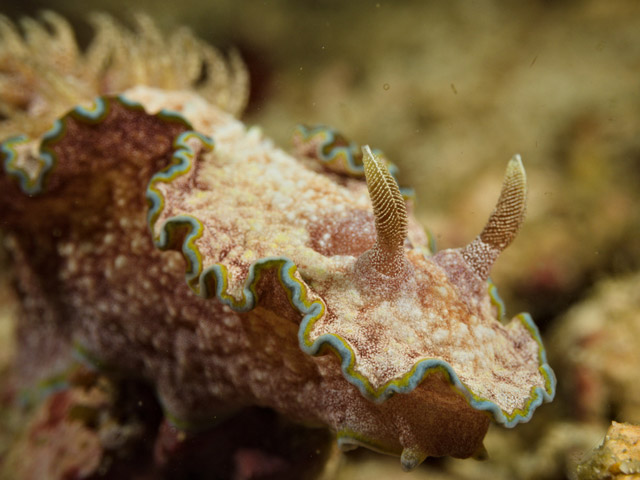 Really, we shouldn’t pigeon-hole these dive sites. Between taking in the impressive underwater scenery and shoals of fish, there are plenty of nudibranchs, shrimps, crabs and the occasional pygmy seahorse competing for our attention. Equally, when searching the muck sites for slugs and critters, a passing shoal of fish demands a different perspective.
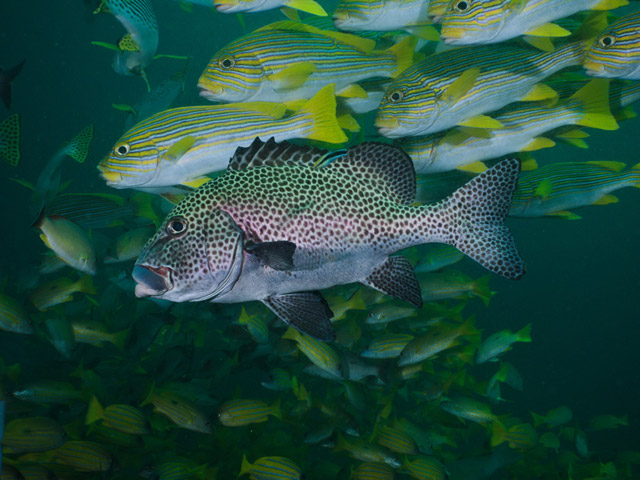
 Raja Ampat translates to “The Four Kings”, which refers to the four largest islands in the archipelago. But from what I’ve seen, Raja Ampat could also be called “The Sea of a Thousand Sweetlips”. Almost every first dive, and a fair number of our second dives, involved hordes of them.
Sweetlips are not fussy fish; in larger groupings of dozens or hundreds of sweetlips, you’ll often find several varieties mingled together around a coral head or beneath a jetty. Pairs and single fish are also found sheltering under overhangs or at cleaning stations, where wrasse can be seen flitting in and out of their gills and mouths.
 It’s not just the sweetlips that stand out here. Many sites, including the famous Cape Kri, also have big shoals of trevally, snapper and barracuda. Black-tip and white-tip sharks regularly cruise past, but are always a little bit too skittish to come within photographic range.
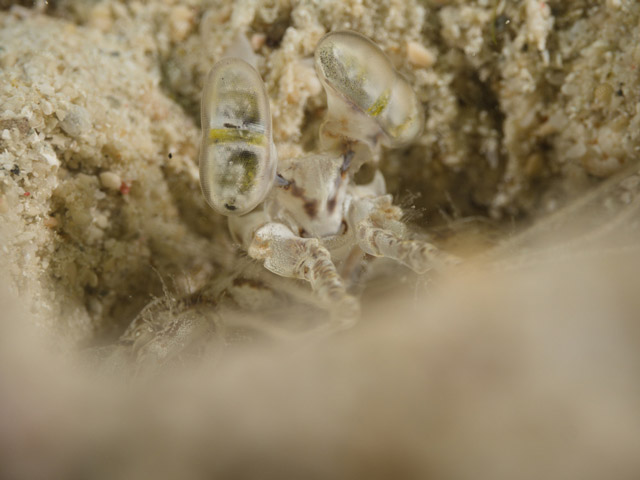
This isn't the case with the tasselled carpet sharks, or wobbegong as they are more popularly known. Wobbegongs simply snooze amongst the coral, usually somewhere with a bit of shade, but often just flopped over the reef.
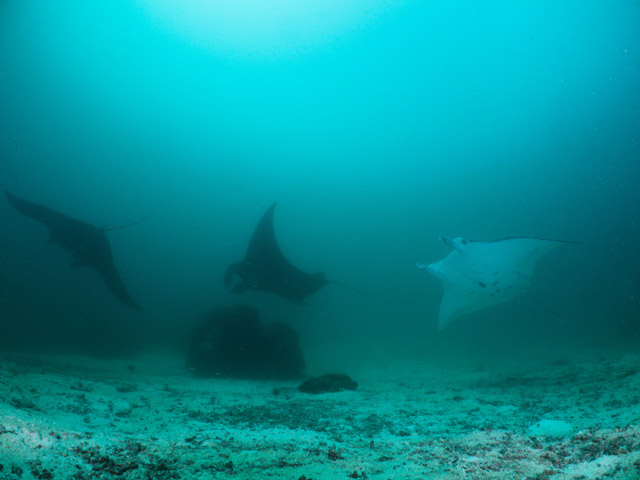
 Manta Slope was a more structured dive, where divers line up along the incline beneath a cleaning station. On our other dives, we usually had four to six of us on the boat, depending on where we are going. For this dive, there were 12 of us and four guides.
Some of my fellow divers were keen to be first in the water. I had a quiet word with our guide and take my time kitting up to ensure I went in last. By the time we are on the seabed at the end of the line, a group of three manta rays were already looping over the cleaning station.
It’s a memorable experience, just sitting there and admiring their effortless aquabatics. But it’s not a photographic experience. Even if the underwater visibility had been perfect, our line of divers was a little too far away.
One by one, the other divers use up their gas, until only a few of us remain. Our guide edges us closer to the action. The manta rays continue their dance. Although I won’t be winning any photography competitions, I was now just about close enough for photographs to work.
 Back at the dive centre, I noted that the clean white and well-lit camera room was a very nice touch - so many camera rooms are dark wood and dingy. There’s also a big supply of universally adaptable sockets, though this is almost taken for granted these days.
The Camera Room
Camera care by the guides and crew was immaculate. At the end of every dive, our cameras were lifted out first, held clear of the boat and ladder, with the lenses pointing outwards, then each one placed in a dedicated basket in the cabin, well away from divers and areas where they would be at risk of accidental damage.
There’s a regular turnover of new faces on the boat, mainly because some of the divers choose to stay at Waiwo for a few days to do shore-based diving before and after their liveaboard trip. Some of the divers joining us had booked a liveaboard directly online, but had taken one look at their boat and jumped ship. For me, this is a good reason to book through a quality tour operator, such as Dive Worldwide, who manage the whole thing.
If you'd like to experience incredible diving in Raja Ampat, check out our dive trips to this region, and head to our Waiwo Dive Resort page for further accommodation information.