Join a research team in the Azores on their study of sperm whales and bottlenose dolphins, to support the future conservation of these species. There is also an opportunity to dive with blue sharks.
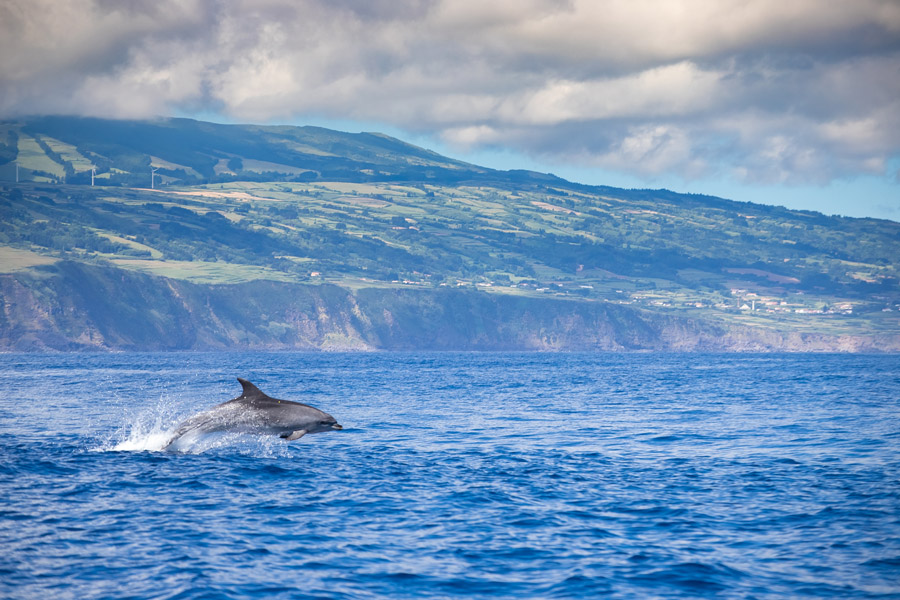
This small group tour combines incredible cetacean encounters with citizen science projects. Bottlenose dolphins, Risso dolphins, common dolphins and sperm whales are all residents of the Azores and can be seen throughout the year subject to weather conditions.
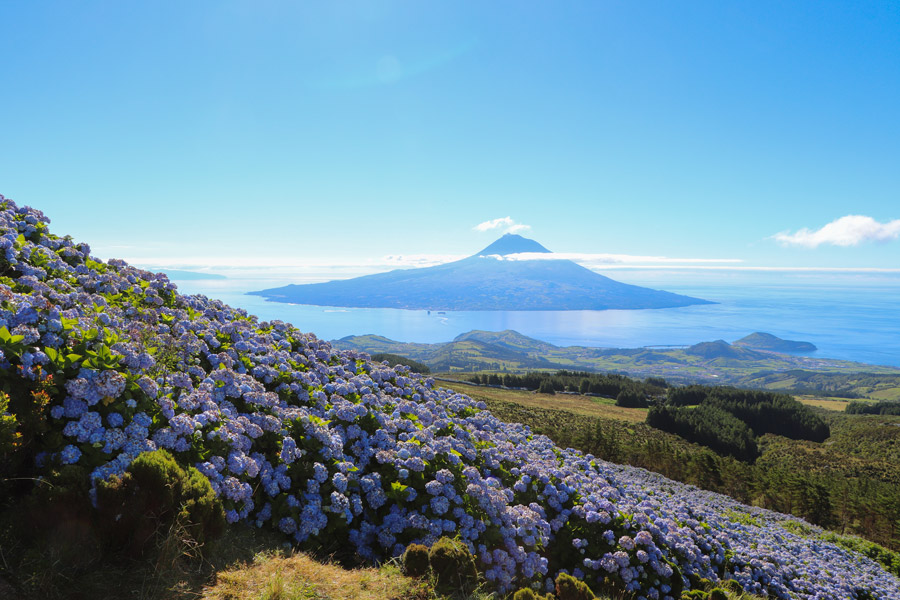
Seasonally in March to May the islands are an important resting point for migrating whales including blue, fin, sei and humpback whales, amongst others. During this small group tour, you participate on full day whale watching tours and record data based on your sightings. A scheduled shore day provides the opportunity to explore the stunning volcanic yet lush interior of Faial or visit neighbouring Pico.
Typical Itinerary
Day1: Depart UK & fly to the Azores
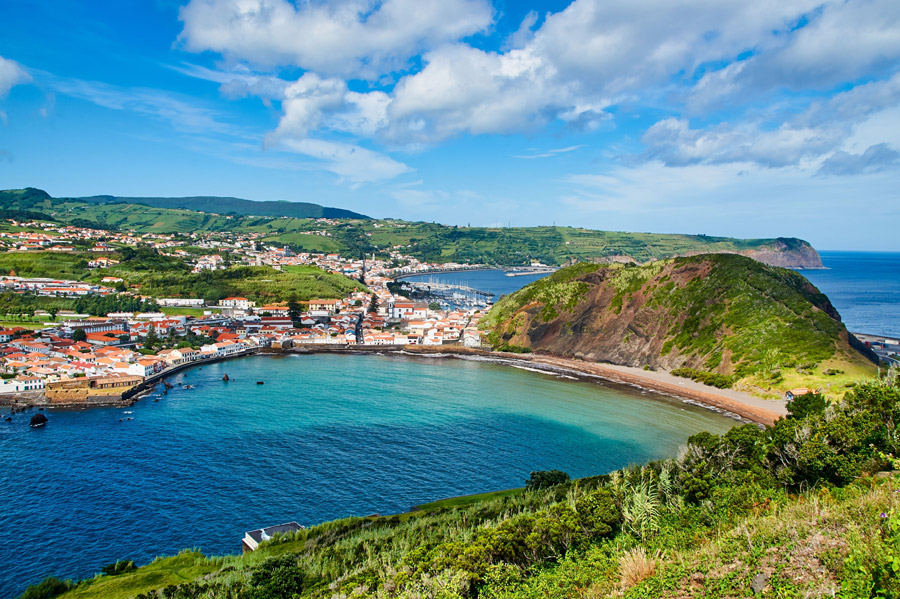
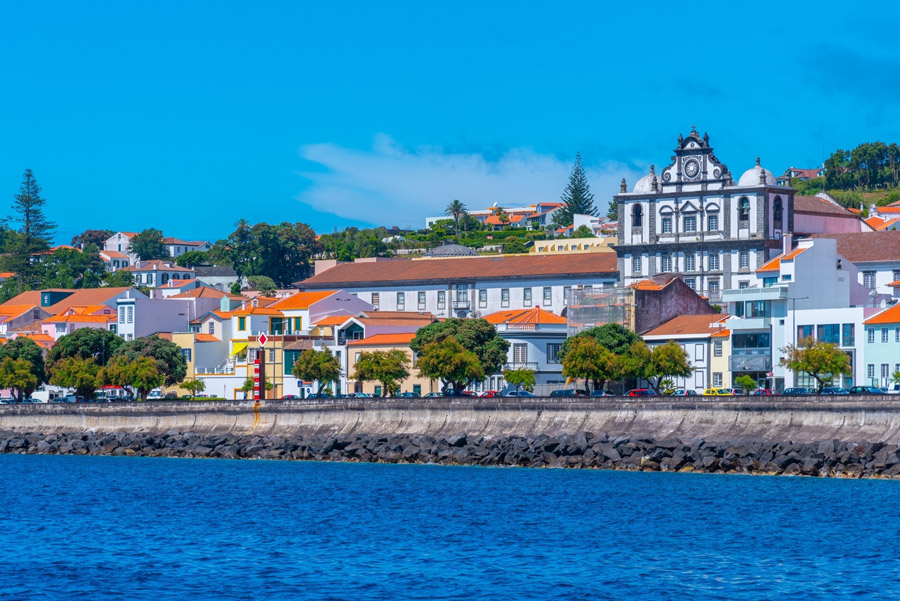
Depart the UK and fly to Horta on the island of Faial via Lisbon, on arrival you’re met and transferred to your accommodation. Here, you meet the others that have joined this group tour.
Days2-5: Whale watching tours & explore Faial
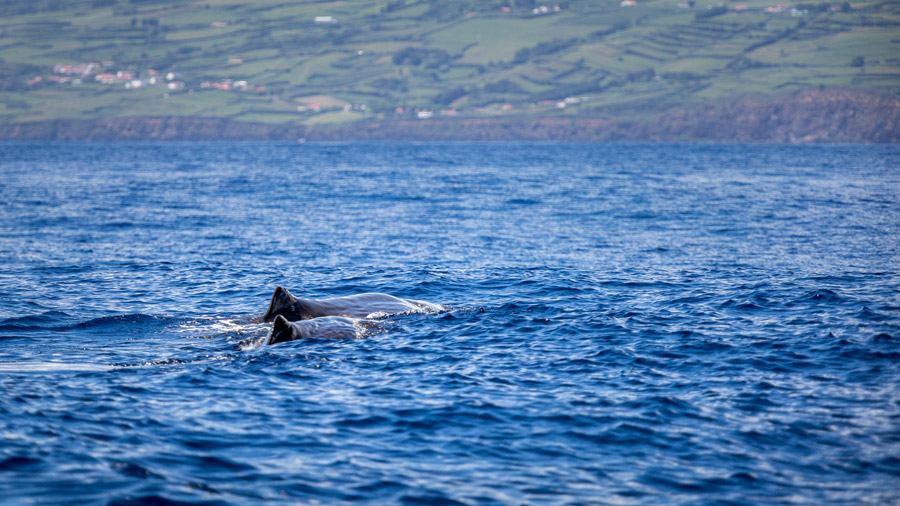
Spend three full days whale watching in the Azores, supporting research efforts focused on resident sperm whales and bottlenose dolphins. Alongside Risso’s and common dolphins, you may also spot pilot whales, flying fish, turtles, and seabirds in these diverse and remote waters.
The marina is a short 10-minute walk from the accommodation, where you board the catamaran Physeter.
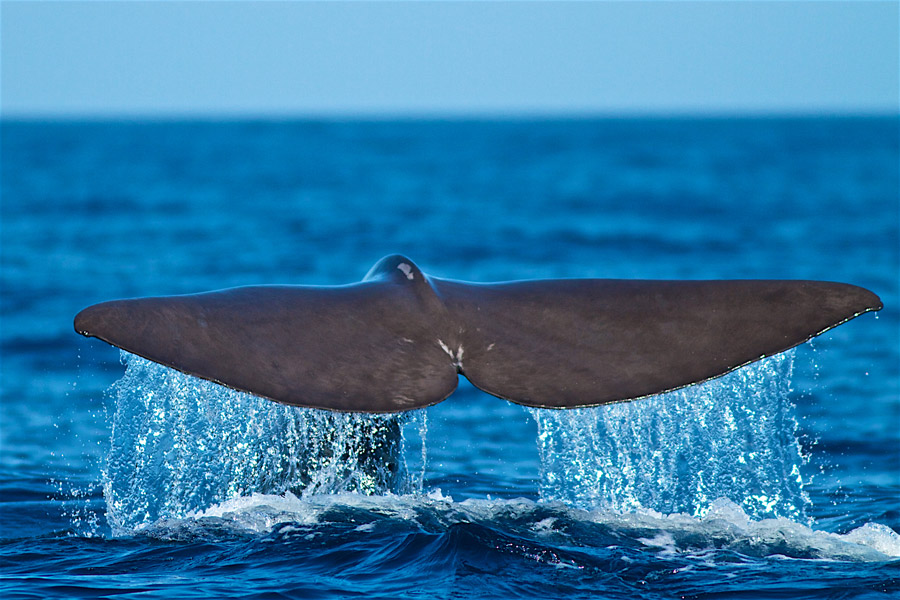
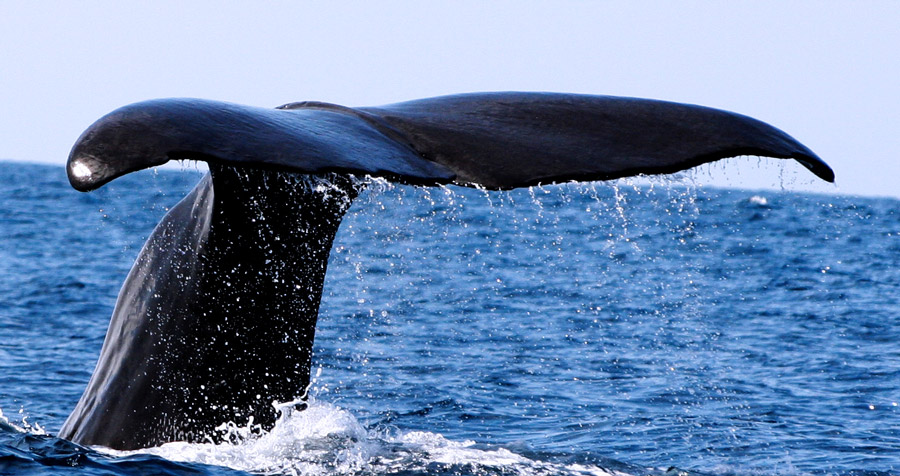
Once the group has set sail, you begin to scan the ocean for activity, aided by cliff-based lookouts, and assist the onboard biologist by recording behaviour, environmental data, and photographing whales for ID kits used in global research. A packed lunch is provided onboard, and the group returns to shore around 4pm each day. Evenings are free to dine and share stories with your group.
While whale watching is possible year-round, baleen whales like fin, humpback, sei, and blue migrate through from March to May even into June, conditions are best towards the end of the season and cetacean sightings are able around this time too.
Day6: Return to the UK
Today you fly back to the UK, an overnight may be required in Lisbon depending on the flight schedule.
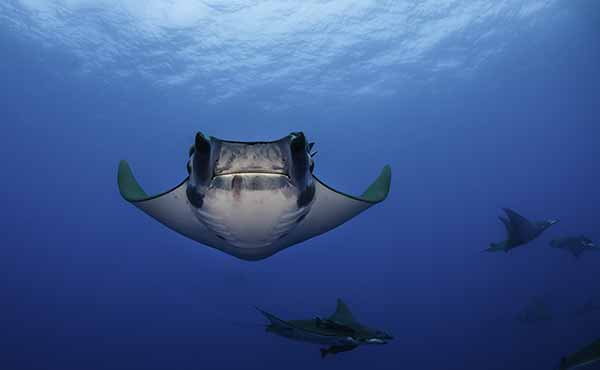
Alternatively, you can head to the neighbouring island of Pico to embark on an epic diving adventure with blue sharks, mobula ray and spectacular underwater pinnacles. Contact our helpful dive experts to discuss the best option for you.
Please note: This group tour is available as both a 5- and extended 9-night itinerary, please see the set departure dates for further details.
Conservation scope
Study the sperm whale’s ecology, population, habitat and behaviour, and compare historical data trends as they migrate north via the Azores in an effort to address future conservation issues.
Conservation role: Field learner
Lectures and workshops
Field observation and light general research tasks
Physical demand: Gentle
Generally easy and comfortable trip
Easily accessible with low involvement and gentle pace
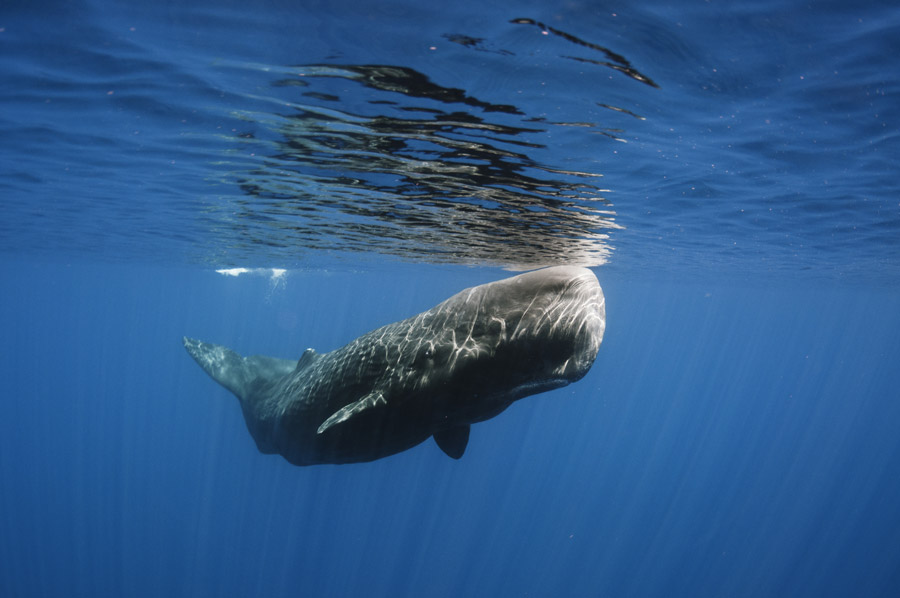
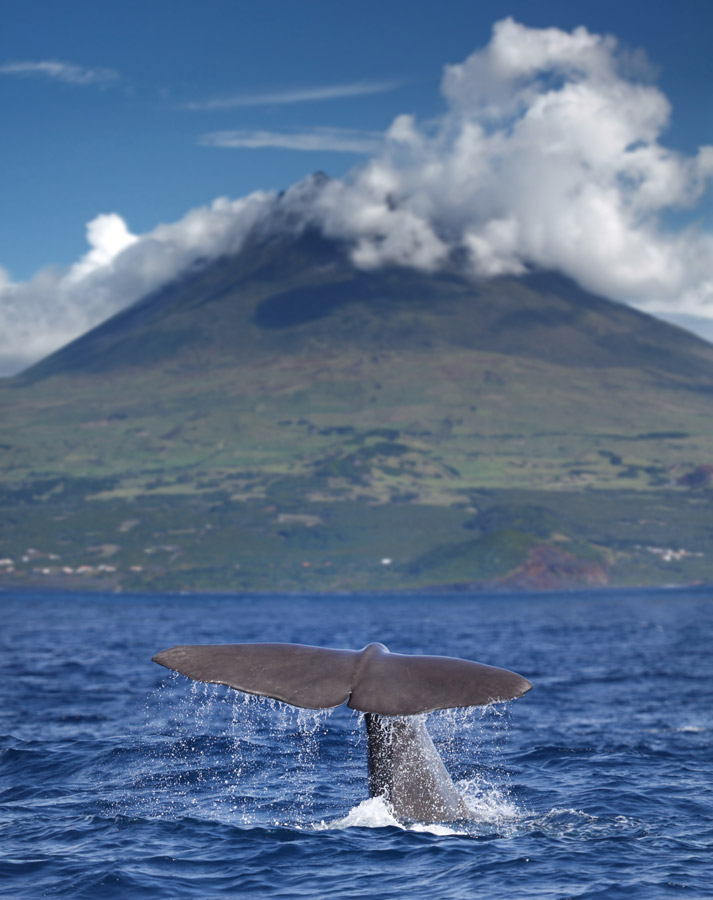
Sperm whales are the largest of the toothed whales, feeding on large squid species, which they hunt at depths below 4000 metres, making them the deepest diving whales in the ocean.
The aim of the research is to complete studies on these mysterious creatures as they migrate north via the Azores, study their behaviour, breeding season and collect data that will help support the conservation and protection of the species and their environment.
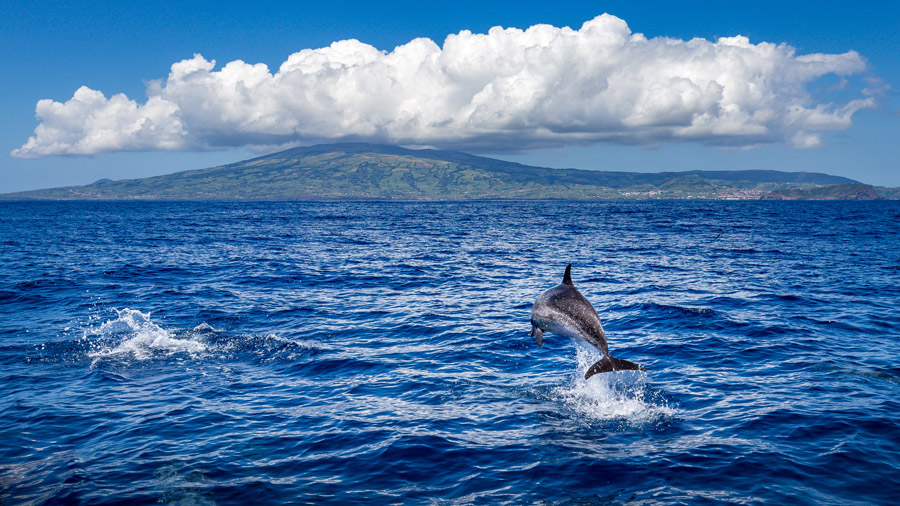
Study the charismatic bottlenose dolphin
The greatest characteristic of the bottlenose, beside its charisma, is its intelligence. Research on bottlenose dolphins has examined mimicry, use of artificial language, object categorisation and self-recognition.
Assist with the whale and dolphin survey
Lead by Dr Lisa Steiner, the data collected by your research will help provide the necessary information to address future conservation issues.
You will receive lectures regarding research undertaken to date and be directly involved with specific tasks to assist with on-going scientific studies, including:
Photo-identification
Behavioural observations
Acoustic recordings
Locating position
As well as photographing whales and dolphins, researchers also record the time of day of each sighting, the size of the group, the presence of any calves, the exact position and direction of travel, the length of time spent on the surface, and any behavioural patterns manifested.
Other general environmental information such as water temperature, sea conditions, wind speed and direction, barometric pressure, cloud cover, visibility, as well as the boat’s position, speed and heading are also recorded.
The work of the project also involves the occasional catching and tagging of loggerhead turtles, who are susceptible to getting entangled with drift nets and long trailing lines.
Dive with blue sharks
You may wish to use your shore days or extend your stay to dive with the blue sharks and devil rays in the Azores (June to October) and assist with underwater photo Identification (optional additional activity, contact us for more details).
The Azores lie on the blue shark’s summer migration pathway (as for whale research) and are one of the best destinations to dive with these elusive creatures, offering a good chance for a close underwater encounter. Up to four metres in length, these graceful beasts can be hard to spot as they inhabit deep pelagic waters. The diving area is in bottomless blue water well offshore (about one hour's boat ride) and you might also see mako sharks.
Note: Depending on flight schedules, some departure dates may require an overnight in Lisbon on the outward journey (additional cost)
Key info
Duration and price including flights from/to UK: 6 daysfrom £1,645 pp
Duration and price excluding international flights: 6 daysfrom £1,245 pp
Single supplement:
From £225
Group size: 12
Group Departures: Please contact us for departure date details.
Home to Pico Volcano, the highest point in the Azores, Pico Island is also known for whale watching. Diving here is spectacular, with magnificent topography and plentiful pelagic species. From here you can also dive with the mantas of Princess Alice Bank.
Find Out More about {acc:title}
Ideal for viewing: blue shark, devil ray, humpback whale, manta ray, Atlantic stingray
Excellent for: Resort based diving, Group diving, Shark diving, Manta ray, Whales