Taking the Plunge on a Learn to Dive Holiday
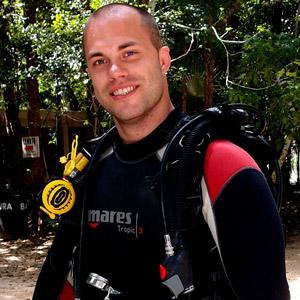
I’ve been a diver for nearly 15 years now and in that time I have had some unforgettable experiences and been fortunate enough to witness some incredible things underwater all around the world.
It’s actually hard to remember what life was like before I became a scuba diver since it has been such an important part of my life for so long. At 18 years old my big brother arranged my first PADI course for me and I will be forever grateful. </a>
For many non divers, the idea of descending to the ocean depths surrounded by an abundance of unfamiliar critters is nothing short of madness. I hope that by the end of this article we would have picked our way through some of the obstacles that stand in the way of the would-be scuba diver.
Isn’t it scary?
This is as good a place to start as any. The simple answer is no, but then of course that entirely depends on your perspective of what is and isn’t scary. If you enjoy being in the water, then there really is no reason why taking the next step to becoming a diver should be scary for you. Your journey starts with a qualified instructor, with you from the very beginning, guiding you through the process initially in a shallow swimming pool usually no more than waist deep.
I’m not a good swimmer, can I dive?
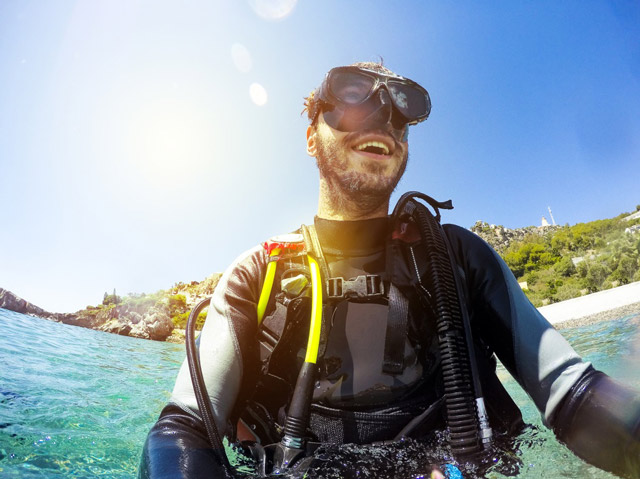
Technically speaking you do not have to be a particularly good swimmer to be a good diver. When we are underwater, it’s our finned feet that do the easy work of helping us effortlessly glide, and our arms are tucked away (or holding a camera!). That being said, the minimum requirements to successfully pass an Open Water course are that you should be able to swim 200 metres or eight lengths of a standard swimming pool.
How long does it take to learn to dive on holiday?
It’s possible to do a ‘try dive’ - often called a ‘Discover Dive’ - which will give you a good introduction in half a day. The Open Water course is the entry level certification that most new divers will begin with; completing this course on a Learn to Dive holiday is usually concluded within three to four days. After that you will be forever certified to dive within your limits to a depth of 18 metres.
Is the course difficult?
In a word, no. Some people have more natural ability than others, but most new divers take to it very well. There are a number of basic skills that you will have to perform in the pool before you will be ready to take the next step with a shallow dive in the open water - usually the sea in a calm bay or right off the beach. There is some classroom ‘work’ to be aware of, but the basic theory that you need to grasp is very manageable. Sometimes the classroom itself will be a beach bar!
None of my friends are interested, can I learn on my own?
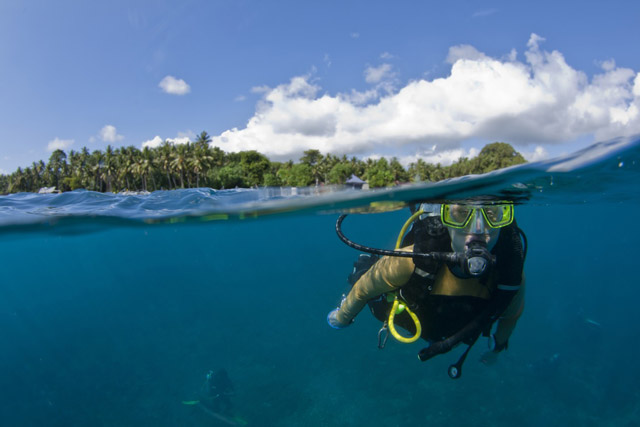
Of course! The diving community is a friendly bunch and we’re always ready and eager to welcome new divers to the fold. Going on a Learn to Dive holiday is actually a great way to meet people as you’ll be going through the process together. I know plenty of people who met during their Open Water course and subsequently arranged to meet up again on holiday the next year!
What about all that equipment?
To the uninitiated I’ll agree; it can look like we wear a lot of gear. In actual fact the essential equipment is made up of just a few items. Your mask and fins (never call them goggles and flippers or your Divemaster will make you buy him a beer!), a wetsuit, your BCD (buoyancy control device), which is essentially a jacket that holds your tank and helps you maintain buoyancy underwater, a weight-belt if your jacket doesn’t come with integrated weight pouches (this helps with your buoyancy too) and last, but certainly not least, your regulators which attach to your tank and enable you to breathe. That’s it. You’ll be shown how the equipment works and it will all make sense in no time.
I sometimes get claustrophobia, can I dive?
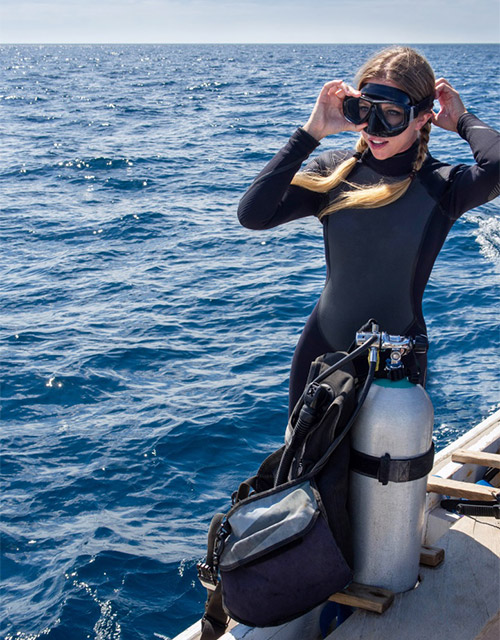
I have assisted instructors on close to 100 PADI Open Water courses in the past and have met a few people who suffered from quite significant claustrophobia. One girl in particular was so anxious that even standing at the poolside in all the equipment was challenging for her. We took our time and by the end of the week she had completed her PADI Advanced course, been on her first night dive and thoroughly enjoyed herself. Only you will know whether something like this will be a hurdle that you can overcome, and you won’t know unless you try.
What’s ‘the bends’?
‘The bends’ is the name given to decompression sickness, a disorder commonly associated with diving. Without going into too much detail (this will be covered in your Open Water Course), it’s safe to say that the chances of you getting ‘the bends’ as a responsible, fit and healthy recreational diver are incredibly slim indeed. In all my time of diving I have never personally met anyone who has suffered from ‘the bends’.
What about sharks?
Sharks are a big draw for us divers; we love them! From the smallest of reef sharks to the bigger guys like bulls and tigers, divers will travel the globe to share the water with these amazing animals. I’m fortunate enough to have seen over 100 bull sharks in Fiji, a mesmerising school of hammerheads at a remote island off the coast of Mexico and an incredibly beautiful tiger shark on the very same dive, not to mention a total of 12 other species of sharks. Treated with an appropriate amount of respect, sharks are perfectly safe to share the water with and although it might sound crazy right now- as a diver you will actively seek them out!
So if you have any other unanswered questions that are standing in your way of becoming a fully fledged scuba diver, then please get in touch. We look forward to seeing you in the water soon!
Take a look at all our Learn to Dive holidays