My Favourite Species to Photograph & Underwater Photography Tips

For budding photographers, the best subjects are often not found by pure chance. A little knowledge goes a long way when it comes to capturing great underwater images. In this blog, underwater photographer and tour leader Saeed Rashid shares some of his insights to capture some iconic species and recreate some of his favourite shots.
Author profile: Saeed Rashid is a lecturer at Bournemouth University, teaching Digital Publishing and Photo Journalism. He learnt to dive in the early noughties in the Great Barrier Reef, Australia. Upon his return he bought a cheap underwater camera at Duty-Free, and has never looked back. In addition to his lecturing job, he also leads several Underwater Photography Holidays with Dive Worldwide including a trip to the muck diving capital of the world Lembeh Strait, works with tourist boards and governments to create underwater photos for their official image libraries, and is a member of the BSoUP (British Society of Underwater Photographers).
Here, Saeed shares some of his favourite marine life species to photograph underwater, and how to achieve the shot yourself.
Ornate Ghost Pipefish
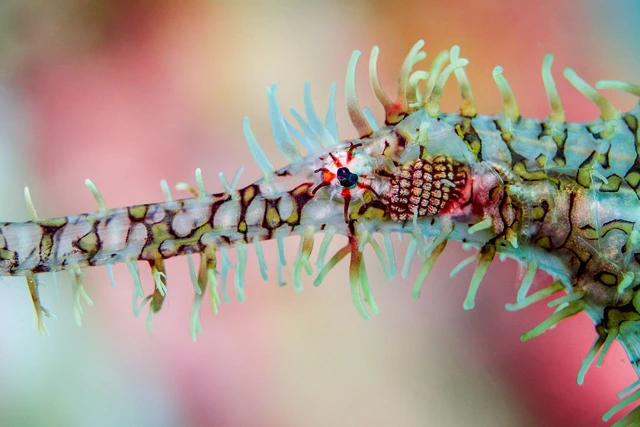 These cryptic fish are closely related to seahorses and are always a favourite find on a dive. Their elaborate fin design helps them to hide in plain sight while also ensuring they're wonderful subjects to encounter and photograph.
“Who doesn't love an ornate ghost pipefish? In my opinion, they're the most beautiful of all the pipefish family. Their elegant disguise mimics the fronds of feather stars, sea fans and soft corals, so they can typically be found in these environments. Think carefully about how to isolate them from often busy backgrounds for the best shot. You can experiment with different aperture settings or carefully adapt your shot angle.”
Distribution: Tropical reefs in the Indo-Pacific region
Where to find them: Typically hiding near to feather stars, sea fans and soft corals.
Shot details:
Focal length 60mm
Shutter speed 1/320
Aperture f/2.8
TOP TIP! Ghost pipefish are often found in pairs, with the larger individual the female. If you see one ghost pipefish, always take a look around for another!
Coconut Octopus
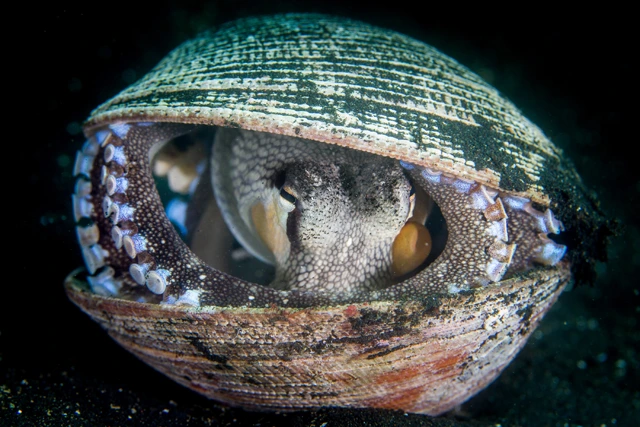 Coconut octopus, or veined octopus, are extraordinary animals, renowned for their intelligence and their creative use of tools. Their name comes from their habit of collecting discarded coconut shells and pulling them together over their body to create a shelter. It’s not only coconut shells they use however; they also grab clamshells, as in this stunning photo.
“I photographed this wonderful coconut octopus in the Lembeh Strait; an incredible destination for underwater photography. The subtle movement of the clamshell gave her away. I had to get low, approach incredibly slowly and bide my time to earn the chance to take this portrait.”
Distribution: Most commonly found in Asia Pacific region. Lembeh, Anilao and Dumaguete are three locations where they're regularly spotted.
Where to find them: Typically found in shallow, sandy areas. Look for a pair of matching shells or coconut husks close together, or eyes protruding above the sand.
Shot details:
Focal length 60mm
Shutter speed 1/200
Aperture f/7.1
TOP TIP! Coconut octopus can also walk, using two arms as legs while others carry their chosen shelter. If you see a coconut or clamshell on the move, you know it must be a coconut octopus!
Cardinalfish
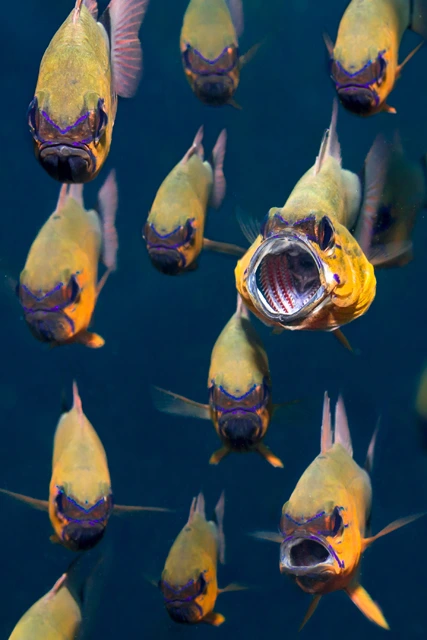 This stunning yet slightly terrifying shot of ringtail cardinalfish was taken near the Tulamben wreck in Bali, Indonesia. They're the type of subject that's easily overlooked, but can make for incredibly dramatic images.
“This is one of my favourite shots. Ringtail cardinalfish tend to congregate in dark crevices or overhangs during the day, or amongst branching corals. You’ll need to approach slowly and try to get open water in the background if possible. Focus on the eye and use a fast enough shutter speed to freeze any movement.”
Distribution: Tropical reefs from Indonesia to the Caribbean
Where to find them: Dark overhangs, crevices, under jetties, or amongst branching corals.
Shot details:
Focal length 60mm
Shutter speed 1/160
Aperture f/8
TOP TIP! This species is also known for paternal mouthbrooding, where the males carry the eggs in their mouth. Something to look out for!
Hypselodoris Nudibranch
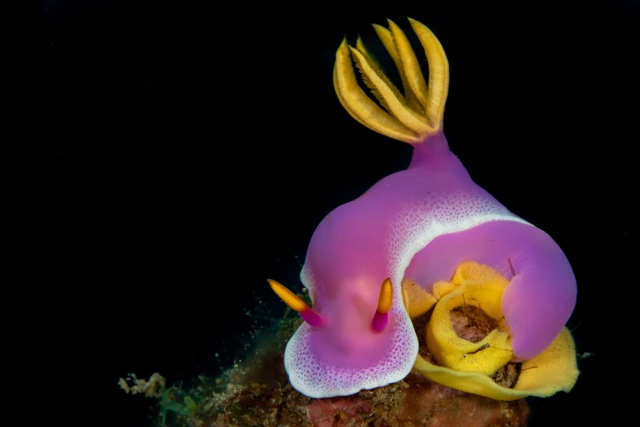 Nudibranches are often colourful and exotic, but the hypselodoris genus has some particularly striking members, making them a great subject for keen underwater photographers. Look for brightly coloured sponges – their primary source of food - on coral reefs or ledges where there can be a little current, as this is where they typically spend their time.
“This shot was taken in Bunaken National Park; I just love the contrast between the background and the vibrant nudibranch. The yellow trail of nudibranch eggs adds to the visual appeal. For the best nudibranch shots, angle yourself with blue water in the background and use a tight aperture; this is what creates the black backdrop, helping the subject to really stand out.”
Distribution: Global, with many photogenic species commonly found in the Indo-Pacific region
Where to find them: Look for colourful sponges on coral reefs and walls, particularly where there are crevices and some current.
Shot details:
Focal length 100mm
Shutter speed 1/125
Aperture f/14
TOP TIP! Look out for a small spiral trail of yellow or white, these are nudibranch eggs and add to any shot!
Commensal Emperor Shrimp
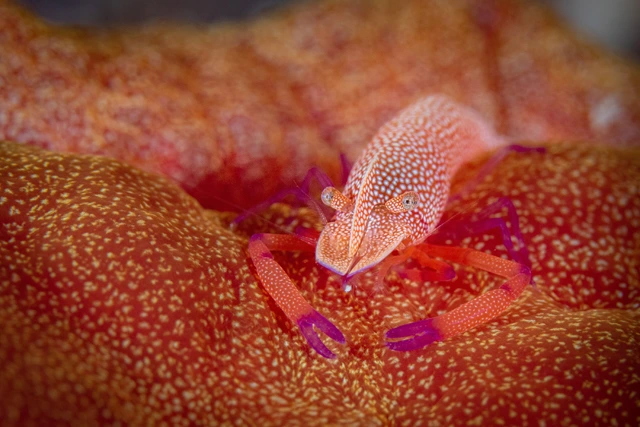 The commensal emperor shrimp, like many other shrimps, are symbiotic in nature, living on or with a particular host. They can create great subjects for underwater photographers, providing an ideal opportunity to showcase your artistic flair! The commensal emperor shrimp often lives on sea cucumbers and sometimes even on larger Spanish dancers, making it a great choice.
“This shot, taken in Bali, is as much about the background as the shrimp, which really helps elevate the image. Sea cucumbers often have fantastic textures and patterns when viewed closely, which can create a wonderful canvas. Focus on the shrimp’s eyes but allow enough space in your shot to showcase the background, thinking about the angle to get a good depth of field.”
Distribution: Widely distributed in tropical waters from the Red Sea to Australia.
Where to find them: They spend their entire lives living on their host, typically sea cucumbers, sea stars or even Spanish dancer nudibranchs.
Shot details:
Focal length 60mm
Shutter speed 1/100
Aperture f/10
TOP TIP! Search for the host, not the shrimp, and get your buoyancy sorted before taking a shot to avoid scaring off your subject!
Shaun the Sheep Nudibranch
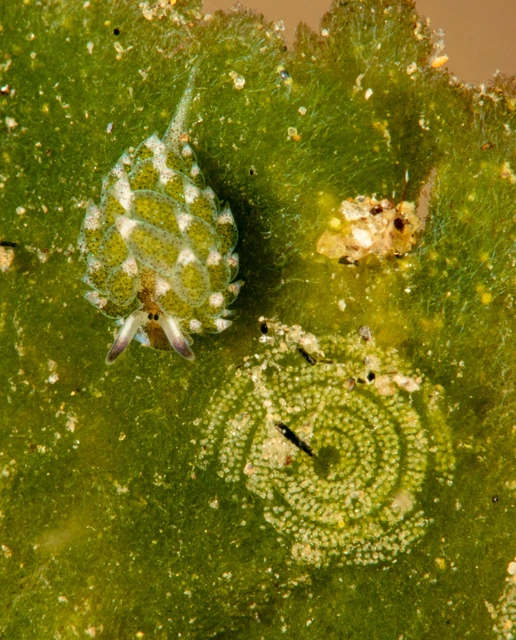 It's easy to see why these charismatic underwater characters are nicknamed Shaun the Sheep. It's also immediately evident why they've shot to fame in recent years. For budding underwater photographers however, just finding, let alone photographing them is a real test.
“The first thing to point out about these fabulous nudibranchs is that they're tiny! Really, really, tiny. The key to finding them is to first find where they live. They feed almost exclusively on a flat, green algae called Avrainvillea. A good shot requires stacking wet macro lenses, and manual focus. This shot was taken in Dumaguete, the location of my workshop earlier this year, but they can also be found in Bali, Anilao and of course Lembeh.”
Distribution: Central and western Indo-Pacific region
Where to find them: Look in shallower water for patches in the green Avrainvillea algae
Shot details:
Focal length 100mm with added diopters for extra magnification
Shutter speed 1/125
Aperture f/25
TOP TIP! You need some serious macro photography kit to get a great shot, and keen eyesight.
Join Saeed in Lembeh
 You can photograph all of these species on our small group tour to the world-renowned muck diving site of Lembeh Strait, led by Saeed Rashid! Enjoy up to 16 dives in search of countless other fascinating macro subjects, while benefitting from Saeed's expert guidance throughout.
Weather permitting, you'll also enjoy a day trip to the colourful reefs of Bangka Island, providing a vibrant contrast to Lembeh's famous black sand habitats.
Departure Date: 26 Jun 2027
12 days from £3,995pp
Travel with Saeed on a trip to the muck diving capital of the world Lembeh Strait, or contact our team of divers today to find out more.
Want to learn about our other trips ideal for underwater photography? Browse all our underwater photography holidays.