Everything you Need to Know About Turtles
The what, when, where, how of sea turtles! Here Sarah summarises (almost) everything you need to know about turtles, how we can protect the conservation of this species and where the best places to swim and dive with turtles are.
With seven species of turtle this article will talk you through how to identify them, the importance of nesting sites and conservation, the top five destinations for swimming with turtles (and some) and how we can protect this endangered species.
Knowing your loggerhead from your leatherback - how to identify turtle species
Sea turtles are found throughout the world’s oceans, and we have a number of trips where you can dive or snorkel with them. Of the seven species found in tropical and temperate waters divers and snorkellers are most likely to encounter green, hawksbill and loggerhead turtles.
 There are several characteristics to help identify the specific species. The hawksbill turtle has the most striking shell (carapace) with overlapping scales (scutes), a bird-like beak and two pairs of prefrontal scales on its head. The green is the largest out of the more commonly seen turtles, has one pair of prefrontal scales on its rounded face, and like the hawksbill, has four pairs of costal scales that lay next to each other, creating the bulk of its smooth carapace. The loggerhead has a much larger head and a long carapace of five or more pairs of costal scutes.
In addition, loggerhead turtles are predominantly carnivores, dining on invertebrates and travelling long distances to nest. Green turtles are mainly seen amongst seagrass beds and migrate to nest, whilst hawksbill turtles gorge on sponges and lay their eggs nearby to where they live.
The most abundant is the Olive Ridley turtle which is smaller, has a wide circular carapace (with six or more costal scutes) and is found in tropical waters. The Kemp’s Ridley is similar in appearance but lives predominantly in the Gulf of Mexico. Leatherback turtles are the largest species (up to 2 metres in length) with a distinctive black back with five ridges and white dots - this is strengthened by plates underneath, giving it a leathery appearance. A pelagic species, they have been observed in all oceans, even occasionally in the UK. The flatback turtle is similar to a green, but only found along the tropical coast of Australia. All turtles can be identified by their unique facial profiles.
Miracle hatchlings! Turtle nests & hatchings
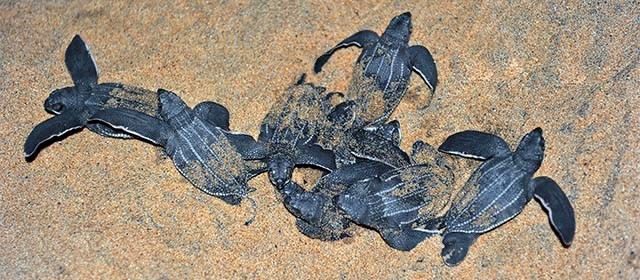 Although nesting can occur several times throughout the year in equatorial areas, turtles tend to lay their eggs in the summer months, so from May to August in the northern and November to February in the southern hemisphere. Laid in clutches of up to 200 ping-pong ball sized eggs, they hatch within around 60 days and their sex is determined by the temperature (warm sand=females). Despite these huge numbers, there are several threats throughout their life with relatively few surviving to maturity. Turtles are a miracle species!
Turtle conservation
 Turtles are protected in many destinations throughout the world but continue to face threats from humans as well as nature. Despite best efforts from volunteers and non-profit organisations, six species are on the IUCN Red List, considered threatened or endangered. You can help the conservation of these species by visiting and supporting local organisations, sanctuaries, and charities whilst on holiday, learning more about the turtles and raising awareness of their plight to friends and family.
Since early 2020 there have been reports of record breaking nests in several locations around the world as well as sightings of leatherback turtles in the Phang-Nga region of Thailand and on the Queensland coast for the first time in over 20 years.
Top five destinations for swimming with turtles
Sulawesi, Indonesia
 Bunaken Marine Park is home to both green and hawksbill turtles in healthy numbers. On some wall sites it’s possible to see over ten individuals on one dive. Siladen Island is a hotspot for hawksbill turtles during nesting season from April to September. This is a great destination for photographers and snorkellers too.
Dive Bunaken (and Lembeh Strait)
Maldives
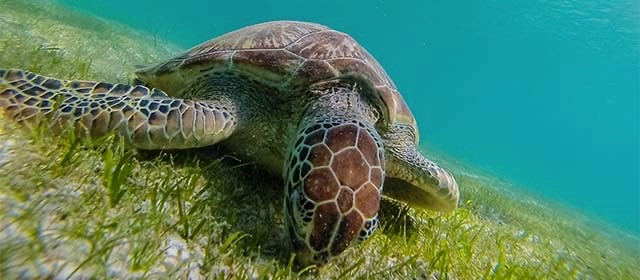 Green sea turtles are seen in large numbers in the Lhaviyani Atoll, especially at the site called ‘Turtle Airport’ in the north. In addition 'Turtle Rock' is home to plenty of hawksbill turtles on the eastern fringes of the atoll. The distribution of hawksbill turtles is wider, and they are regularly seen on the reefs of the Malé and Ari atolls too. Loggerhead, Olive Ridley and leatherback turtles have also occasionally been seen in open water. Turtles are thought to lay eggs throughout the year in the Maldives.
Mexico
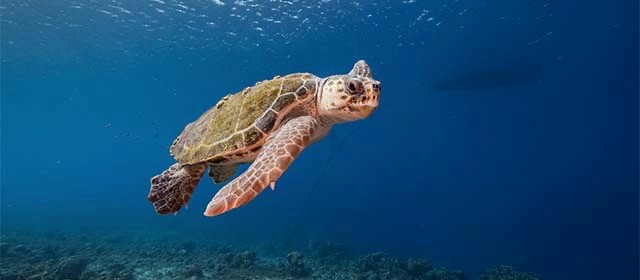 Both green and loggerhead turtles can be seen regularly on the east coast of Mexico. Observe loggerhead turtles when diving along Cozumel’s reef and snorkel with young green turtles in Akumal Bay on the mainland. Nesting season is May to September.
Oman
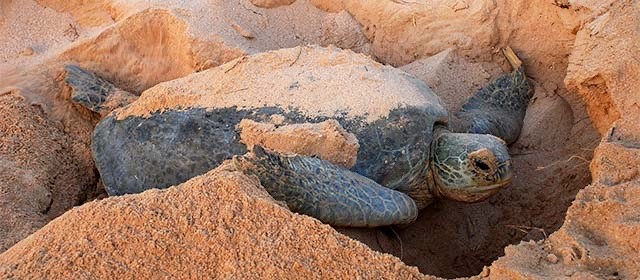 Four species of turtle regularly lay their eggs on Masirah Island throughout the year. In addition, there are hawksbill and leatherback nesting sites in the Daymaniyat Islands and on the beach at Shangri-La Al Husn. Nesting season here is April to August. Green, hawksbill, loggerhead and Olive Ridley turtles are regularly observed at dive sites along the east coast.
Red Sea
 Sea turtles are found throughout the Red Sea. On dive sites in the Straits of Tiran hawksbill turtles can be seen munching on the soft corals of Jackson and Thomas reefs. Further south, Abu Dabbab Bay is home to green turtles found in the seagrass beds and hawksbill turtles out on the reef. The nesting season is June through to September.
Best of the Rest
 It is possible to observe turtle nesting and hatching in many other locations. Sometimes this experience is at its best during the low season for diving, so best combined with a topside adventure in destinations such as Belize, Costa Rica and the Galapagos Islands.
Sea turtles can be observed regularly on dive sites at several other destinations around the world. The Caribbean Sea is synonymous with turtles, with six ever present species. For your best chance of turtle encounters here visit the Bahamas, Cayman Islands, Turks & Caicos, Grenada and Tobago.
The Great Barrier Reef is home to six species as well as the largest rookery of green sea turtles in the world on Raine Island in the north. As well as regular adventures, there are turtle specific itineraries on liveaboards to this remote part of Australia.
Papua New Guinea is regarded as the most biodiverse underwater ecosystems in the world. Hawksbill turtles can regularly be seen on the seamounts and other dive sites in Kimbe Bay whilst Lissenung Island Turtle Conservation works with local communities to protect the eggs laid on nearby islands in season from September through to February. These are predominantly hawksbill but increasing numbers of green turtle nests have been observed.
Protecting sea turtles
Want to learn more? Here are a couple of conservation organisations from around the world. All raising awareness, educating, researching and working towards protecting sea turtles.
View all our diving holidays , or for more information on our best places to swim with turtles contact a member of our friendly team.