Diving in Antarctica Q&A
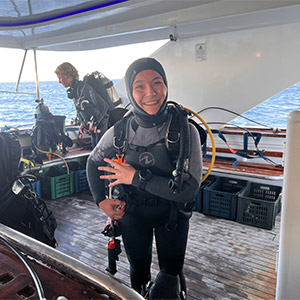
We've been operating scuba diving holidays for over 25 years to far-flung destinations, however perhaps one of our most unusual places is Antarctica. It may seem like a baffling idea to many divers, however, regular client Nick has had the Polar waters of Antarctica on his diving bucket list for several years. In March, that dream became a reality and Nick plunged into the truly icy waters inside the Polar Circle and the Weddell Sea that few divers get to experience. We caught up with him on his return to ask him what it’s really like to dive in Antarctica.
 Ok, let's get straight to it ... how cold was it and how many layers did you have on?
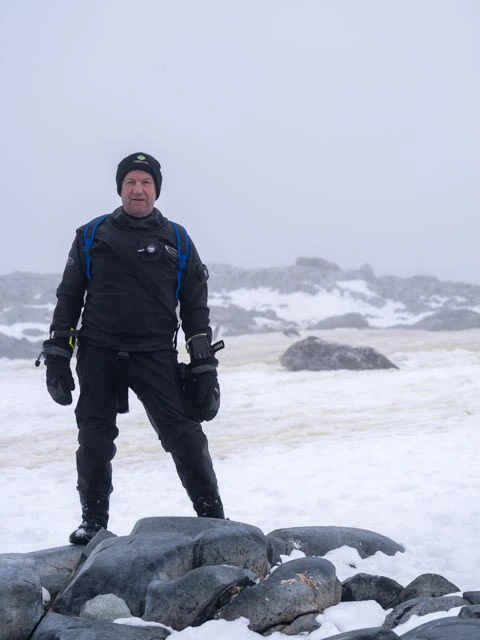
It was fresh to say the least! Water temperature sat at about 0 to -1°c, but close to the icebergs where the fresh and cold water was mixing it dropped as low as –2°c. We travelled towards the end of the summer and the water was as 'warm' as it gets. I dived in a drysuit with dry gloves, I had two thermal base layers plus my drysuit thermals on, and I was ok ... mostly. I can’t say I wasn’t envious of those with heated vests and gloves, but the initial shock was no worse than a chilly February day in the UK.
The cold weather when out of the water was a challenge, rather different to temperate and tropical regions I normally visit, but to witness spectacular ice formations was well worth it!
Do you have previous cold water experience?
Yes, I leant to dive in the UK in the 90s, and I dive in the UK year-round as a BSAC instructor and abroad when I can. Previous drysuit experience is a must for Polar diving, the vessel requires you have all your own equipment and at least 30 drysuit dives. I’ve dived in remote places before, but Antarctica is something else, experienced divers need to be completely comfortable in very, very cold water.
This isn’t a normal scuba diving ‘liveaboard’, so what did a “day’s scuba diving” look like?
The biggest difference I found compared to a ‘normal’ liveaboard is that every day is an unknown. I did a variation of Dive Worldwide's Classic Antarctica itinerary, however there are so many variable factors that take president over whether you can dive or not. Icebergs move surprisingly fast, and weather can turn in a blink of an eye. The dive crew on board would always head out in an RIB first to check the sea, ice and weather conditions, and many of the sites we did were exploratory as the planned site wasn’t accessible. Every day is flexible, which added to the excitement and was a big draw for me, I was humbled to be there in the first place!
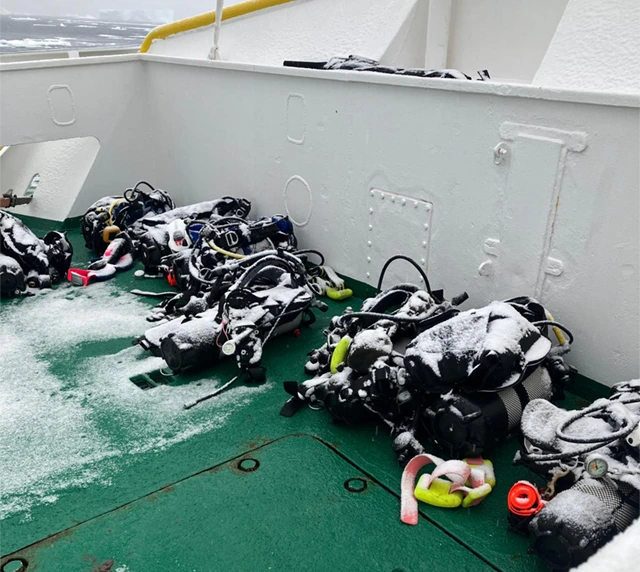
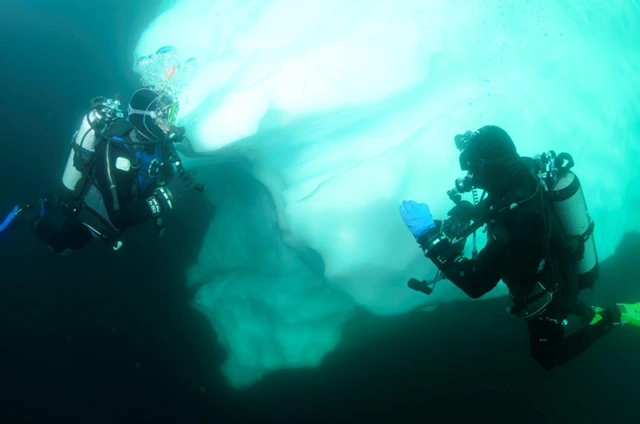
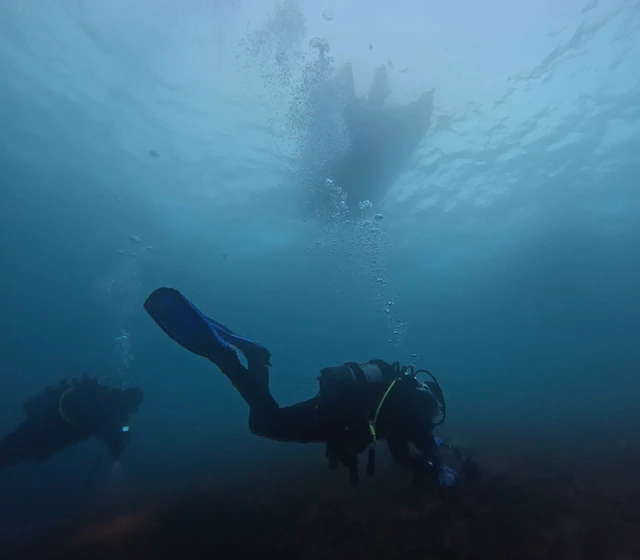
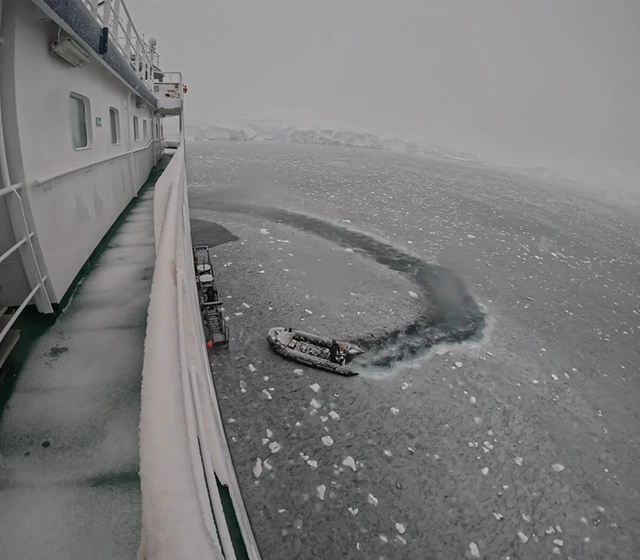 But to answer your question, where possible, two dives were available each day to offer numerous diving opportunities during the cruise. The maximum dive time being 40 minutes (although 30 minutes was plenty!) and the maximum depth was 20 metres. The evening prior we were advised of the ‘ropes off’ time for the following morning and were given a briefing of the expected dive site, plus standard safety diving practices for Polar divers. It was then our responsibility to ensure our dive gear was assembled and on the RIB, which had been craned onto the deck, ready to go. We’d often find our equipment with a dusting of snow, which was magical. In the morning we’d don our suits and wait while the dive team headed out to check the site, we’d head down the gangway to board our respective diving group's RIB and head out for the dive (adjusting the dive plan if needed), we’d be in the water within ten minutes.
 My buddy didn’t fancy diving on this trip, but very similarly to a ‘normal’ liveaboard, the crew buddied me up with someone with similar experience. Each dive was done as a buddy pair; there was no guide in the water with us. Instead, two members of the dive crew stayed on each RIB as surface for cover, checking for shifting ice and helping divers where needed. On request, one of the experienced dive guides would join.
Once we’d surfaced, it was the same old story of getting into any RIB without a ladder, a team effort. Those with heated gloves were much more dextrose at this point! After this, we’d all head straight to shore for the activities, still in drysuits. I would pack my warm hat and gloves in a dry bag, which I'd leave on the RIB ready. The dive boats were always first out in the morning, so we didn’t miss out on the land excursions at all.
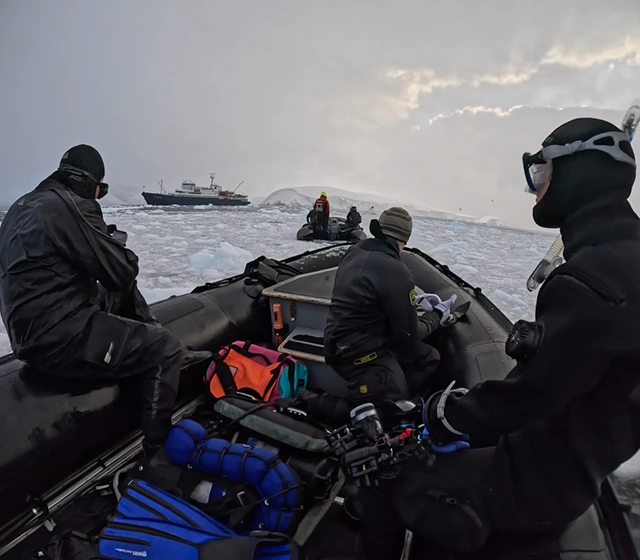 If two dives were happening that day, then the RIB would be craned up, cylinders filled, lunch eaten, and a time given over vessel PA for ‘ropes off’ that afternoon, and you’d do it all over again.
What marine life did you see?
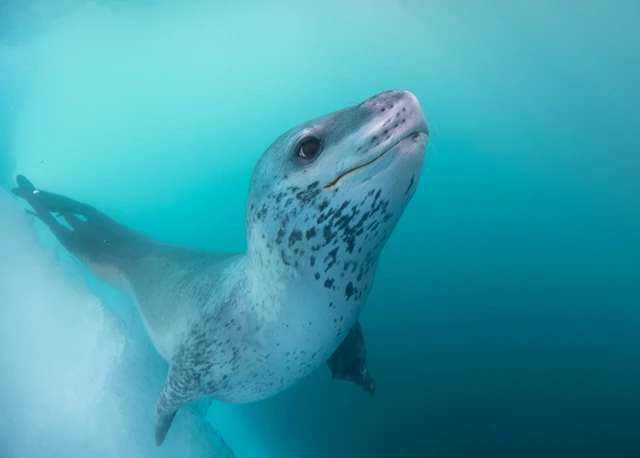
We saw chinstrap, Adelie, and gentoo penguins, leopard, Antarctic fur, crab and Weddell seals, and lots of cold-water anemones, jellyfish, and isopods. The leopard seals we saw both in water and from the RIB and were a highlight. The curious seals will often come to check you out, and the leopard seals in particular are chunky! Roughly three metres long, they move effortlessly in the water, and I was very aware I was in their world.
 The penguins are so fun, when we dived near the shore they would be coming and going to fish for their chicks. They just bomb in and out of the water like little torpedoes, it was incredible to watch them from the shallows.
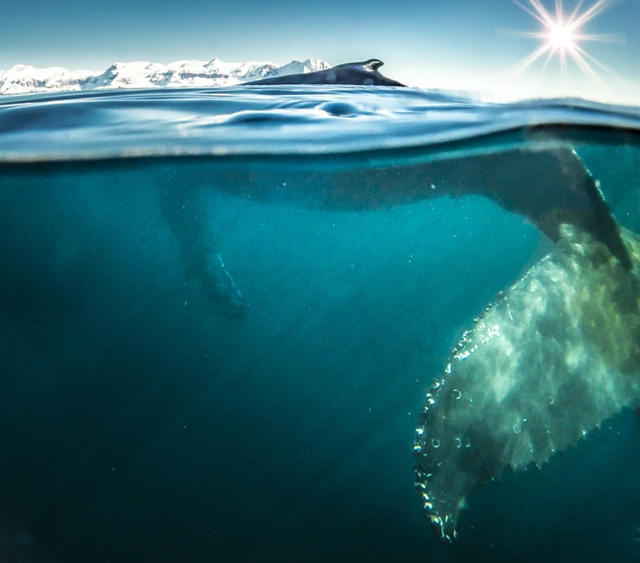
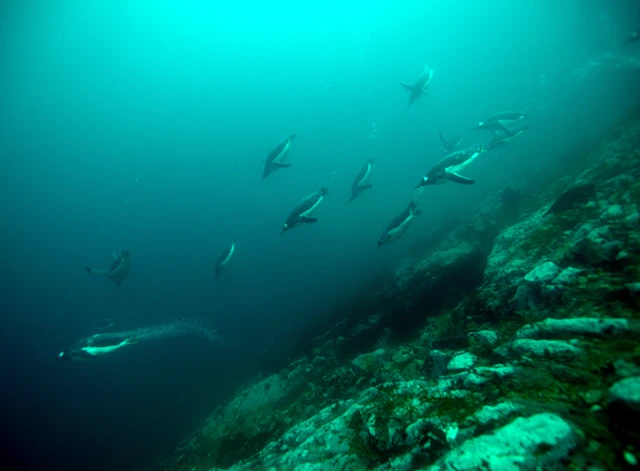 As it was summer, the visibility was 15–20 metres. The water is full of zooplankton, which is what the cetaceans are there for, and wow are they there! The occasional humpback whale could be heard under the water, like a drum in the chest. The unique dive sites allowed us to encounter remarkable wildlife and witness spectacular marine ecosystems.
What is it like under the water? Did you dive near icebergs?
Alongside the interesting marine life, the main attraction for me was the topography and the icebergs. The ocean floor has been scarred by glaciers and constantly scoured by shifting icebergs. We did encounter a few icebergs that had “bottomed out”, meaning they’re stuck and not going anywhere. That's good news for divers because these are the ones we could get close to. The light through these was stunning, a blue like no other. It was also eerily quiet as they blocked surrounding noise from the ocean, penguin colonies, and cetaceans.
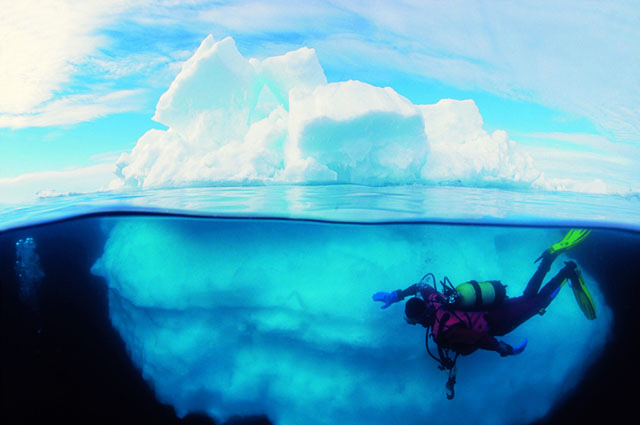 Diving offered a unique and adventurous opportunity to witness unforgettable wildlife encounters and stunning marine ecosystems. Kelp grows in bays sheltered from the icebergs, these areas are a small oasis for the invertebrate and excellent for routing around in. There are also a few walls which I peered over the edge of into the icy abyss.
 Did you do other activities while on board?
From the mother ship several activities were available, some had to be prebooked such as kayaking, photography workshops, wild camping, and diving, while the daily landings by RIB were available to everyone. It was truly wonderful to explore the Antarctic continent by foot! While out on the RIB we would see whales and other marine life, humpbacks would often pop right up besides us and penguins would whiz by.
 A bonus was the talks by the guides that were conducted on various topics throughout the voyage. Each speaker was as passionate as the next about their subject. I particularly enjoyed the historical expert who spoke about a disused research station which was visited earlier in the day. I was in awe of how brave these early scientists and explorers were, basically living in a garden shed with ten other people for 2+ years. It was aspects of the polar region that have come so far when considering projects such as BAS’s Halley VI.
Another of my favourites was the glaciologist and geologist who explained, in simple terms, what we were looking at out of the window. It sounds so simple, but it all added another layer of understanding and enjoyment to the place we were guests of.
What was the vessel like?
Now, this was different to a ‘normal’ liveaboard! Capacity of the MV Plancius is just over 100, which is small compared to some expedition cruise operators in the area. It's a great expedition vessel, simple but safe and comfortable, with excellent food and an incredible crew on board. They couldn't do enough for us; my non-diving buddy was attempting to quietly celebrate a special birthday while onboard, and the staff made sure she was treated to the full works.
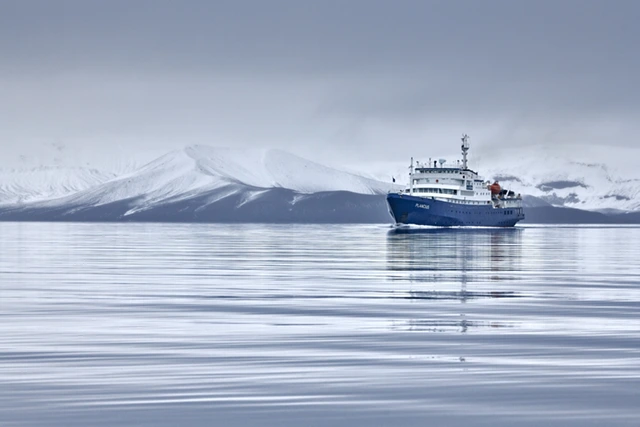 I loved sitting in the lounge, situated at the bow on one of the upper decks it has panoramic windows perfect to watch the dramatic landscape glide by, and the warmest place to spot marine and wildlife from. Hot drinks, cakes and an abundance of snacks were available throughout the day, it was a haven.
Did you do anything in Ushuaia before joining the sailing?
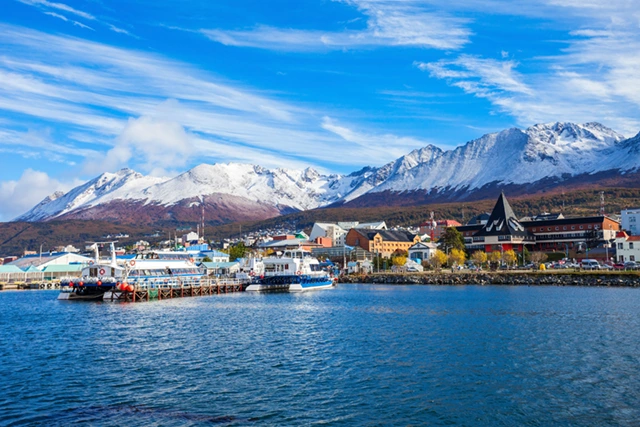
It was our first time in Argentina, and we wanted to experience what we could in the short time we had before the sailing. We landed a couple of days early, and I would absolutely recommend doing that to anyone embarking on such a journey. The Patagonian scenery is spectacular; it truly is the end of the Earth. We took a tour into the mountains and to a museum dedicated to the early communities and the ‘Tierra del Fuego’ area, a name given by explorers who spotted the hundreds of campfires kept alight by indigenous peoples along the cost. Ushuaia town is a must to explore, good food and welcoming people. I recommend a trip on the steam train, that used to take wood to the prison, it’s now available to tourists as it gives a wonderful snapshot of the Tierra del Fuego National Park.
 Would you recommend it?
Absolutely! A polar voyage is more than a diving holiday; it’s adventure, it’s exploration, it’s pushing your limits, it’s seeing next level marine life, it’s setting foot onto land that few have, and diving in areas that sometimes no one has. The specialised scuba diving programme in Antarctica requires participants to have certification and recent diving experience, ensuring they are well-prepared for the unique underwater experiences. Although I would say I am well-travelled, and my usual destinations are a little warmer, I was apprehensive about this holiday. I had never been anywhere like this before. Dive Worldwide and the expedition cruise operators made it all so easy and accessible, it’s a once in a lifetime journey that I would recommend to anyone considering it. We have come home with memories that will last forever.
 Please note: Polar regions scuba diving tours are suitable for Advanced Open Water divers who have completed the Drysuit specialty certified diver course with a minimum of 30 logged drysuit dives.
Images by Nick Charter, Miss Scuba, John Neuschwander, Cyriel de Grijs, Dietmar Denger & Mike Louagie
If you’re interested in the ultimate polar adventure and a quality dive experience, exploring breathtaking underwater worlds where you can encounter majestic marine wildlife, then contact us for more information about scuba diving in Antarctica.